Cloisters
Milan, Italy
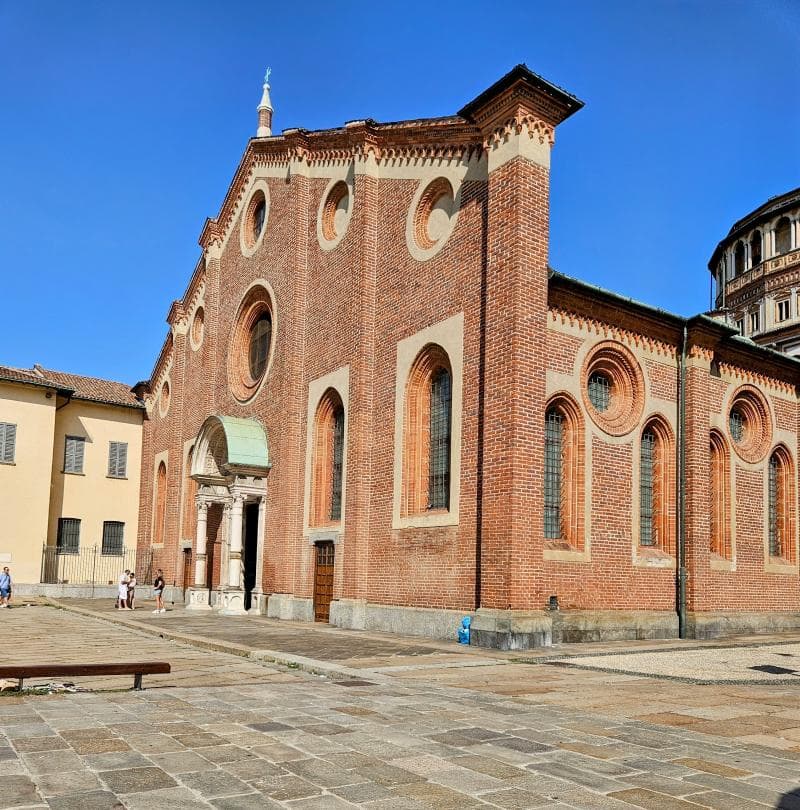
Discover the tranquil Cloisters of Santa Maria delle Grazie in Milan, Italy, including the charming 'Cloister of the Frogs' with its Renaissance architecture.
Overview
Nestled within the historic complex of Santa Maria delle Grazie in Milan, Italy, the Cloisters offer a serene escape from the bustling city. While many visitors flock to this UNESCO World Heritage site to witness Leonardo da Vinci's 'The Last Supper', the cloisters themselves are masterpieces of Renaissance architecture and tranquility. Specifically, the 'Chiostro delle Rane' or 'Cloister of the Frogs', stands out as a notable feature, inviting contemplation and admiration of its elegant design and peaceful atmosphere.
This sacred space, once an integral part of the Dominican convent, showcases the architectural brilliance of the Italian Renaissance, offering a glimpse into the monastic life that once thrived here. Its delicate balance of form and function provides a profound sense of peace, making it a compelling destination for those seeking both historical insight and a moment of quiet reflection amidst Milan's vibrant cultural landscape.
History & Cultural Background
The origins of the Santa Maria delle Grazie complex trace back to 1463, when construction began under the guidance of Guiniforte Solari. Duke Francesco I Sforza of Milan initiated the project, with the church and convent intended to honor the Virgin Mary. By 1469, the main parts of the convent were largely completed, followed by the church in 1482.
A significant period of transformation occurred in the late 15th century, particularly under Duke Ludovico Sforza, who decided to make the church the Sforza family burial site. It was during this era that the renowned architect Donato Bramante was involved, adding Renaissance elements that profoundly reshaped the complex. Bramante is credited with the design of the tribune, the old sacristy, and the small cloister (Chiostrino) which connects the tribune to the sacristy, marking a shift from the earlier Gothic style to the elegant lines of the Renaissance.
The convent originally comprised three cloisters: a first one later demolished, a 'Great Cloister' where monks' cells were located, and the 'Cloister of the Dead', near the ancient Chapel of the Virgin of Graces. The Chiostro delle Rane, often referred to as the small cloister, was a key Bramante addition, created around 1497.
What Makes It Special
What truly distinguishes the Cloisters, especially the 'Chiostro delle Rane', is its exquisite Renaissance architecture and serene atmosphere. Attributed to Donato Bramante, its design exemplifies the period's ideals of harmony and proportion. The quadrangular cloister features five elegant arches on each side, supported by slender columns that create a rhythmic and visually pleasing colonnade.
At its heart lies a tranquil garden, bisected by cobbled paths leading to a central round basin. This garden, often adorned with spring magnolias, provides a peaceful focal point. The interplay of light and shadow through the arches, the quiet rustling of leaves, and the sense of historical depth make it a truly special place for reflection. It stands as a testament to Bramante's genius and the enduring beauty of Renaissance design, offering a calming contrast to the dramatic narrative of 'The Last Supper' found nearby.
Stories, Fun Facts & Local Details
The 'Chiostro delle Rane' translates to the 'Cloister of the Frogs' in English. This endearing name comes from the four bronze frog statues positioned around the central basin, playfully spouting fresh water. While the exact origin of these charming batrachians remains a delightful mystery, some like to imagine they harken back to a time when the surrounding area of Milan was characterized by rice fields and flourishing kitchen gardens.
This small detail adds a touch of whimsical charm to the otherwise solemn convent setting. Beyond its architectural beauty, the cloister is steeped in the history of the Dominican friars who lived and meditated within these walls for centuries. It also connects to the powerful Sforza dynasty, whose desire to establish a family mausoleum led to the significant architectural enhancements by Bramante.
Visitor Perspective
Visiting the Cloisters of Santa Maria delle Grazie offers a unique opportunity to step back in time and experience a rarely seen aspect of this iconic Milanese site. While the focus for many is on Leonardo's mural, taking time to explore the cloisters provides a deeper understanding of the entire monastic complex. The 'Chiostro delle Rane' is typically accessible, allowing visitors to walk along its arcades, admire the architectural details, and enjoy the peaceful garden.
The atmosphere here is one of quiet reverence, a stark yet beautiful contrast to the often-crowded refectory where 'The Last Supper' resides. It's a place where one can pause, absorb the history, and appreciate the masterful design of Renaissance architects like Bramante. The experience is not just about seeing historical structures but feeling the echoes of centuries of monastic life and artistic endeavor. For those who appreciate art, history, and moments of calm, the Cloisters are an essential, enriching part of the Santa Maria delle Grazie visit.
Coordinates: 9.17111, 45.46583
View on Google Maps💬 How Travelers Describe This Place
Based on community votes
Interesting
683Photogenic
642Must See
536Beautiful
251Unique
88
Traveler Stories
Discover memorable experiences shared by travelers who have visited this place.
No traveler stories yet.
Be the first traveler to share what made this place memorable.

Tour
By
Spot
Discover amazing places around the world. Your journey starts here.
Explore
© 2026 TourBySpot. All rights reserved.