Cloister
Manila, Philippines
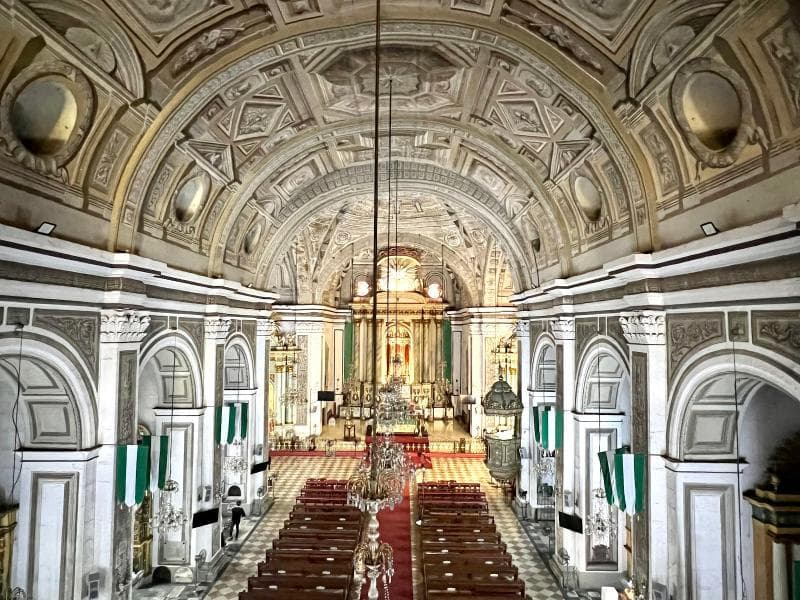
Explore the tranquil Cloister of San Agustin Church in Manila, Philippines, a UNESCO World Heritage Site. Discover centuries of history and art.
Overview
Nestled within the ancient walls of Intramuros in Manila, Philippines, the Cloister of San Agustin Church offers a serene retreat into history and culture. This captivating sub-spot is an integral part of the San Agustin Museum, itself housed in the former Augustinian monastery adjacent to the revered San Agustin Church. The entire complex is recognized as a UNESCO World Heritage Site, celebrated for its enduring Baroque architecture and profound historical significance.
The cloister features elegant arcaded walkways surrounding peaceful courtyards, providing an atmospheric setting that transports visitors back to the Spanish colonial era. It serves as a vital component of the museum, showcasing an outstanding collection of religious art, colonial artifacts, and historical treasures assembled by the Augustinian order. Stepping into the cloister offers a unique opportunity to immerse oneself in centuries of Philippine religious and colonial heritage.
History & Cultural Background
The history of the San Agustin Church and its adjoining monastery, including the cloister, is deeply intertwined with the Spanish colonization of the Philippines. The present stone church, completed in 1607, stands as the oldest stone church in the country. Prior to its current robust form, two earlier structures made of more perishable materials like nipa and bamboo succumbed to fires in 1574 and 1583.
The construction of the stone church began in 1586, symbolizing the Augustinian friars' unwavering commitment to establishing Catholicism in the archipelago. Over centuries, the San Agustin complex has remarkably withstood numerous natural disasters, including major earthquakes that devastated much of Manila. It also survived the widespread destruction of Intramuros during the Battle of Manila in 1945, a testament to its exceptional earthquake-resistant Baroque architecture.
What Makes It Special
The Cloister of San Agustin is special not only for its tranquil beauty but also for its profound resilience and historical depth. Its elegant arcaded cloisters, with their centuries-old stone walls and carved wooden ceilings, offer a tangible link to monastic life from a bygone era. The architectural design, reflecting Spanish colonial aesthetics, provides a stunning backdrop to the museum's rich exhibits.
What truly sets the cloister apart is its role as a silent witness to Philippine history. It has endured invasions, fires, and wars, emerging largely intact when much of its surroundings lay in ruins. This survival makes the cloister a powerful symbol of heritage preservation and the enduring legacy of the Augustinian order. The serene courtyards, once traversed by friars, now invite visitors to reflect on the historical narratives etched into every stone and archway.
Stories, Fun Facts & Local Details
The cloister holds many fascinating stories. During the devastating Battle of Manila in 1945, when Intramuros was almost completely leveled, the San Agustin Church and its monastery, including these cloisters, stood as one of the few structures left largely undamaged. This remarkable survival has led many to view it as a miracle.
Within the monastery walls, including areas adjacent to the cloisters, the museum's collection tells a broader story of cultural exchange. Visitors can find Chinese ceramics alongside European religious art, illustrating the vibrant interactions that shaped the Philippines during the Spanish colonial period. The very atmosphere of the church and monastery is said to symbolize the 'majesty and equilibrium of a Spanish golden era,' providing a unique sense of grandeur. Furthermore, the cloisters once encompassed a renowned botanical garden cultivated by Fr. Manuel Blanco O.S.A., famed for his botanical research on Philippine flora.
Visitor Perspective
For the curious traveler, the Cloister of San Agustin offers a truly immersive and reflective experience. It's a place where the past feels remarkably present, allowing for a deep appreciation of Philippine history and religious art. Walking through the arcaded corridors, one can almost hear the echoes of Augustinian friars who once called this place home. The tranquil courtyards provide a peaceful respite from the bustling city outside Intramuros.
Many visitors find the cloisters and courtyards to be ideal spots for photography due to the soft, natural lighting that enhances the historical architecture. To fully appreciate the serene ambiance and avoid larger crowds, it's often recommended to visit in the morning. Exploring this area is not just a tour; it's a journey through time, offering profound insights into the spiritual and cultural heart of Manila.
Coordinates: 120.97528, 14.58889
View on Google Maps💬 How Travelers Describe This Place
Based on community votes
Unique
963Must See
897Interesting
723Beautiful
463Photogenic
274
Traveler Stories
Discover memorable experiences shared by travelers who have visited this place.
No traveler stories yet.
Be the first traveler to share what made this place memorable.

Tour
By
Spot
Discover amazing places around the world. Your journey starts here.
Explore
© 2026 TourBySpot. All rights reserved.