Clock Tower
Podgorica, Montenegro
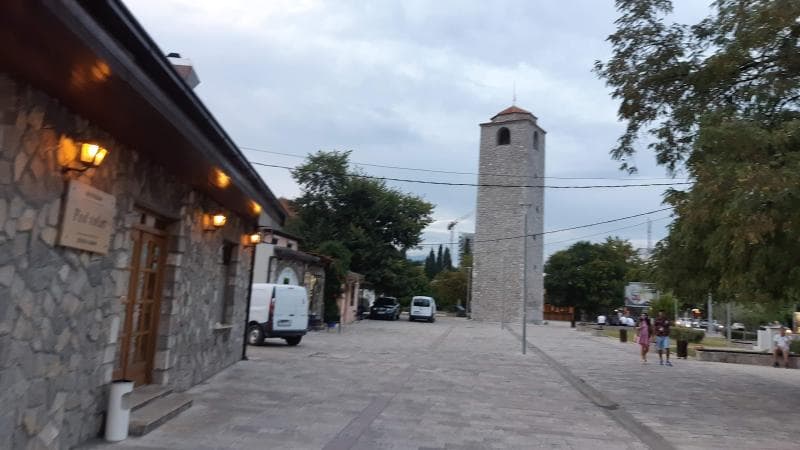
Explore Podgorica's historic Clock Tower (Sahat Kula) in Stara Varoš, Montenegro. Discover its Ottoman origins, resilient past, and cultural significance.
Overview
Nestled in the heart of Stara Varoš, Podgorica's old town, stands the Clock Tower, locally known as Sahat Kula. This enduring landmark serves as a poignant reminder of the city's rich and complex past, majestically rising approximately 19 meters (62 feet) above Bećir Beg Osmanagić Square. It is one of the few Ottoman-era structures that remarkably survived the extensive bombings of Podgorica during World War II, making it a unique testament to resilience and history. Today, the Clock Tower is recognized as an important cultural monument of Montenegro, legally protected for its historical significance.
Far more than a simple timekeeper, Sahat Kula symbolically bridges the old and new parts of the city, its dignified presence offering a tangible link to centuries of urban life. Its stone façade and intricate design capture the essence of its heritage, inviting curious travelers to delve into the stories held within its walls.
History & Cultural Background
The Podgorica Clock Tower was constructed in 1667 by Hadži-paša Osmanagić, a prominent citizen of Podgorica during the Ottoman period. For many years, this impressive stone tower served as the sole public clock in the city, dictating the rhythm of daily life for its inhabitants, from marking prayer times to coordinating market activities.
Its original clock mechanism, believed to be from Austria, was later replaced around 1890 with a new turret clock mechanism crafted by the Pietro Colbachini foundry in Bassano del Grappa, Italy. This period also marked a significant symbolic shift: as Podgorica was incorporated into Montenegro, a metal cross was installed at the very top of the tower. This cross, made by Stevan Radović, grandfather of Lazar Radović, symbolized the transfer of the city from Ottoman to Christian Montenegrin hands, adding another layer to the tower's cultural narrative.
In January 2012, the Clock Tower underwent a careful renovation. While a new electric mechanism was installed to ensure its continued functionality, the historic original mechanism was thoughtfully preserved, underscoring the tower's enduring value and heritage.
What Makes It Special
What truly sets the Clock Tower apart is its extraordinary survival. Amidst the heavy World War II bombings that devastated much of Podgorica's historical infrastructure, Sahat Kula stood firm, emerging as one of the very few Ottoman landmarks to withstand the destruction. This makes it an almost miraculous artifact, offering a rare, tangible connection to an era that largely vanished from the city's landscape.
The tower's architecture, distinctly Ottoman, is gracefully complemented by the later addition of the Christian cross, making it a powerful visual representation of Podgorica's multicultural history and the various influences that have shaped the region over centuries. It's a monument that embodies historical continuity and the city's enduring spirit, linking a rich past to modern-day Podgorica.
Stories, Fun Facts & Local Details
Local legends suggest that the clock itself was brought to Podgorica all the way from Italy, adding a touch of intriguing mystery to its already fascinating history. For generations, the Clock Tower wasn't just a building; it was the heart of the community, its chimes marking the passage of time for everyone. Imagine a Podgorica where this single clock was the reference point for all appointments, prayers, and market dealings – a truly central element of urban life.
The Clock Tower stands proudly within Stara Varoš, the oldest district of Podgorica. Wandering through the narrow, winding cobblestone streets of Stara Varoš offers an immediate immersion into the city's Ottoman past. Here, visitors can still find other historical gems, such as the Starodoganjska Mosque and the Osmanagić Mosque, creating an atmospheric journey back in time that contrasts sharply with Podgorica's more modern areas. The area around the tower has been revitalized, with a tiled and arranged square, enhancing its role as a cultural and social hub.
Visitor Perspective
For any traveler exploring Podgorica, a visit to the Clock Tower in Stara Varoš is a must. Its central location at Bećir Beg Osmanagić Square makes it easily accessible and visible from the surrounding old town streets. While the tower itself is a striking architectural marvel, the experience is enriched by its setting within Stara Varoš, an open-air living museum where the pace of life slows and the modern city noise fades away.
Visitors are encouraged to take a leisurely stroll around the tower and the surrounding park, soaking in the tranquil atmosphere. This spot offers excellent photo opportunities to capture its elegant architecture. Nearby, cafes and shops provide a chance to savor local delicacies or pick up souvenirs, extending the cultural immersion beyond just the monument itself. It's a place to not only witness history but to feel the layered past of Podgorica, offering a genuine glimpse into the soul of Montenegro's capital.
Coordinates: 19.260013, 42.435565
View on Google Maps💬 How Travelers Describe This Place
Based on community votes
Unique
948Interesting
913Must See
595Photogenic
337Beautiful
196
Traveler Stories
Discover memorable experiences shared by travelers who have visited this place.
No traveler stories yet.
Be the first traveler to share what made this place memorable.

Tour
By
Spot
Discover amazing places around the world. Your journey starts here.
Explore
© 2026 TourBySpot. All rights reserved.