Clock Tower
Venice, Italy
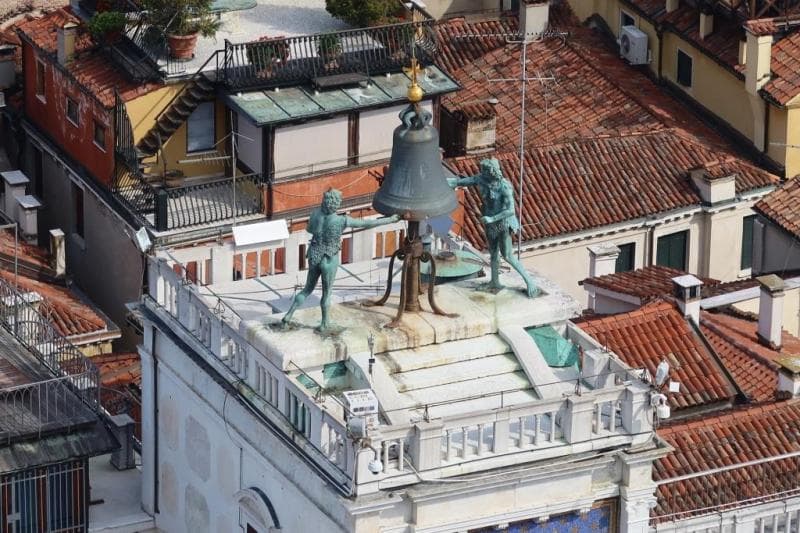
Discover the historic Clock Tower (Torre dell'Orologio) in Venice, Italy's St. Mark's Square, a Renaissance marvel with an astronomical clock and iconic 'Moors'.
Overview
Standing proudly at the northern edge of St. Mark's Square in Venice, Italy, the Clock Tower, or Torre dell'Orologio, is a magnificent early Renaissance landmark. This architectural marvel not only tells time but also serves as a symbolic gateway, marking the entrance to the Mercerie, Venice's historic main shopping street that connects the square to the Rialto. Conceived as a grand display of Venetian wealth and engineering prowess, the tower has been a focal point of the city's civic life for over 500 years.
Its intricate astronomical clock face, featuring the zodiac and moon phases, along with the iconic bronze figures known as the 'Moors' who strike the hour, make it an enduring symbol of Venice's rich past and its mastery of art and science.
History & Cultural Background
The story of the Clock Tower began in 1493 when the Venetian Senate, recognizing the inadequacy of the old St. Alipio clock, commissioned a new, more impressive timepiece. Doge Agostino Barbarigo initiated its construction, which took place between 1496 and 1499. The tower's design is largely attributed to Mauro Codussi, a prominent Renaissance architect, with the complex clock mechanism crafted by the skilled father-and-son team Gian Paolo and Gian Carlo Ranieri from Reggio Emilia. The tower was strategically placed to be visible from the waters of the lagoon, serving as a beacon to sailors and merchants and proclaiming the glory of Venice to all who approached. Its inauguration on February 1, 1499, was a significant event, revealing a structure that seamlessly integrated the city's political and religious heart with its commercial artery.
What Makes It Special
The Clock Tower is a symphony of symbolic and mechanical elements. At its summit, two impressive bronze figures, hinged at the waist, strike a large bell on the hour. These figures, initially described as giants, became known as the 'Moors' due to the dark patina their bronze acquired over centuries. One figure is older and bearded, representing the past, while the younger one symbolizes the future, together illustrating the relentless march of time. Below them, a relief of the winged Lion of St. Mark, the patron saint and emblem of Venice, stands over an open book.
Further down, a niche holds a gilded copper statue of the Madonna and Child. The monumental clock face itself is a marvel, displaying not only the time in Roman numerals but also the phases of the moon and the dominant zodiac sign of the sun. Perhaps one of its most enchanting features is the procession of wooden figures – the Three Magi led by an angel with a trumpet – that emerge and bow to the Madonna and Child. This captivating spectacle occurs only twice a year, on the Feast of the Epiphany and Ascension Day.
Stories, Fun Facts & Local Details
The Clock Tower is steeped in intriguing stories. A popular Venetian legend recounts that after the clock's unveiling, the Doge ordered the clockmakers to be blinded so they could never replicate their masterpiece elsewhere. While this tale adds a dramatic flair, historical accounts suggest that the Ranieri brothers were actually made caretakers of their creation, living within the tower and beginning a tradition of resident clock keepers. The tower's position is also deeply symbolic; it acts as a triumphal arch from St. Mark's Square into the bustling Mercerie, which historically led to the commercial heart of the Rialto. Conversely, approaching from the Mercerie, it frames a breathtaking view of St. Mark's Basilica, the Doge's Palace, and the lagoon.
The meticulous detail extended to its original decoration, which included quantities of ultramarine and gold leaf, with even the 'Moors' initially gilded, showcasing Venice's commitment to grandeur. For centuries, its bell, cast in 1497 by Simeone Campanato, has faithfully marked the hours.
Visitor Perspective
Today, the Clock Tower remains an active and accessible piece of Venetian history, offering a unique perspective on the city. Guided tours allow visitors to venture inside the tower, climbing its historic staircases. These tours provide an unparalleled opportunity to see the intricate inner workings of the clock mechanism, a complex system of gears and counterweights that has measured time for over half a millennium. The journey culminates on the terrace at the top, offering breathtaking panoramic views over St. Mark's Square, the Basilica, the Doge's Palace, and the wider Venetian lagoon.
It is important to note that due to the tower's historic nature and narrow internal spaces, tours may not be suitable for individuals with certain mobility challenges or conditions such as claustrophobia. Visiting the Clock Tower is an immersive experience, connecting travelers directly with the ingenuity and artistic spirit of Renaissance Venice.
Coordinates: 12.3388, 45.434
View on Google Maps💬 How Travelers Describe This Place
Based on community votes
Unique
953Must See
695Interesting
658Photogenic
69Beautiful
22
Traveler Stories
Discover memorable experiences shared by travelers who have visited this place.
No traveler stories yet.
Be the first traveler to share what made this place memorable.

Tour
By
Spot
Discover amazing places around the world. Your journey starts here.
Explore
© 2026 TourBySpot. All rights reserved.