Clock Mechanism
Lucerne, Switzerland
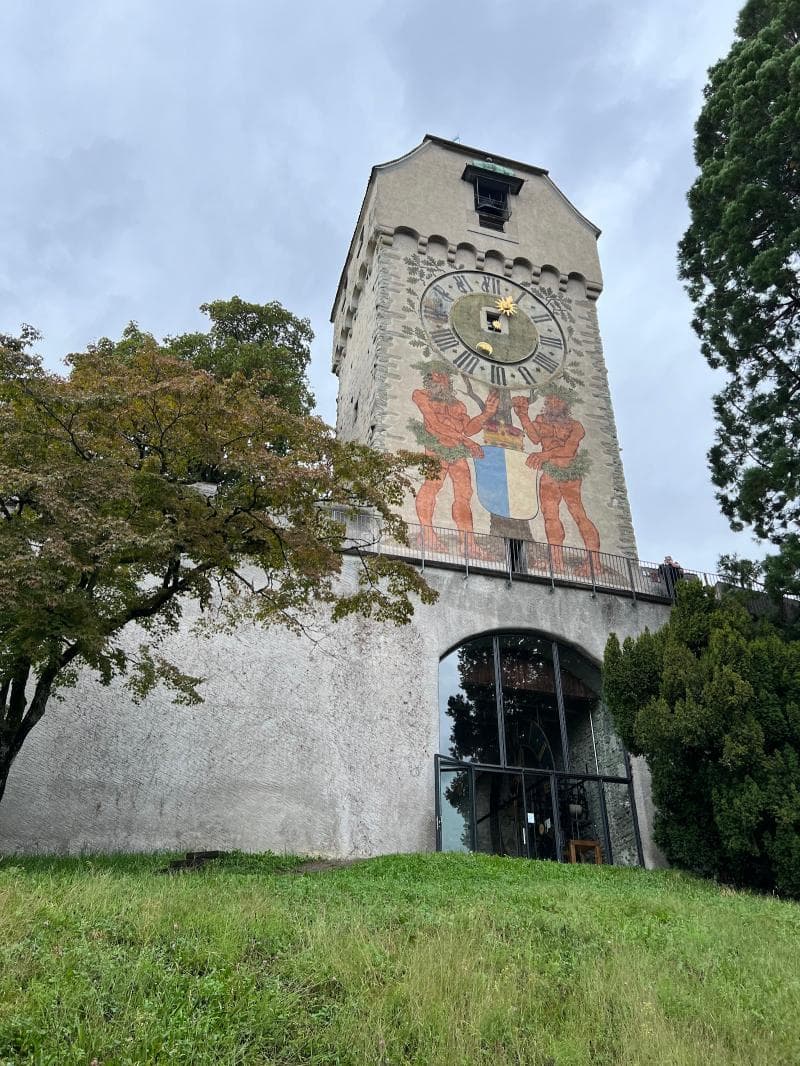
Discover the Zytturm's ancient clock mechanism, the oldest in Lucerne, Switzerland. Explore its history, unique privilege, and panoramic views.
Overview
Perched majestically within Lucerne, Switzerland's ancient Musegg Wall, the Zytturm, or Clock Tower, stands as a captivating testament to medieval ingenuity and timekeeping. It is not merely a tower but a living piece of history, housing a remarkable clock mechanism that has diligently marked the hours for centuries. As the most distinctive among the nine towers gracing the Musegg Wall, the Zytturm beckons curious travelers to explore its venerable past and witness a truly unique piece of horological heritage.
This particular tower is renowned for its operational medieval clock, which continues to function with a charm and precision that defies its age. Visitors can ascend the tower to observe the intricate inner workings of this historic timepiece firsthand, gaining an appreciation for the craftsmanship of a bygone era. The Zytturm offers more than just a historical clock; it provides a panoramic vantage point over the picturesque city of Lucerne, its sparkling lake, and the dramatic backdrop of the Swiss Alps.
History & Cultural Background
The Musegg Wall itself, dating back to the 13th century, is one of Switzerland's longest and best-preserved medieval defensive structures, stretching over 800 meters. Built between the 14th and 16th centuries, the wall and its nine towers symbolized Lucerne's growing power.
The Zytturm's construction dates back to the 15th century, with some internal timber elements even tracing their origins to 1403. While some accounts suggest its main structure was erected around 1442, early sections of the wall it rests upon are reported to be from as far back as 1386. Unlike other towers primarily built for defense, the Zytturm's principal purpose was to accommodate the city's main clock, making it a crucial public utility for the citizens of Lucerne and even sailors on Lake Lucerne.
The original clock mechanism within the Zytturm was first installed around 1385, later replaced by the current, oldest clock in Lucerne and central Switzerland, crafted by Hans Luter in 1535. This makes the Zytturm's clock older than the famous Zytglogge tower in Bern.
What Makes It Special
The Zytturm's clock mechanism holds a unique and charming privilege: it chimes the full hour one minute before all other public clocks in Lucerne. This ancient tradition, a relic from the Middle Ages when precise time synchronization was rare, ensured that the city's inhabitants always knew the approaching hour from their most prominent timepiece.
The clock's dial, measuring an impressive three to four meters in diameter, was deliberately designed to be large enough for fishermen on the lake and citizens across the city to read the time from a distance. Adding to its distinctiveness is the vibrant fresco painting on its south façade, dating from 1596, which depicts two mythical giants appearing to hold the clock face. This striking visual element is not just an artistic flourish but a historical marker, with earlier documentation of such figures found in Diebold Schilling's 16th-century Lucerne Chronicle.
Inside the Zytturm, visitors are invited into a world of historical horology. The tower hosts an exhibition of various antique tower clocks, some of which are still operational, offering a fascinating glimpse into the evolution of mechanical timekeeping.
Stories, Fun Facts & Local Details
For centuries, the Zytturm's clock was not merely a mechanical device but an integral part of daily life in Lucerne, requiring constant human interaction. Since the late Middle Ages, a dedicated individual was responsible for winding the clock daily, a tradition that speaks volumes about the value placed on accurate time. The detailed operating manual from 1386, preserved in the Lucerne State Archives, offers a rare insight into these historical practices.
The Leonhardsglocke, the bell that calls out the hours from the Zytturm, is itself a piece of history. Originally cast in 1370, this bell once hung in Saint Peter's Chapel on Kapellplatz before finding its home in the Clock Tower. An opening for this significant bell was specifically integrated into the tower's wall in 1513, complete with a small canopy to protect it from the elements.
Despite being struck by lightning multiple times in the 16th century, the Zytturm's clockwork remarkably remained undamaged, showcasing the robust engineering of its time. This resilience allowed it to continue its essential function of signaling time to the bustling city and those navigating the waters of Lake Lucerne.
Visitor Perspective
A visit to the Zytturm provides a memorable journey back in time. As you climb the wooden stairs, you can observe the genuine antique clock mechanism with its pendulums swinging and gears turning, a truly immersive experience. Timing your visit just before the hour allows you to experience the powerful chime of the bell from within the tower, a privilege granted to this oldest of Lucerne's clocks.
Reaching the top rewards you with breathtaking 360-degree panoramic views, encompassing Lucerne's charming Old Town, the serene Lake Lucerne, and the majestic peaks of the surrounding Swiss Alps. The Zytturm, along with a few other towers on the Musegg Wall, is typically open to the public from April to November, offering a free and enriching cultural experience.
Coordinates: 8.3045, 47.0543
View on Google Maps💬 How Travelers Describe This Place
Based on community votes
Photogenic
826Unique
800Must See
589Interesting
387Beautiful
90
Traveler Stories
Discover memorable experiences shared by travelers who have visited this place.
No traveler stories yet.
Be the first traveler to share what made this place memorable.

Tour
By
Spot
Discover amazing places around the world. Your journey starts here.
Explore
© 2026 TourBySpot. All rights reserved.