City Viewpoints
Skopje, North Macedonia
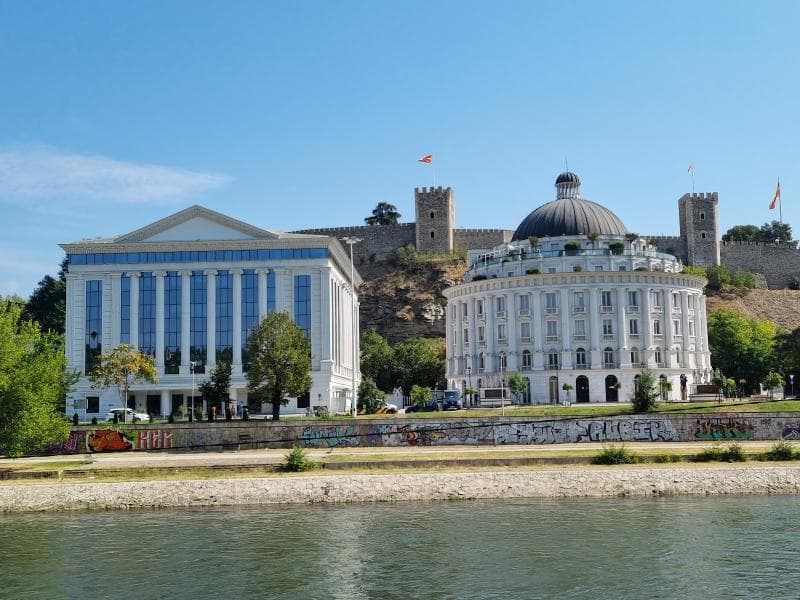
Explore Skopje Fortress's City Viewpoints for panoramic vistas of Skopje, North Macedonia. Discover centuries of history and stunning urban landscapes.
Overview
Perched majestically on a hill overlooking the vibrant city of Skopje, the Skopje Fortress, affectionately known as Kale Fortress, stands as a silent sentinel of history. This ancient stronghold offers some of the most spectacular city viewpoints in North Macedonia, providing a panoramic canvas of Skopje's diverse landscape. From its elevated position, visitors are treated to sweeping vistas that encompass the winding Vardar River, the historic Old Bazaar with its terracotta rooftops, the modern city center featuring Macedonia Square, and the iconic Stone Bridge that links the old with the new.
Kale Fortress is more than just a collection of old stones; it is a gateway to understanding the soul of Skopje. Its walls, free to explore, invite travelers to trace the footsteps of countless generations who have gazed upon this very scenery. The viewpoints within the fortress provide an unparalleled perspective, allowing one to appreciate the strategic importance of this site throughout millennia. Whether observing the bustling life below or simply soaking in the serene expanse, the experience of these city viewpoints is a profound connection to Skopje's enduring narrative.
History & Cultural Background
The story of Skopje Fortress stretches back to an astonishingly ancient period, with archaeological evidence suggesting human habitation on this strategic hill since the Neolithic and Bronze Ages, around 4000 BC. The earliest recorded fortifications were constructed in the 6th century AD under the command of Byzantine Emperor Justinian I. Interestingly, much of the construction material, particularly the yellow limestone and travertine, was repurposed from the ruins of the Roman city of Skupi, which had been devastated by an earthquake in 518 AD.
Throughout its long and tumultuous history, Kale Fortress has been a focal point for various empires and rulers. It witnessed the ebb and flow of power, changing hands between Byzantines, Bulgarians, Serbs, and Ottomans. Each civilization left its indelible mark, contributing new architectural layers and reinforcing its defensive capabilities. During the Ottoman era, the fortress served as a vital military and administrative center, though it also experienced periods of neglect.
A notable chronicler of the Ottoman Empire, Evliya Çelebi, described the fortress in 1660 as 'a very strong and sturdy fortress with double walls,' praising its refined construction. The fortress endured numerous wars and natural disasters, including a devastating earthquake in 1963 that caused significant damage. Extensive archaeological excavations and restoration efforts have since worked to preserve and reveal its rich past, making it a prominent cultural and tourist site today.
What Makes It Special
What truly sets the City Viewpoints at Skopje Fortress apart is the breathtaking 360-degree panorama they offer. From atop its ancient walls, visitors can literally see the layers of Skopje's history spread out below them. To the east, the labyrinthine streets and Ottoman-era architecture of the Old Bazaar unfold like a tapestry, with the minarets of historic mosques punctuating the skyline, such as the Mustafa Pasha Mosque visible just below.
Looking south, the modern heart of Skopje comes into view, characterized by Macedonia Square and the iconic Stone Bridge gracefully spanning the Vardar River. Beyond, the city sprawls towards the distant Vodno Mountain, crowned by the Millennium Cross. The views encapsulate the city's unique blend of old and new, tradition and aspiration. The feeling of standing on battlements that have guarded this city for over a millennium, witnessing its continuous evolution, is a uniquely compelling experience. The southeastern ramparts are particularly noted for providing the most classic views of the Old Bazaar.
Stories, Fun Facts & Local Details
The name 'Kale' itself is a testament to the region's Ottoman heritage, being the Turkish word for 'fortress.' Imagine Byzantine emperors overseeing their dominion, medieval armies preparing for battle, and Ottoman pashas surveying their province from these very ramparts. One fascinating historical detail is that materials from the Roman city of Skupi were extensively recycled to construct the early Byzantine fortress. This act of repurposing underscores the long human presence and the continuous cycle of destruction and rebirth that characterizes Skopje's history.
Another significant event linked to Kale Fortress is the coronation of Stefan Dušan in 1346. It was here that he adopted the title of Emperor and established Skopje as the capital of the Serbian Empire, highlighting the fortress's strategic importance in the Balkans. Locally, the fortress is depicted on the coat of arms and flag of Skopje, symbolizing its enduring significance to the city's identity.
While the interior of the fortress is largely an open archaeological site today, it once housed various structures, including military barracks and even the old Archaeological Museum before its destruction in the 1963 earthquake. Visiting during sunset is a particularly cherished local tip, as the golden light bathes the city, creating an unforgettable spectacle as the city lights begin to twinkle.
Visitor Perspective
For any curious traveler, exploring the City Viewpoints of Skopje Fortress is a rewarding and accessible experience. Entry to the fortress is completely free, making it an excellent stop for those looking to immerse themselves in history without a cost. The fortress is easily reachable on foot, typically a short uphill walk from the Old Bazaar or Macedonia Square.
Visitors can wander freely along the ancient walls and through the open spaces, soaking in the atmosphere and enjoying the diverse views. While the paths are generally easy to navigate, it is advisable to wear comfortable shoes, as some terrain can be uneven. There are benches available to sit and contemplate the panoramic vistas. Although specific informational boards about the history directly on-site may be limited, the sheer scale of the fortress and its commanding position speak volumes. It is recommended to combine a visit here with a stroll through the nearby Old Bazaar for a richer cultural itinerary, offering a seamless transition from ancient history to vibrant market life.
Coordinates: 21.4344, 42
View on Google Maps💬 How Travelers Describe This Place
Based on community votes
Beautiful
623Interesting
545Unique
343Must See
302Photogenic
20
Traveler Stories
Discover memorable experiences shared by travelers who have visited this place.
No traveler stories yet.
Be the first traveler to share what made this place memorable.

Tour
By
Spot
Discover amazing places around the world. Your journey starts here.
Explore
© 2026 TourBySpot. All rights reserved.