City Hall
Minsk, Belarus
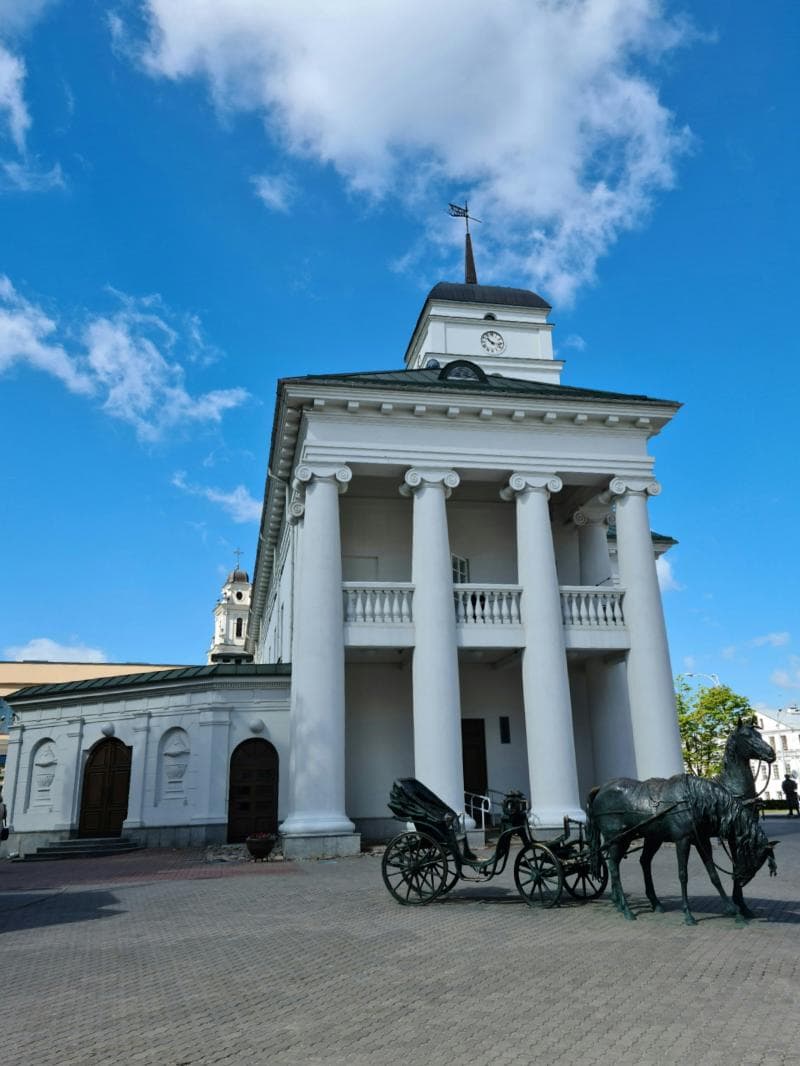
Explore Minsk City Hall in Upper Town, Belarus. Discover its neoclassical architecture, rich history, and cultural significance as a restored landmark.
Overview
Nestled within the historic Upper Town of Minsk, Belarus, the City Hall stands as a proud symbol of the city's enduring spirit and rich heritage. With its striking neoclassical architecture, characterized by a white facade, symmetrical design, and a prominent central tower topped with a clock, it is an undeniable landmark on Freedom Square. While it no longer serves as an administrative center, the Minsk City Hall has been lovingly restored to become a vibrant cultural and ceremonial hub, inviting travelers to connect with the city's storied past and present.
Its location in the Upper Town, a district steeped in history, makes it a focal point for exploring Minsk's oldest quarter. The area, with its cobblestone streets and well-preserved buildings, offers a glimpse into bygone eras, creating a captivating atmosphere for those eager to uncover the city's historical layers.
History & Cultural Background
The tale of the Minsk City Hall begins in the 16th century, with its original construction dating back to around 1600 or 1602. Its emergence was intrinsically linked to Minsk's acquisition of Magdeburg Law in 1499, a pivotal moment that granted the city significant self-governance rights and privileges. Under this law, the City Hall became the heart of civic life, serving as the administrative and judicial center. It housed the magistrate, a courtroom, and a clock tower, symbolizing the city's independence and its ability to govern itself.
Over centuries, the building evolved, undergoing various reconstructions and changes in appearance. However, its existence was abruptly halted in 1857 when it was demolished by order of Emperor Nicholas I during the period of Russian imperial rule. This act effectively erased a vital emblem of Minsk's autonomy, leaving a void in the city's architectural and cultural landscape for nearly a century and a half.
A determined effort to revive this lost landmark began in the early 1980s, culminating in an ambitious reconstruction project completed in 2004. This painstaking restoration was based on extensive historical records, detailed drawings, and archaeological research, ensuring that the new structure faithfully replicated the neoclassical style prevalent in the 18th and 19th centuries. The re-emergence of the City Hall was more than just a rebuilding; it was a profound act of reclaiming Minsk's historical identity and civic pride.
What Makes It Special
What makes the Minsk City Hall truly special is its remarkable journey from destruction to dignified reconstruction. It stands today not as an ancient relic, but as a living monument, a testament to the city's resilience and its deep respect for its past. The neoclassical design, with its elegant columns, balanced proportions, and grand facade, embodies a period of significant architectural and cultural development in the region.
Beyond its architectural beauty, the City Hall holds a unique place as a cultural nexus. Unlike its predecessor, it now functions as a cultural and ceremonial venue, hosting a diverse array of exhibitions, official receptions, and public events that celebrate Minsk's heritage. This transformation from an administrative seat to a vibrant cultural center allows a broader audience to engage with its significance, making history accessible and engaging.
Stories, Fun Facts & Local Details
The Minsk City Hall is not just a building; it is a repository of charming details and living traditions. One of its most beloved features is the clock tower, which not only marks the time but also chimes hourly with a melody specially composed for Minsk. For a truly enchanting experience, visit at noon when a small door on the clock tower opens, and a figure of a trumpeter emerges to play a short, traditional melody, a delightful revival of a 17th-century custom.
For those fascinated by history, the building offers a tangible link to its original foundations. In the basement, visitors can observe original foundation stones from the 1602 structure, visible through a clear glass panel in the main hall's floor. This provides a direct connection to the very origins of Minsk's self-governance.
The square in front of the City Hall, Freedom Square, is a bustling hub for city life, hosting various public gatherings and festivities throughout the year. Notably, it becomes home to the city's official Christmas tree each winter, adding a festive glow to this historical site.
Visitor Perspective
As a curious traveler, a visit to the Minsk City Hall offers a multifaceted experience. You can immerse yourself in the grandeur of its neoclassical architecture and appreciate the meticulous detail of its reconstruction. Stepping inside, you might encounter various exhibitions that delve into Minsk's rich history, offering insights into its past residents and pivotal moments.
The central location of the City Hall within the Upper Town means it's surrounded by other historical and cultural gems, making it an ideal starting point for a walking tour. From here, you can easily explore nearby cathedrals, museums, and other architectural marvels that contribute to the unique charm of this district. Some sources suggest mornings and early afternoons on weekdays as the best time to visit the interior, though it is also reported to be open on Saturdays free of charge, making it accessible for various schedules.
Beyond the building itself, the panoramic views from the upper floors offer a unique perspective of Minsk, allowing you to take in the cityscape from a historical vantage point. Whether you are a history enthusiast, an architecture admirer, or simply a traveler seeking to understand the soul of a city, the Minsk City Hall in Minsk's Upper Town provides a meaningful and memorable journey through time.
Coordinates: 27.55612, 53.90355
View on Google Maps💬 How Travelers Describe This Place
Based on community votes
Must See
799Photogenic
539Unique
424Interesting
234Beautiful
30
Traveler Stories
Discover memorable experiences shared by travelers who have visited this place.
No traveler stories yet.
Be the first traveler to share what made this place memorable.

Tour
By
Spot
Discover amazing places around the world. Your journey starts here.
Explore
© 2026 TourBySpot. All rights reserved.