Church Nave
Hamburg, Germany
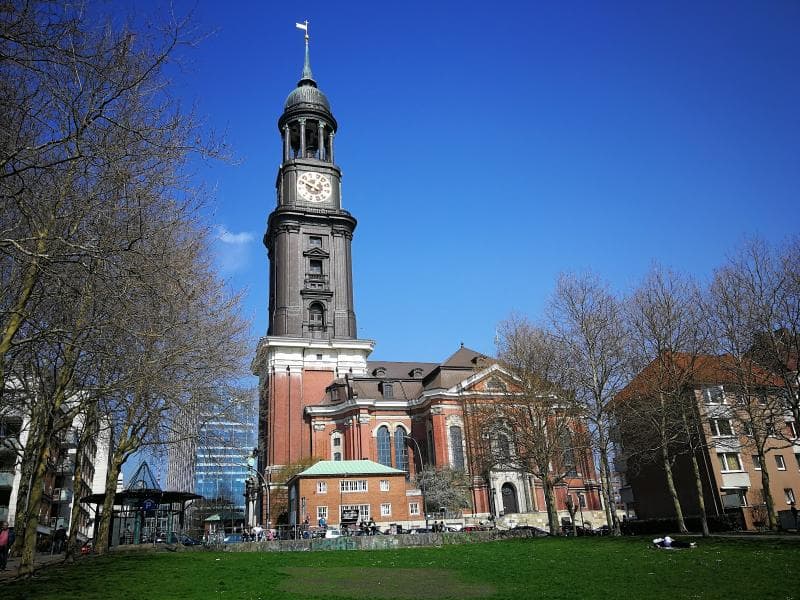
Explore the magnificent Church Nave of St. Michael's Church in Hamburg, Germany. Discover its Baroque architecture, rich history, and cultural significance.
Overview
Stepping into the Church Nave of St. Michael’s Church, affectionately known as 'Michel', in Hamburg, Germany, is to enter a realm of impressive Baroque grandeur and serene spaciousness. This central area of Hamburg’s most famous church immediately conveys a sense of light and openness, a testament to its Protestant design. It is the heart of the sacred space, where worshipers and visitors alike gather to experience the spiritual and architectural marvels of this iconic landmark. The nave's substantial size and elegant design make it a focal point for understanding the church's significance within the Hanseatic city.
With a seating capacity of 2,500 people, the nave of St. Michael's Church is the largest in Hamburg, reflecting its role as a principal church and a gathering place for the community. Its bright, soaring interior, often described as entirely decorated in white and gold, offers a striking contrast to many older, darker European churches, characteristic of its Baroque style. This vast hall, with its monumental altar and impressive pulpit, invites contemplation and admiration, serving as both a house of worship and a symbol of Hamburg's enduring spirit.
History & Cultural Background
The history of St. Michael's Church, and by extension its nave, is one of remarkable resilience. The present church building is actually the third on this site, each incarnation facing destruction and subsequent rebuilding with unwavering determination. The first church, built between 1647 and 1669, was tragically destroyed by a lightning strike in 1750. The second, whose foundation stone was laid in 1751 and largely completed by 1762 following designs by Johann Leonhard Prey and Ernst Georg Sonnin, was inaugurated with an oratorio by Georg Philipp Telemann.
However, this second magnificent structure, including its nave, fell victim to a devastating fire during construction work in 1906. Undeterred, Hamburgers rebuilt the church in its current form, largely replicating the 18th-century design. The third and present church was completed in 1912, though it suffered further damage during the bombings of World War II and underwent extensive restoration. The nave, therefore, embodies centuries of Hamburg's history, reflecting its citizens' perseverance and their deep connection to their principal Protestant church. It was purposefully built as a Protestant church, a distinction from many other Hamburg churches originally constructed by Roman Catholics and later converted during the Reformation.
What Makes It Special
The Church Nave of St. Michael’s stands out for several distinctive features. Its vast size, accommodating 2,500 seats, makes it the largest church interior in Hamburg and one of the finest Hanseatic Protestant Baroque churches. The architectural design, characterized by a Latin cross plan, is notable for its impressive dimensions: 44 meters wide, 52 meters long, and 27 meters high.
The interior's bright and elegant aesthetic, adorned in white and gold, creates an uplifting atmosphere. Dominating the visual landscape of the nave is the twenty-meter-high main altar, crafted from costly marble in 1910. This altar features three sections depicting key scenes from the life of Jesus Christ, with the central image portraying the Resurrection, and a relief of the Last Supper below it. Above, a large crucifix is crowned by a dove symbolizing the Holy Spirit, encircled by a radiant halo and flanked by kneeling angels. The pulpit, centrally located and crafted from marble in 1910 by sculptor Otto Lessing, resembles a rounded chalice and is crowned by the Angel of Annunciation. The nave also houses some of the church's five organs, including a massive Steinmeyer organ with 85 registers, 5 manuals, and 6,674 pipes, enriching the acoustic experience within the grand space.
Stories, Fun Facts & Local Details
The 'Michel' is more than just a church; it is deeply woven into the fabric of Hamburg life and history. One particularly notable detail is that the renowned composer and pianist Johannes Brahms was baptized in this church on May 26, 1833, and later confirmed here. This connection to such a towering figure of classical music adds a layer of cultural significance to the nave, imagining the young Brahms within its walls.
For centuries, the church's tower served as an essential landmark for sailors navigating the Elbe River, guiding them home. While the nave itself is an interior space, its presence as the heart of such a significant maritime beacon reinforces its cultural importance. Locals affectionately refer to St. Michael's as 'Michel', a sign of deep familiarity and pride in this enduring structure. The tradition of a trumpet chorale being played from the tower daily at 10 am and 9 pm (and also at 12 noon on Sundays and public holidays) is another charming local custom that echoes through the city, often audible from within the nave, connecting the interior to the wider city soundscape.
Visitor Perspective
For the curious traveler, visiting the nave of St. Michael’s Church offers a truly immersive experience. Upon entering, the sheer scale and luminous quality of the interior are often the first things to strike a visitor. The clean lines, bright white walls, and gilded accents contribute to an atmosphere that feels both grand and welcoming. Moving through the nave, one can appreciate the thoughtful layout, which directs the eye towards the magnificent altar. The central pulpit, a masterpiece of marble, commands attention, emphasizing its role in the Protestant service.
Many visitors choose to spend time simply sitting in the pews, soaking in the peaceful ambiance and admiring the intricate details of the Baroque architecture. The soundscape is often enhanced by the resonating tones of one of the church's impressive organs, especially during midday performances. This provides a moment of reflection and a deep connection to the living history of the church. The nave serves as a powerful introduction to the 'Michel', preparing visitors for further exploration, such as ascending the tower for panoramic views or delving into the crypt below. It is a space that educates, inspires, and offers a profound sense of Hamburg's cultural and spiritual heritage.
Coordinates: 9.978889, 53.548333
View on Google Maps💬 How Travelers Describe This Place
Based on community votes
Unique
685Photogenic
472Beautiful
446Interesting
399Must See
33
Traveler Stories
Discover memorable experiences shared by travelers who have visited this place.
No traveler stories yet.
Be the first traveler to share what made this place memorable.

Tour
By
Spot
Discover amazing places around the world. Your journey starts here.
Explore
© 2026 TourBySpot. All rights reserved.