Church interior
Milan, Italy
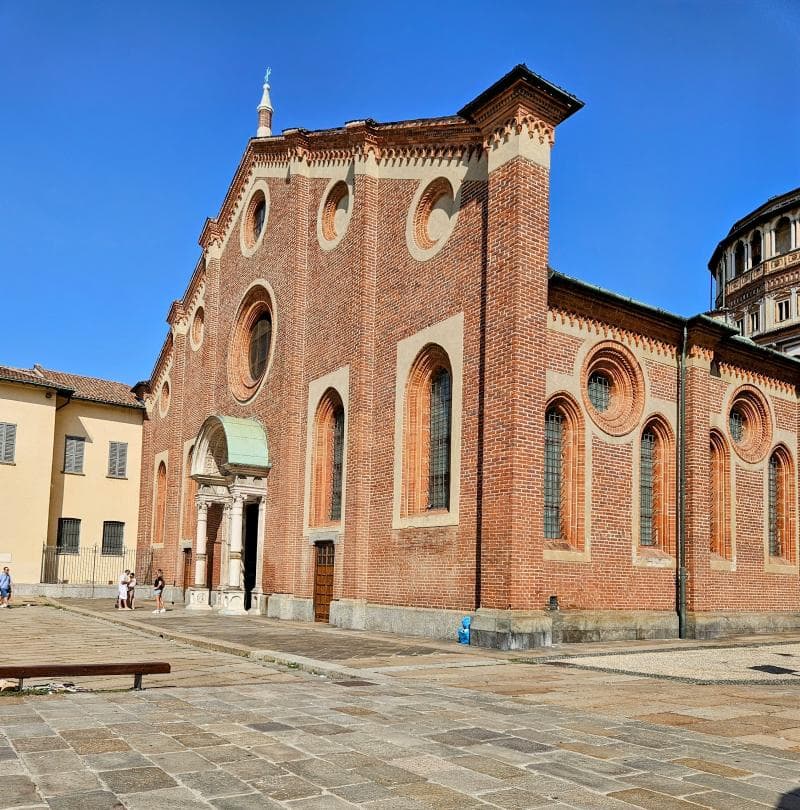
Explore the exquisite Church interior of Santa Maria delle Grazie in Milan, Italy, a UNESCO World Heritage site blending Gothic and Renaissance architecture.
Overview
Stepping inside the Church of Santa Maria delle Grazie in Milan, Italy, offers a profound journey through centuries of art, faith, and architectural innovation. This magnificent Dominican complex, a designated UNESCO World Heritage site, is much more than just the home of Leonardo da Vinci's 'The Last Supper' in its adjacent refectory; the church itself holds a captivating story and an impressive array of artistic and structural wonders. While many flock to witness Leonardo's masterpiece, the church interior provides a serene and historically rich experience, freely accessible to all who wish to explore its hallowed halls. It stands as a testament to Milanese Gothic tradition harmoniously intertwined with the nascent Italian Renaissance, offering visitors a unique blend of two distinct architectural eras within a single sacred space.
History & Cultural Background
The origins of Santa Maria delle Grazie trace back to the mid-15th century when Count Gaspare Vimercati, a commander for Francesco I Sforza, Duke of Milan, donated land to the Dominican friars. Construction commenced in 1463 under the guidance of architect Guiniforte Solari, who designed the initial Gothic structure, including the convent (completed by 1469) and the main body of the church (finished around 1482 or 1490). The church was built on the site of an older chapel dedicated to the Madonna delle Grazie, which inspired the complex's name, meaning 'Holy Mary of Grace.' A significant transformation began in 1492 when Duke Ludovico il Moro, who intended for the church to become a family mausoleum, commissioned Donato Bramante to redesign parts of the complex. Bramante is credited with the revolutionary Renaissance design of the apse, the crossing, and the magnificent dome, elements that contrast beautifully with Solari's earlier Gothic work. Ludovico's wife, Beatrice d'Este, was interred here in 1497. Despite suffering damage during Allied bombardments in 1943, particularly to the convent, the church's Bramante-designed dome remarkably survived intact, and the complex was meticulously restored in the years following the war.
What Makes It Special
The true allure of Santa Maria delle Grazie's interior lies in its fascinating duality of architectural styles. As you step inside, you are enveloped by Solari's late Gothic design, characterized by three solemn naves, pointed arches, and a series of fourteen side chapels. Each chapel, often square in plan, served as a private prayer space and burial site for prominent Milanese families, many adorned with rich frescoes and sculptures. Notably, the Chapel of Santa Caterina features sculptures by Antonello da Messina, while the Chapels of the Adoring Virgin and the Holy Crown showcase frescoes by Gaudenzio Ferrari. Frescoes by Bernardo Zenale, depicting the Resurrection and Passion, along with scenes from the life of St. Catherine, further enrich the artistic tapestry of the church. Moving towards the chancel, the atmosphere shifts dramatically to Bramante's sublime Renaissance vision. Here, the grand dome and meticulously designed apse introduce an era of classical proportion and light, creating a striking visual dialogue between the two distinct periods. The use of local materials, such as earthenware for masonry and granite for the Corinthian-leaf adorned capitals, grounds the monumental structure in its Lombard heritage. Delicate frescoes on the ogival vaults and vibrant stained-glass windows filter light, illuminating the intricate details and contributing to the church's profound sense of spirituality and artistic depth.
Stories, Fun Facts & Local Details
Beyond its grand architecture and art, the Church of Santa Maria delle Grazie is imbued with compelling stories. It began as a tribute to a miraculous image of the Virgin Mary, a belief that spurred its very construction and gave it its evocative name. The ambitious desire of Ludovico il Moro to transform it into a grand dynastic mausoleum, featuring the best architects of his time, speaks volumes about the political and cultural ambitions of Renaissance Milan. While his own sepulchral monument was later moved, his vision profoundly shaped the church's Renaissance elements. Many visitors rush past the church itself, heading directly for the refectory to see 'The Last Supper,' but a true appreciation of the entire complex reveals how the church interior acts as a prelude and complement to Leonardo's masterpiece. The contrasting Gothic and Renaissance sections tell a silent story of evolving artistic tastes and the patronage of powerful figures over time. This architectural dialogue is a 'fun fact' in itself, inviting observers to ponder the shift from the mystical verticality of Gothic to the harmonious Classicism of the Renaissance, all within one building.
Visitor Perspective
For the curious traveler, a visit to the Church of Santa Maria delle Grazie is an enriching and contemplative experience. Unlike the strictly timed and ticketed entry to 'The Last Supper' refectory, the church's interior welcomes visitors freely, offering ample opportunity for unhurried exploration. Plan for at least an hour to truly absorb the atmosphere and appreciate the numerous chapels, artworks, and architectural nuances. The peaceful ambiance provides a welcome respite from the bustling Milanese streets, encouraging reflection and an intimate connection with centuries of history and devotion. Located within a walkable distance from other major Milanese landmarks like the Duomo and Castello Sforzesco, it's also easily accessible via Milan's efficient metro and tram systems, making it a convenient and deeply rewarding addition to any itinerary. To stand beneath Bramante's dome, gaze upon the vibrant frescoes, and walk the same aisles as countless Milanese before you, is to touch the very soul of this historic city.
Coordinates: 9.17111, 45.46583
View on Google Maps💬 How Travelers Describe This Place
Based on community votes
Interesting
733Unique
642Must See
409Photogenic
375Beautiful
12
Traveler Stories
Discover memorable experiences shared by travelers who have visited this place.
No traveler stories yet.
Be the first traveler to share what made this place memorable.

Tour
By
Spot
Discover amazing places around the world. Your journey starts here.
Explore
© 2026 TourBySpot. All rights reserved.