Christian VII Palace
Copenhagen, Denmark
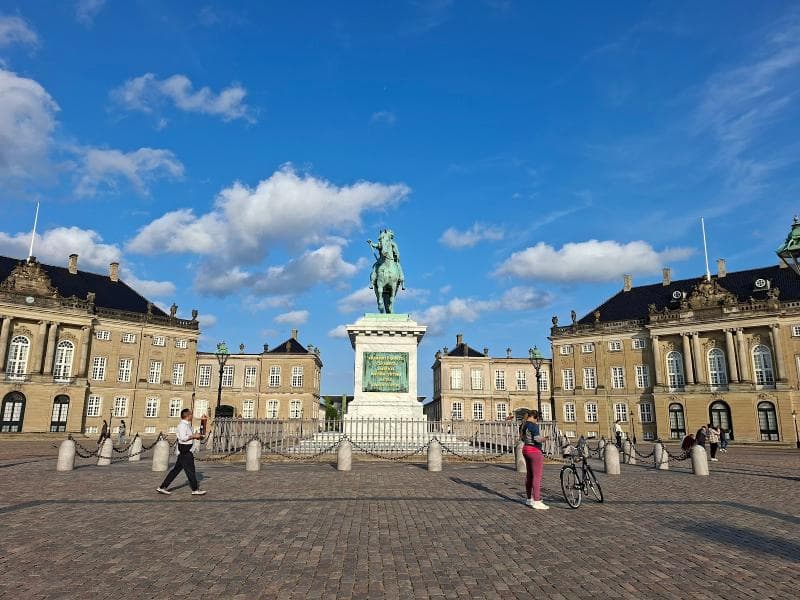
Explore Christian VII's Palace, Moltke's Palace, a stunning Rococo gem within Amalienborg Palace in Copenhagen, Denmark. Discover its royal history and opulent interiors.
Overview
Christian VII's Palace, also known historically as Moltke's Palace, stands as a magnificent testament to Rococo architecture within the iconic Amalienborg Palace complex in Copenhagen, Denmark. Originally constructed for a prominent nobleman, this palace later became an integral part of the Danish royal residence. Today, while not a private residence for the reigning monarch, it serves a crucial role in Danish royal life, primarily hosting official functions, gala dinners, and accommodating distinguished guests. Its stately presence and historical grandeur offer a glimpse into centuries of royal tradition and refined elegance in the heart of the Danish capital.
History & Cultural Background
The story of Christian VII's Palace begins in the mid-18th century, a period marked by grand urban planning in Copenhagen. Commissioned by King Frederik V, the entire Frederiksstaden district, including Amalienborg, was laid out to commemorate the 300th anniversary of the Oldenburg royal house. The land for the four identical palaces around the octagonal Amalienborg Square was granted to four noble families, who were tasked with building structures adhering to architect Nicolai Eigtved's precise designs.
Christian VII's Palace was the first of these four palaces to be completed, built between 1750 and 1754 for Lord High Steward Adam Gottlob Moltke. It was renowned as the most expensive and sumptuously decorated of the four original mansions. The shift from aristocratic residence to royal palace occurred dramatically in 1794. Following a devastating fire that destroyed Christiansborg Palace, the royal family found themselves without a home. They promptly acquired Moltke's Palace (and another) and moved into Amalienborg, establishing it as their primary residence. Named after King Christian VII, who reigned during this period, the palace subsequently housed various members of the royal family and served diverse functions, including accommodating the Royal Household and even parts of the Ministry of Foreign Affairs in the 19th century.
What Makes It Special
Christian VII's Palace stands out not just for its historical significance but also for its exceptional artistic and architectural merit. Designed in the elegant Rococo style by Nicolai Eigtved, the palace's exterior boasts the characteristic symmetry and grace of the era. However, it is its interiors that truly captivate. The palace is celebrated for having some of the finest Danish Rococo interiors, particularly its Great Hall, known as Riddersalen (the Knight's Hall).
This magnificent hall features exquisite wood carvings (boiseries) by Louis August le Clerc, paintings by the renowned French artist François Boucher, and intricate stucco work by Giovanni Battista Fossati. These elements combine to create an opulent and harmonious space, reflecting the pinnacle of 18th-century decorative art. Beyond its aesthetic appeal, the palace's special status derives from its continued role as the backdrop for significant state occasions and royal hospitality. When world leaders, ambassadors, or other important guests visit the Danish royal family, they are often welcomed and entertained within these historic walls, making it a living part of Denmark's diplomatic and cultural heritage.
Stories, Fun Facts & Local Details
Delving deeper into Christian VII's Palace reveals fascinating anecdotes and unique details. Adam Gottlob Moltke, its original owner, was a highly influential figure with a remarkably large family, reportedly fathering 22 sons who mostly entered public service. The fact that this palace was the most expensive of the four Amalienborg mansions to build highlights Moltke's wealth and status, as well as the ambition behind its design.
In more recent times, Christian VII's Palace has had surprisingly diverse uses beyond its grand ceremonial role. Between 1971 and 1975, it even housed a small kindergarten for the young Crown Prince Frederik (the current King) and Prince Joachim, with a schoolroom later established there for them. This blend of grand history and charming domesticity adds a unique layer to its story. While the Amalienborg Museum, which offers insights into royal life, is located in Christian VIII's Palace, Christian VII's Palace occasionally opens its doors to the public, offering rare opportunities to experience its lavish rooms and imagine the historical events that unfolded within.
Visitor Perspective
For a curious traveler, experiencing Christian VII's Palace offers a unique encounter with Danish royal history and art. It is important to note that unlike Christian VIII's Palace, which permanently houses the Amalienborg Museum, Christian VII's Palace is primarily a working royal venue for official functions and is therefore not always open to the public.
However, when the palace is open for tours, usually on a limited or seasonal basis, it provides an unparalleled opportunity to step inside and explore its magnificent Rococo interiors. Visitors can marvel at the elaborate Great Hall and other richly decorated rooms, gaining a profound appreciation for the artistic craftsmanship of the 18th century and the royal lifestyle. These guided tours allow an intimate look at spaces where kings and queens have hosted dignitaries for centuries, providing a tangible connection to Denmark's regal past. Keeping an eye on the official royal family website or local tourism guides for specific opening periods is highly recommended for anyone hoping to tour this extraordinary part of Amalienborg.
Coordinates: 12.59333, 55.684028
View on Google Maps💬 How Travelers Describe This Place
Based on community votes
Beautiful
981Unique
617Interesting
357Photogenic
147Must See
28
Traveler Stories
Discover memorable experiences shared by travelers who have visited this place.
No traveler stories yet.
Be the first traveler to share what made this place memorable.

Tour
By
Spot
Discover amazing places around the world. Your journey starts here.
Explore
© 2026 TourBySpot. All rights reserved.