Choir Area
Lyon, France
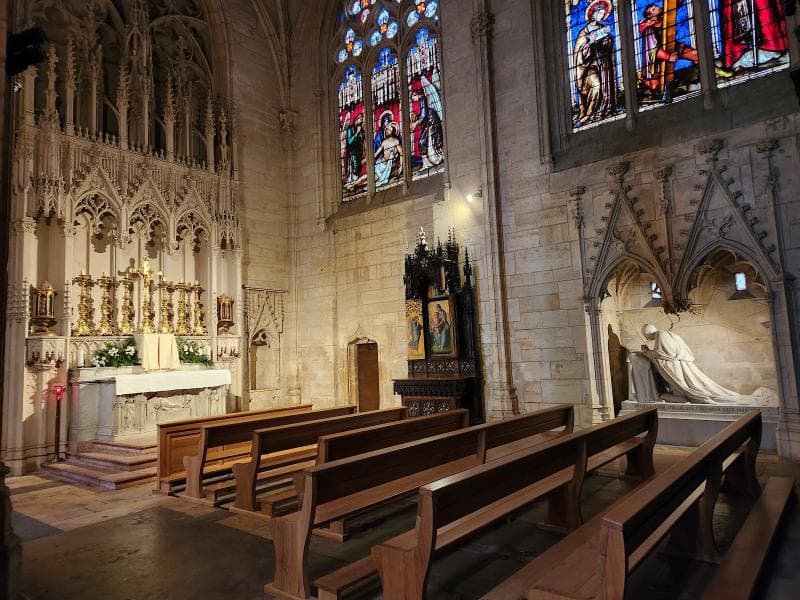
Explore the historic Choir Area of Cathédrale Saint-Jean-Baptiste in Lyon, France. Discover its Romanesque architecture, ancient crosses, and rich cultural past.
Overview
Nestled within the ancient stones of the Cathédrale Saint-Jean-Baptiste in Lyon, France, the Choir Area stands as a testament to centuries of unwavering faith and remarkable artistry. This revered section of the cathedral, dating back to its earliest phases of construction, offers a profound glimpse into Lyon's rich ecclesiastical history and architectural evolution. As a vital part of this UNESCO World Heritage site, the Choir Area is not merely an architectural space; it is a living chronicle, whispering tales of Romanesque design amidst a predominantly Gothic edifice.
Unlike the soaring Gothic nave and façade that were developed later, the Choir and its adjacent apse proudly exhibit the robust and dignified characteristics of Romanesque architecture. It is here that the spiritual heart of the cathedral beats, where religious ceremonies have unfolded for generations, and where visitors can feel the palpable weight of history. The space is defined by its sturdy construction and evocative details, inviting contemplation and admiration for the skilled artisans who shaped its form centuries ago.
History & Cultural Background
The Cathédrale Saint-Jean-Baptiste, often simply called Lyon Cathedral, traces its origins to the 12th century, with construction beginning around 1180 on the foundations of earlier 6th-century churches. The Choir Area represents the oldest surviving part of this magnificent structure, a starting point from which the rest of the cathedral progressively emerged over nearly three centuries until its completion around 1476. This extended construction period resulted in a fascinating blend of styles, with the Choir and apse retaining their original Romanesque character, providing a stark yet harmonious contrast to the later Gothic elements found in the nave and façade.
Culturally, the cathedral, and especially its Choir, has been a central hub for religious and political life in Lyon. It has served as the seat of the Archbishop of Lyon, who, since 1079, has held the prestigious title of 'Primate of All the Gauls', signifying legal supremacy over other archbishops in the kingdom. This status meant the cathedral was a venue for significant historical events, including two ecumenical councils in 1245 and 1274, where major decisions shaping medieval Christendom were made.
What Makes It Special
The Choir Area's distinct Romanesque design is its primary special characteristic. While the eye is often drawn to the dramatic verticality of Gothic cathedrals, the Choir of Saint-Jean-Baptiste offers a quieter, more grounded aesthetic. Its thick walls, rounded arches, and sense of solidity speak to an earlier era of church building, emphasizing strength and permanence. This architectural contrast within a single building is a rare and compelling feature, allowing visitors to visually trace the evolution of medieval architectural thought.
Within this sacred space, two historic crosses flank the altar, remarkable relics that have been preserved since the Second Council of Lyon in 1274. They stand as enduring symbols of the union of churches, a powerful historical reminder embedded directly within the fabric of the building. Furthermore, the Choir is adorned with beautiful 13th-century stained glass windows, which, despite the passage of time, continue to filter light into the interior, casting vibrant hues and adding to the ethereal atmosphere. The grandeur of the space is further enhanced by the impressive cathedral organ, installed near the apse in 1841 and later rebuilt, its pipes soaring upwards, ready to fill the ancient stones with music during services.
Stories, Fun Facts & Local Details
- A Blend of Eras: Imagine walking from the 12th century into the 15th century in just a few steps. The transition from the Romanesque Choir to the Gothic nave is a subtle yet profound architectural journey within the same structure, a visual timeline of a cathedral built across 300 years.
- The Archbishop's Seat: For centuries, the Archbishop of Lyon has been known as the 'Primate of All the Gauls.' This powerful title, granted by Pope Gregory VII in 1079, highlights Lyon's historical importance as a religious center and underscores the significant events that have unfolded in the Choir, from papal elections to royal ceremonies.
- Silent Witnesses: The two crosses flanking the altar are not just decorative; they are tangible links to a pivotal moment in Christian history. Their presence since the 1274 Council evokes the solemn agreements and spiritual unity they represent, inviting reflection on the deeper meaning of the space.
- An Ancient Musical Heart: The organ situated near the Choir has been the musical voice of the cathedral for over 180 years, contributing to the spiritual ambiance and accompanying countless liturgies. Though rebuilt, its essence echoes the centuries of sacred music that have resonated through these walls.
Visitor Perspective
Approaching the Choir Area, visitors are invited to slow down and absorb the distinct atmosphere of this ancient core. The Romanesque lines provide a sense of stability and historical depth, offering a counterpoint to the more ornate Gothic sections of the cathedral. It's a place where you can almost hear the echoes of medieval chants and imagine the solemn processions that have graced its aisles for hundreds of years. Respectful quiet is encouraged, particularly as the cathedral remains an active place of worship.
Observe the architectural details, the strength of the pillars, and the subtle interplay of light through the old stained glass. Take a moment to appreciate the enduring presence of the 1274 crosses and consider the profound history they embody. The Choir Area is more than just a section of a building; it's a doorway to Lyon's spiritual heritage, a space where past and present converge in quiet reverence. It offers a unique opportunity to connect with the deep roots of Christian tradition in France, all within the majestic setting of one of Lyon's most treasured landmarks.
Coordinates: 4.8275, 45.76056
View on Google Maps💬 How Travelers Describe This Place
Based on community votes
Unique
998Photogenic
903Interesting
481Must See
472Beautiful
92
Traveler Stories
Discover memorable experiences shared by travelers who have visited this place.
No traveler stories yet.
Be the first traveler to share what made this place memorable.

Tour
By
Spot
Discover amazing places around the world. Your journey starts here.
Explore
© 2026 TourBySpot. All rights reserved.