Chinese Tower
Munich, Germany
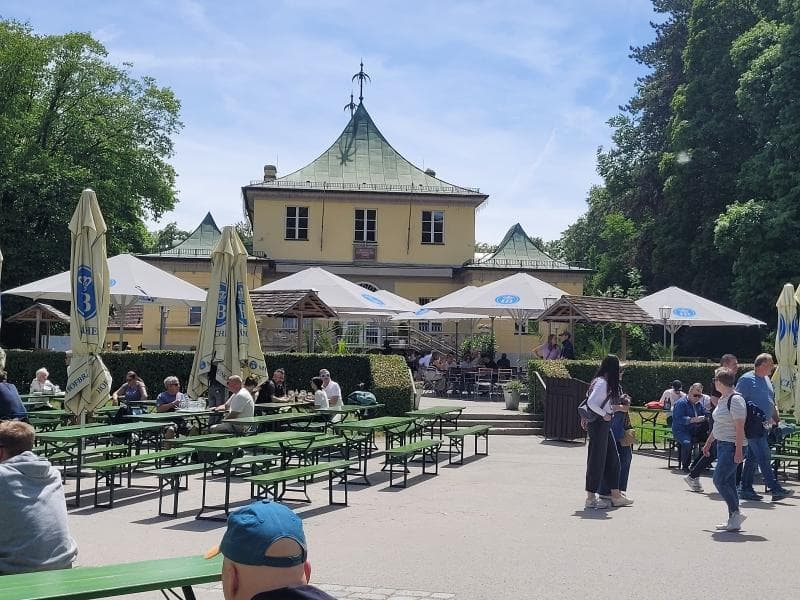
Discover the iconic Chinese Tower in Munich's English Garden, a historic pagoda-style landmark and home to a vibrant Bavarian beer garden. Explore its unique history and cultural events.
Overview
Nestled within the sprawling expanse of Munich's English Garden, the Chinese Tower, or 'Chinesischer Turm' in German, stands as a distinctive landmark. This 25-meter-high wooden pagoda-style structure is not only an architectural curiosity but also the vibrant heart of one of Munich's most beloved beer gardens. It serves as a central gathering point, drawing both locals and international visitors to its lively atmosphere. The tower's unique design and historical significance make it an unmissable stop for anyone exploring the vast urban park.
History & Cultural Background
The Chinese Tower was constructed between 1789 and 1790 by Johann Baptist Lechner, based on a design by Joseph Frey. Its creation was part of the broader vision for the English Garden, conceived by Benjamin Thompson (Count Rumford) and further developed by landscape architect Friedrich Ludwig von Sckell, who aimed to create a versatile and internationally inspired oasis. The tower's design was inspired by the 'Great Pagoda' in London's Royal Botanic Gardens at Kew, which itself drew influence from a porcelain pagoda in Beijing. Upon the English Garden's official opening in 1792, the Chinese Tower initially served as an observation deck, offering panoramic views of the then-less-treed park. This architectural style, known as Chinoiserie, was highly fashionable in Europe during the late 18th century, symbolizing a romanticized fascination with East Asian culture. Tragically, the original wooden tower suffered repeated fire damage throughout its history, most notably being completely destroyed in a white phosphorus attack during the bombing of Munich on June 13, 1944, near the end of World War II. However, a testament to its cultural importance, the tower was meticulously reconstructed in its original style between 1951 and 1952, reopening ceremonially on September 6, 1952.
What Makes It Special
What truly sets the Chinese Tower apart is its captivating blend of East Asian aesthetics within a quintessentially Bavarian setting. This 25-meter, five-story wooden structure is surrounded by Munich's second-largest beer garden, capable of seating up to 7,000 guests, making it a bustling social hub. A defining feature is the continuous live brass band music played from the tower itself, adding an authentic soundtrack to the communal beer garden experience. While the tower served as an observation platform historically, it has been closed to public access since the 1970s for safety reasons, with only the performing musicians allowed inside. Adjacent to the tower, a charming reconstructed carousel, dating back to the Biedermeier period, offers nostalgic rides, enhancing the family-friendly appeal of the area.
Stories, Fun Facts & Local Details
The Chinese Tower is not just a structure; it's a stage for rich local traditions and vibrant community events. Perhaps the most famous of these is the annual Kocherlball, a historic dance event held on the third Sunday of July. Thousands of early risers, many dressed in traditional Bavarian costumes, gather before dawn for this unique outdoor ball, which begins at 5:30 AM and runs until 10:00 AM. This tradition dates back to the Biedermeier era when servants and other working people, who had their day off early Sunday mornings, would meet to dance. Beyond the Kocherlball, the area around the tower transforms into a festive Christmas market during the winter months. In earlier times, the site was home to a 'Chinese Inn' with amenities like a bowling alley and dance floor, reflecting its long history as a place of entertainment. Visitors can also enjoy horse-drawn carriage rides that start from the tower, offering a charming way to explore the southern section of the English Garden.
Visitor Perspective
Visiting the Chinese Tower offers an immersive experience into Munich's relaxed yet lively outdoor culture. As a traveler, you'll find yourself amidst a diverse crowd, enjoying traditional Bavarian specialties like 'Hendl' (roasted chicken), 'Steckerlfisch' (grilled fish on a stick), 'Schweinshaxn' (roasted pork knuckle), and 'Obatzda', all paired with freshly tapped Hofbräu beer. The self-service nature of the beer garden encourages a laid-back, communal atmosphere, making it easy to strike up conversations. Getting to the Chinese Tower is convenient, with several public transport options available, including bus lines that stop directly at the tower, or a pleasant walk from subway or tram stops. It's an ideal spot to relax under shady chestnut trees, soak in the festive atmosphere, and listen to the brass band music. After enjoying the beer garden's delights, the extensive pathways of the English Garden invite further exploration, offering a perfect blend of natural beauty and cultural immersion.
Coordinates: 11.592314, 48.15204
View on Google Maps💬 How Travelers Describe This Place
Based on community votes
Beautiful
839Photogenic
445Must See
388Unique
289Interesting
141
Traveler Stories
Discover memorable experiences shared by travelers who have visited this place.
No traveler stories yet.
Be the first traveler to share what made this place memorable.

Tour
By
Spot
Discover amazing places around the world. Your journey starts here.
Explore
© 2026 TourBySpot. All rights reserved.