Charles De Gaulle Entrance
Bucharest, Romania
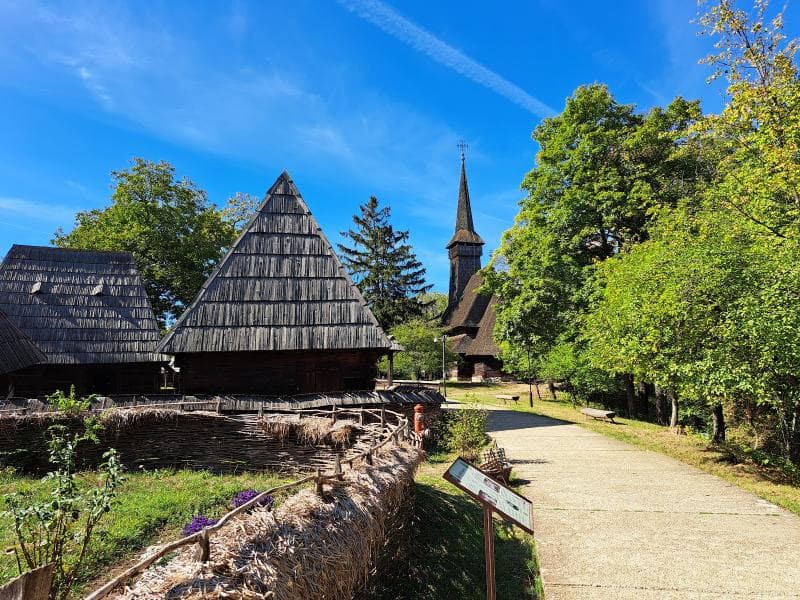
Explore Bucharest's Charles de Gaulle Entrance, a historic square and iconic gateway to King Mihai I Park, Romania, rich in history and culture.
Overview
The Charles de Gaulle Entrance serves as a grand gateway to King Mihai I Park, one of Bucharest, Romania's most expansive and beloved green spaces. Situated in the city's northern sector, this vibrant square, officially known as Piața Charles de Gaulle, is more than just a park entrance; it is a significant urban landmark. Dominated by an impressive bronze statue of General Charles de Gaulle, the square blends historical gravitas with the natural beauty of the park. It acts as a bustling intersection for major boulevards and a tranquil prelude to the vast recreational areas beyond its limits. Visitors are drawn here not only for access to the park's serene landscapes but also to appreciate the square's unique cultural and historical resonance in the heart of the Romanian capital.
History & Cultural Background
The history of Charles de Gaulle Square is a compelling narrative reflecting Romania's tumultuous 20th century. Originally known as Piața Jianu, named after the local hero Iancu Jianu, it underwent several dramatic transformations. During World War II, the square was renamed Piața Adolf Hitler, a stark reminder of Romania's alignment during that period. Following the war and the rise of communism, it became Piața Generalissim I.V. Stalin, where an imposing statue of the Soviet leader stood from 1951 until its removal in 1962. The daring removal of Stalin's monument occurred overnight, reportedly with the aid of tanks and bulldozers, signifying Romania's gradual political distancing from Moscow. Briefly renamed Piața Aviatorilor, the square finally received its current designation, Piața Charles de Gaulle, in the late 1990s. This renaming symbolized Romania's post-1989 diplomatic openness and reinforced strong historical and cultural ties with France. The current statue of General Charles de Gaulle, unveiled in 2006 during the Francophonie Summit, stands proudly as a testament to this enduring friendship.
What Makes It Special
The Charles de Gaulle Entrance distinguishes itself through a unique confluence of monumental art, historical depth, and its role as a vibrant urban hub. Unlike a simple park entrance, it serves as a powerful symbol of Franco-Romanian relations and a gateway to Bucharest's largest green oasis, King Mihai I Park. The square itself is a living museum, where the very ground beneath your feet holds layers of history, from its pre-war origins to its communist-era transformations and its present-day European identity. The 4.6-meter bronze statue of Charles de Gaulle, crafted by Mircea Spătaru, is a commanding presence, capturing the essence of the French statesman and becoming a beloved landmark. Furthermore, the square features the abstract 'Millennium Cross' sculpture by Paul Neagu, adding a contemporary artistic dimension. Its strategic location connects several important boulevards and is in close proximity to the iconic Arcul de Triumf and the renowned Dimitrie Gusti National Village Museum, making it a focal point for both local life and tourism.
Stories, Fun Facts & Local Details
Beyond its official history, the Charles de Gaulle Entrance holds intriguing stories and local quirks. The striking bronze statue of Charles de Gaulle, while formally recognizing the French leader's significance, has earned an affectionate, informal nickname among some locals: 'Ospătaru', meaning 'The Waiter'. This humorous moniker stems from the statue's pose, which some interpret as resembling a waiter descending steps with a napkin draped over his arm. This playful interpretation adds a touch of local charm to an otherwise grand monument. The dramatic removal of the colossal Stalin statue in 1962—an operation executed under the cover of night using military hardware—is a gripping tale often recounted, illustrating a pivotal moment in Romania's break from Soviet influence. The square's constant evolution, from bearing names like Adolf Hitler and Stalin to its current designation, underscores Bucharest's resilience and its journey through complex political landscapes. These layers of narrative, from the solemn to the subtly humorous, enrich the visitor's understanding and appreciation of this important Bucharest landmark.
Visitor Perspective
For a curious traveler, the Charles de Gaulle Entrance offers a rich, multi-faceted experience. It serves as an ideal starting point for exploring the vast King Mihai I Park, whether you seek a leisurely stroll along Lake Herăstrău, a visit to the open-air Village Museum, or simply a tranquil escape from urban bustle. The square's accessibility, with the Aviatorilor metro station directly beneath, makes it a convenient stop on any Bucharest itinerary. As you stand amidst the bustling traffic and the grandeur of the statue, you can sense the layers of history that have shaped this city. It is a place for quiet reflection on Romania's past, a vibrant hub of modern life, and a picturesque threshold to one of Europe's largest urban parks. Whether your interest lies in history, culture, or simply enjoying green spaces, the Charles de Gaulle Entrance provides a meaningful and memorable introduction to northern Bucharest.
Coordinates: 26.087247, 44.465168
View on Google Maps💬 How Travelers Describe This Place
Based on community votes
Unique
934Must See
879Beautiful
741Interesting
276Photogenic
30
Traveler Stories
Discover memorable experiences shared by travelers who have visited this place.
No traveler stories yet.
Be the first traveler to share what made this place memorable.

Tour
By
Spot
Discover amazing places around the world. Your journey starts here.
Explore
© 2026 TourBySpot. All rights reserved.