Chapel Of The Maccabees
Geneva, Switzerland
Discover the Chapel of the Maccabees inside St. Pierre Cathedral, Geneva, Switzerland – a vibrant Neo-Gothic masterpiece.
Overview
Tucked away within the austere walls of St. Pierre Cathedral in Geneva, Switzerland, lies a hidden jewel of vibrant color and intricate detail: the Chapel of the Maccabees. This striking chapel offers a captivating contrast to the otherwise sober Protestant interior of the main cathedral, beckoning curious travelers to step back in time and marvel at its unexpected splendor. Located in the cathedral's south-west wing, it's a testament to centuries of change, from a lavish funerary chapel to a functional warehouse and academic lecture hall, before its eventual restoration to a Neo-Gothic masterpiece. Today, it stands as a unique historical and artistic highlight, hosting concerts and ceremonies, inviting visitors to experience its rich past and stunning aesthetics.
History & Cultural Background
The Chapel of the Maccabees was originally constructed in the early 15th century, specifically between 1397 and 1406, as a funerary chapel for Cardinal Jean de Brogny and his family. De Brogny was a powerful churchman who served under Pope Clement VII. The chapel's name, 'Maccabees', is quite unusual for a Christian place of worship, likely referring to the seven Hebrew martyrs mentioned in the biblical Book of Maccabees. This choice hints at the complex cross-cultural connections prevalent in medieval Swiss religious spaces.
Its destiny took a drastic turn during the Reformation in the 16th century, a period marked by significant religious upheaval in Geneva led by figures like John Calvin. With the shift from Catholicism to Protestantism, the chapel was stripped of its Catholic adornments and repurposed. It served a rather mundane, yet essential, role as a warehouse for salt and gunpowder. By the late 17th century, it found new utility as an auditorium for philosophy lectures, an academic function for the Academy, a predecessor to the University of Geneva. During this time, practical internal floors were even added to accommodate larger audiences.
However, the 19th century brought a renewed appreciation for historical preservation. Beginning around 1878, the chapel underwent an extensive Neo-Gothic restoration, aiming to revive its original grandeur. This comprehensive work, completed around 1888-1889, meticulously reproduced the original frescoes and redecorated the chancel vault with a celestial chorus theme, echoing its glorious past before the austerity of the Reformation.
What Makes It Special
What truly sets the Chapel of the Maccabees apart is its astonishing visual richness, a stark and deliberate contrast to the main cathedral's pared-down Calvinist interior. While the cathedral's nave embodies a deliberate plainness, emphasizing the spoken word over visual splendor, the chapel explodes with color, painted vaults, heraldry, and vibrant stained glass. This visual opulence offers a rare glimpse into the medieval Catholic aesthetic that the Reformation actively sought to suppress.
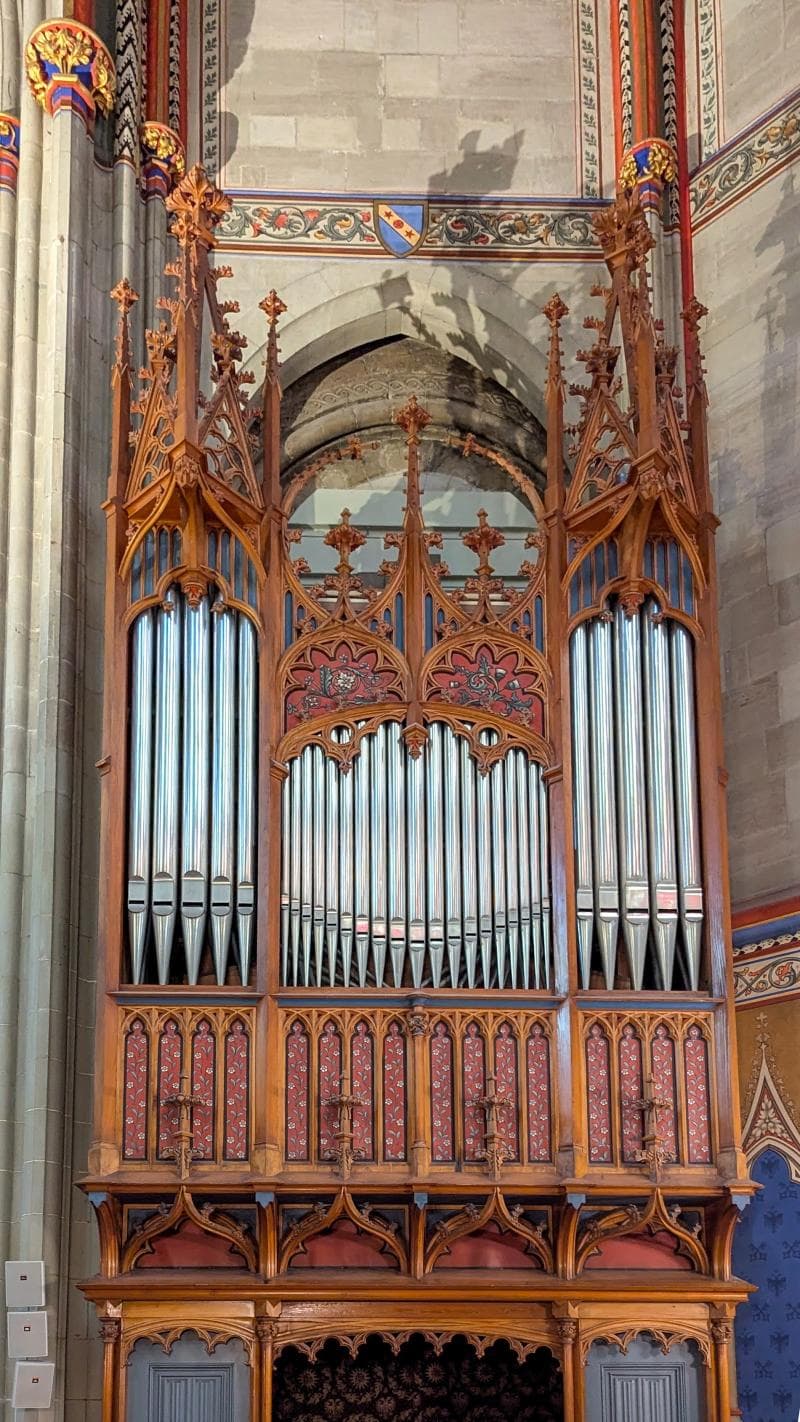
Visitors are immediately struck by the colorful arches and a high ceiling painted in shades of blue and pink, adorned with angels. The sunlight filtering through the stained-glass windows casts a magical, ever-changing play of hues across the interior, creating an enchanting atmosphere. Another remarkable feature is the gilded pulpit, intricately carved with sculptures of an angel, an eagle, a winged lion, and a winged horse, symbols that once represented the Medieval Royal Houses that patronized the chapel. Furthermore, a historic Walcker organ, installed in 1889 directly above Cardinal de Brogny's tomb, contributes to the chapel's unique character and acoustic appeal, making it a favored venue for musical performances.
Stories, Fun Facts & Local Details
One fascinating aspect of the Chapel of the Maccabees is its remarkable resilience and adaptability. Its survival through centuries of profound religious and political shifts is a story in itself. From being a sacred tomb to a mundane storage facility for gunpowder, and then a center for philosophical discourse, its transformations reflect the dynamic history of Geneva. The name 'Maccabees', while unusual for a Christian chapel, highlights a period when different religious traditions occasionally intersected, creating spaces with unique cultural references.
During its use as an academic space, the addition of multiple interior floors was a purely practical measure, transforming the grand religious architecture into a multi-story lecture hall, a testament to the pragmatism that sometimes trumped sacred design. The 19th-century Neo-Gothic restoration wasn't just a physical repair; it was an act of recovering and celebrating Geneva's medieval artistic heritage, creating a 'restored memory' rather than a perfectly preserved original. Today, attending a concert within its vibrant walls offers a chance to experience its exceptional acoustics and immerse oneself in its unique ambiance, where history, art, and music converge.
Visitor Perspective
For any traveler exploring Geneva's Old Town, a visit to the Chapel of the Maccabees within St. Pierre Cathedral is an essential and rewarding experience. While the main cathedral inspires with its Reformation-era gravitas, the chapel provides a delightful and unexpected burst of artistic expression. The journey through ancient cobblestone pathways to reach St. Pierre Cathedral sets the stage for a visit filled with historical discovery.
Entry to the chapel is typically free, allowing ample opportunity to linger and absorb the intricate details of its architecture and artwork. It's often recommended to visit on a sunny day, as the natural light enhances the beauty of the stained-glass windows, illuminating the colorful frescoes and sculptures in a truly magical way. Take your time to gaze at the ornate ceiling, admire the gilded pulpit, and consider the layers of history embedded in its very structure. The chapel also serves as a venue for contemporary events, including concerts and weddings, offering a chance to see this historic space alive with modern activity. Its accessibility and visual impact make it a memorable highlight, standing as a vivid symbol of Geneva's rich and multifaceted past.
Coordinates: 6.1485083, 46.2011047
View on Google Maps💬 How Travelers Describe This Place
Based on community votes
Interesting
685Unique
446Photogenic
399Must See
152Beautiful
33
Traveler Stories
Discover memorable experiences shared by travelers who have visited this place.
No traveler stories yet.
Be the first traveler to share what made this place memorable.

Tour
By
Spot
Discover amazing places around the world. Your journey starts here.
Explore
© 2026 TourBySpot. All rights reserved.