Changling Tomb
Beijing, China
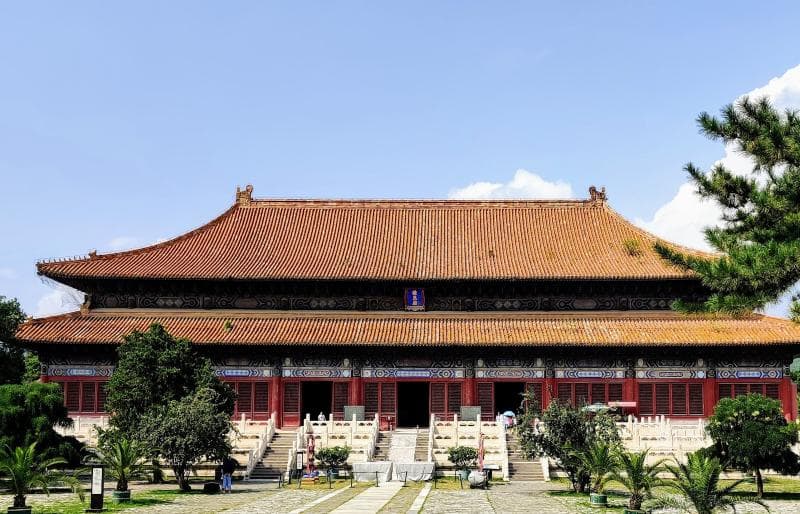
Explore Changling Tomb, the grandest and best-preserved Ming Dynasty imperial mausoleum in Beijing, China, burial site of the Yongle Emperor.
Overview
Nestled amidst the serene Tianshou Mountains in Beijing, China, Changling Tomb stands as a profound testament to the grandeur and imperial legacy of the Ming Dynasty. As the most magnificent and best-preserved among the Thirteen Ming Tombs, this sacred site offers a captivating journey into China's rich historical past. It is the final resting place of Emperor Zhu Di, famously known as the Yongle Emperor, and his esteemed Empress Xu. Changling is not merely a tomb; it is an expansive architectural marvel covering approximately 120,000 square meters, meticulously designed to reflect ancient Chinese cosmological beliefs.
Visitors to Changling Tomb are invited to explore a sprawling complex featuring impressive gates, courtyards, and a majestic palace. Unlike many other imperial tombs, the ground structures of Changling have been remarkably preserved, offering a rare glimpse into the ceremonial architecture of the Ming era. It serves as a vital cultural landmark, inviting travelers to immerse themselves in the stories of an empire that profoundly shaped China's destiny.
History & Cultural Background
Changling Tomb marks the dawn of the Ming Tombs complex, as its construction commenced in 1409, making it the first mausoleum built for a Ming emperor in this valley. Emperor Zhu Di, the third ruler of the Ming Dynasty, selected this auspicious site in accordance with meticulous Feng Shui principles, believing it to be the perfect location for an imperial resting place to ensure good fortune for his dynasty. His reign, from 1402 to 1424, was a pivotal period during which he moved the capital from Nanjing to Beijing and commissioned the construction of the iconic Forbidden City. The construction of Changling itself was an immense undertaking, spanning 18 years and reaching completion in 1427.
This mausoleum is a joint burial site for Emperor Yongle and his Empress Xu. The layout of the tomb, with its square front and round back, embodies the ancient Chinese philosophical concept of 'heaven is round, earth is square,' a belief that influenced much of imperial architecture and thought. While the first Ming Emperor was buried in Nanjing, Yongle's decision to establish his tomb here set the precedent for twelve subsequent Ming emperors to choose this valley as their eternal abode, collectively forming the UNESCO World Heritage-listed Ming Tombs.
What Makes It Special
Changling Tomb distinguishes itself through its sheer scale and the exceptional preservation of its above-ground structures, particularly the awe-inspiring Blessing and Grace Palace (Ling'en Palace). This palace is a unique architectural masterpiece, recognized as the only surviving tomb palace from the Ming Dynasty built entirely of precious camphor wood. Its grand hall is supported by sixteen colossal camphor pillars, some reaching up to 13 meters in height and over a meter in diameter, creating an interior space of profound majesty. The vibrant, colorfully painted ceiling and the floor paved with 'golden bricks' further underscore its imperial splendor.
Beyond the architectural prowess, the intricate stone carvings found throughout the complex are remarkable. Visitors can admire dragon-head-shaped stone drainages and magnificent bas-reliefs depicting mythical creatures like seahorses leaping through waves, with dragons soaring above chasing fire beads. These artistic details not only showcase exquisite craftsmanship but also convey deep symbolic meaning within Chinese culture. The fact that Changling's underground palace remains unexcavated, its secrets untouched, adds an air of enduring mystery that sets it apart from other tombs like Dingling, which has been fully explored.
Stories, Fun Facts & Local Details
The history of Changling is interwoven with fascinating stories and cultural nuances. Emperor Yongle, a ruler of immense ambition, was not only responsible for the Ming Tombs but also for commissioning the vast literary compilation known as the 'Great Dictionary of Yongle' and dispatching Admiral Zheng He on his legendary maritime expeditions across Asia and Africa. A poignant detail connected to the tomb concerns the burial practices of the era: sixteen of Yongle's concubines were interred with him, some reportedly forced to hang themselves to accompany the emperor into the afterlife. This grim practice was later abolished during the reign of the Zhengtong Emperor, marking a significant shift in imperial customs.
Despite its prominence, the exact location of Emperor Yongle's burial chamber within the unexcavated underground palace remains a mystery, as excavation was forbidden. Interestingly, during initial archaeological surveys in the 1950s, Changling was the intended target for excavation due to its significance. However, difficulties in locating its entrance led archaeologists to shift their focus to the smaller Dingling Tomb instead. The construction of Ling'en Hall is also a marvel, built without a single iron nail, showcasing advanced ancient Chinese woodworking techniques.
Visitor Perspective
Visiting Changling Tomb offers a unique historical and cultural experience. It is one of the three Ming Tombs currently open to the public, and many suggest starting your exploration here after experiencing the solemn beauty of the Sacred Way, which leads to the tomb complex. As you walk through the successive courtyards and approach the towering gates, you can almost feel the weight of centuries of history. The sheer scale of the architecture, particularly the Ling'en Palace, provides a powerful sense of the imperial power it once represented.
Unlike the excavated Dingling Tomb, where visitors can descend into the underground palace, Changling offers an experience focused on its grand above-ground structures and the artifacts displayed within the Ling'en Palace. Here, you can ponder the lives of the emperors and empresses, marvel at the ancient craftsmanship, and reflect on the enduring legacies of the Ming Dynasty. The peaceful surroundings of the Tianshou Mountains add to the contemplative atmosphere, making a visit to Changling Tomb a profoundly moving journey through China's imperial past.
Coordinates: 116.24318, 40.301433
View on Google Maps💬 How Travelers Describe This Place
Based on community votes
Interesting
953Beautiful
695Photogenic
658Must See
396Unique
22
Traveler Stories
Discover memorable experiences shared by travelers who have visited this place.
No traveler stories yet.
Be the first traveler to share what made this place memorable.

Tour
By
Spot
Discover amazing places around the world. Your journey starts here.
Explore
© 2026 TourBySpot. All rights reserved.