Changing Of The Guard
Copenhagen, Denmark
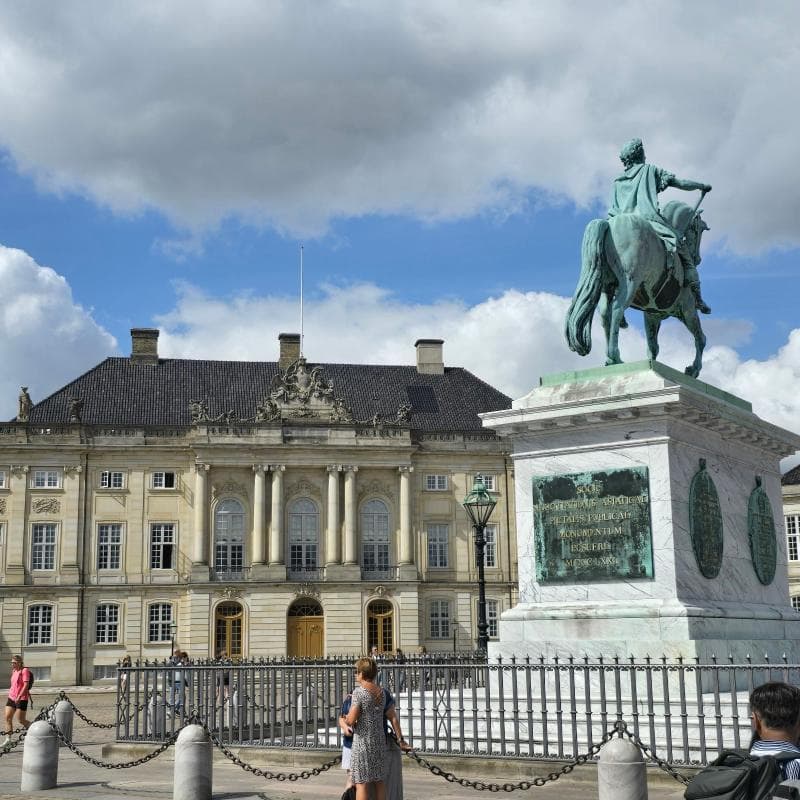
Witness the daily Changing of the Guard ceremony at Amalienborg Palace in Copenhagen, Denmark, a captivating royal tradition featuring the Royal Life Guard.
Overview
The Changing of the Guard at Amalienborg Palace in Copenhagen, Denmark, is a daily tradition that draws visitors and locals alike to witness a moment of Danish royal heritage. Every day, the Royal Life Guard marches through the streets of Copenhagen to Amalienborg Palace, where the ceremonial changing of the guard takes place precisely at noon. This vibrant spectacle unfolds in the palace's octagonal courtyard, offering a glimpse into centuries-old customs.
The procession begins at 11:30 AM from the Life Guard's Barracks by Rosenborg Castle. The guards, clad in their distinctive uniforms, make their way through various city landmarks before arriving at Amalienborg. The type of ceremony and whether it includes musical accompaniment depends on the presence of the monarch or other members of the royal family at the palace.
History & Cultural Background
The Royal Life Guard (Den Kongelige Livgarde) was established on June 30, 1658, by King Frederik III. Its original dual purpose was to serve as both a protective body for the head of state and a combat regiment within the army. This foundational role has continued through the centuries, making the Royal Life Guard a unique blend of ceremonial duty and military service.
Amalienborg Palace itself became the official royal residence in 1794, following a devastating fire that destroyed the previous royal home, Christiansborg Palace. Initially a temporary solution, the royal family found Amalienborg suitable and made it their permanent winter residence. The tradition of the Changing of the Guard, though primarily ceremonial today, is rooted in strict military protocols that have been observed since the Life Guard's inception.
What Makes It Special
What truly sets Amalienborg's Changing of the Guard apart is its dynamic nature, adapting to the royal family's presence. There are three distinct types of guard duties: the 'King's Guard' (Kongevagt), the 'Lieutenant's Guard' (Løjtnantsvagt), and the 'Palace Guard' (Palævagt). The most elaborate, the King's Guard, occurs when the monarch is in residence, signaled by the flying royal flag. During this time, the entire Royal Guards music band accompanies the march, filling the air with traditional tunes.
The guards themselves are instantly recognizable by their striking uniforms, featuring dark blue jackets, bearskin hats, and often red and blue detailing. Their disciplined march from Rosenborg Castle to Amalienborg is a performance in itself, a precise choreography that winds through Copenhagen's historic streets, creating an immersive experience for onlookers. This blend of military precision, royal pageantry, and historical continuity makes it a truly captivating event.
Stories, Fun Facts & Local Details
The Royal Life Guard's motto, 'Pro Rege et Grege' (For King and People), encapsulates their dedication not only to the Danish monarchy but also to the nation. Beyond their ceremonial duties, members of the Royal Life Guard are also active soldiers, serving as a frontline combat unit and participating in international peacekeeping missions, highlighting their dual role.
Amalienborg Palace serves as the Danish royal family's winter residence, typically from September to April. A simple yet significant detail to note is the presence of the royal flag flying above one of the palaces; this indicates that the King is currently in residence, guaranteeing the full 'King's Guard' ceremony with musical accompaniment. In the center of the octagonal palace square stands a monumental equestrian statue of King Frederik V. Legend has it that this magnificent statue, created by French sculptor Jacques Saly, cost more to produce than the entire Amalienborg palace complex itself.
Visitor Perspective
Attending the Changing of the Guard is a free and accessible experience for all visitors to Copenhagen. To secure the best viewing spot, it's advisable to arrive early, ideally by 11:30 AM to catch the guards departing from Rosenborg Castle, or before 12:00 PM to find a good position in Amalienborg's courtyard. While the guards are part of an armed protection force, the public can move freely through the courtyard, making it an intimate spectacle. However, it's crucial to respect their space and maintain a distance of at least 1.5 meters from the palace buildings and the marching guards.
The full, most impressive ceremony, complete with the Royal Guards music band, occurs when the monarch is in residence. This offers the most complete and authentic experience of this historic ritual. The Changing of the Guard is not merely a daily event; it's a living tradition that connects visitors to Denmark's rich royal history and military discipline, making it a highly recommended and memorable highlight of any trip to Copenhagen.
Coordinates: 12.593, 55.684
View on Google Maps💬 How Travelers Describe This Place
Based on community votes
Photogenic
847Must See
831Interesting
685Unique
433Beautiful
211
Traveler Stories
Discover memorable experiences shared by travelers who have visited this place.
No traveler stories yet.
Be the first traveler to share what made this place memorable.

Tour
By
Spot
Discover amazing places around the world. Your journey starts here.
Explore
© 2026 TourBySpot. All rights reserved.