Chandeliers Hall
Odessa, Ukraine
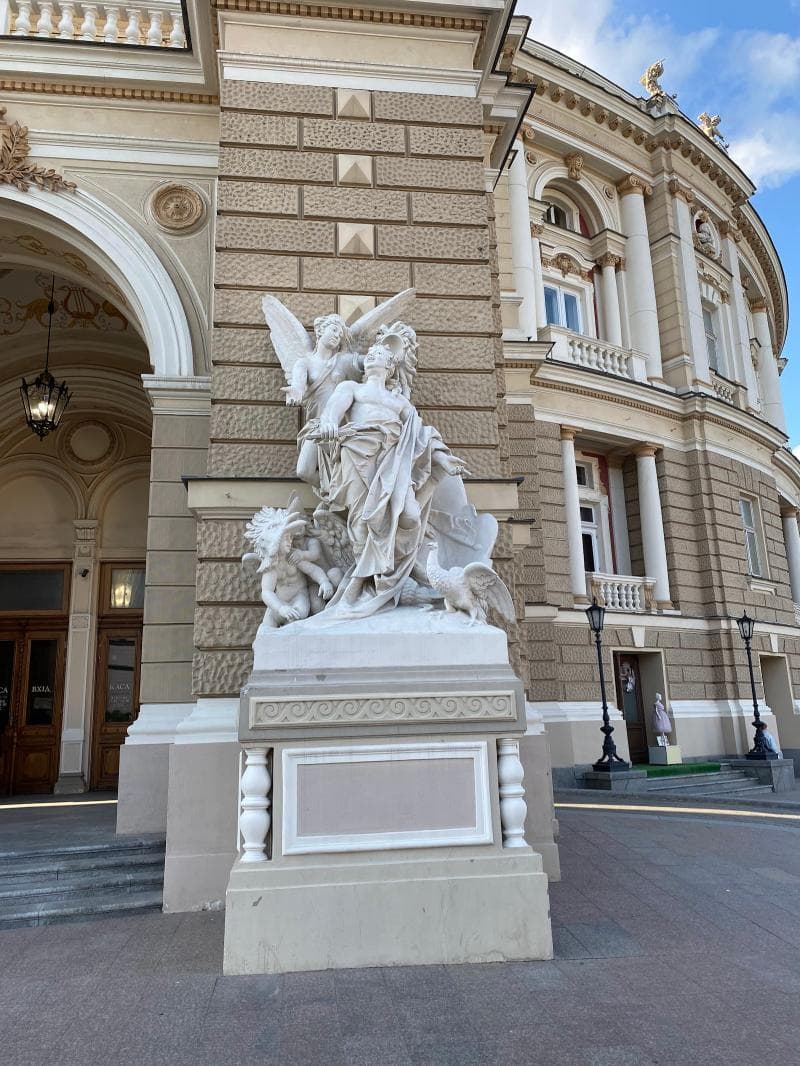
Explore the opulent Chandeliers Hall within the Odessa Opera and Ballet Theater in Odessa, Ukraine. Discover its stunning Rococo interior and rich history.
Overview
The Odesa Opera and Ballet Theater, a true architectural jewel in Odesa, Ukraine, captivates visitors with its stunning beauty and rich history. While not a standalone 'Chandeliers Hall,' the theater's main auditorium is famously adorned with magnificent chandeliers, most notably a grand central crystal chandelier weighing 2.5 tons, giving rise to its affectionate, if unofficial, designation. This opulent space, designed in the late French Rococo style, is the heart of the theater's grandeur, offering an immersive cultural experience that transports audiences to a bygone era of elegance and artistic brilliance. Its intricate decor, vibrant acoustics, and storied past make it a must-visit destination for any traveler seeking to delve into Ukraine's cultural heritage.
The theater itself is among the most beautiful in the world, often compared to the Vienna Opera House, and has been recognized by Forbes magazine as one of Eastern Europe's most remarkable sights. It stands as a testament to European arts, blending cultural traditions with a forward-looking artistic vision.
History & Cultural Background
The history of the Odesa Opera and Ballet Theater dates back to 1810 when the city's first theater was opened. Sadly, this original structure was completely destroyed by a devastating fire in 1873. The current majestic building, an iconic symbol of Odesa, rose from the ashes and was inaugurated on October 1, 1887. It was meticulously designed by the renowned Viennese architects Ferdinand Fellner and Hermann Helmer, who imbued it with a striking Neo-Baroque (Vienna Baroque) style on its exterior and a luxurious late French Rococo style within the audience hall. The foundation stone for this grand replacement was laid in 1884, and its construction cost 1,300,000 rubles. It was also notably the first building in Odesa to feature electric illumination, thanks to the Edison Company.
The theater quickly established itself as a vital cultural center, hosting the Ukrainian premieres of famous operas like Rossini's 'The Barber of Seville' and Puccini's 'Tosca.' Over the centuries, it has nurtured and showcased a vibrant array of performances, contributing significantly to the cultural life of Ukraine and Europe.
What Makes It Special
Beyond its dazzling chandeliers, the main auditorium of the Odesa Opera and Ballet Theater is truly a marvel of engineering and artistry. Its horseshoe-designed layout, a characteristic of late French Rococo style, is not merely for aesthetics; it contributes to the theater's unique and famously precise acoustics. Even the softest whisper from the stage can be heard clearly in every part of the 1,636-seat hall, creating an intimate connection between performers and audience.
The interior is a symphony of gilded stucco ornamentation, adorned with intricate motifs that never repeat, contributing to its unparalleled richness. Ornate domes, arches, and antique columns create a lavish setting, complemented by velvet-cushioned seating, typically in deep red, and mirrors in gilded frames. The ceiling frescoes, painted by artist Lefler, depict captivating scenes from Shakespeare's masterpieces such as 'Hamlet,' 'A Midsummer Night's Dream,' 'The Winter's Tale,' and 'As You Like It,' adding a profound artistic and literary dimension to the theatrical experience.
Stories, Fun Facts & Local Details
The Odesa Opera House holds many fascinating stories within its walls. One remarkable anecdote tells of its incredible luck during World War II: a high-explosive shell reportedly struck the building but, miraculously, did not explode, saving the architectural masterpiece from destruction. This survival story adds another layer of legend to its already illustrious history. The building has also faced ongoing challenges due to being built on shifting ground, with cracks appearing early in its history. Geologists, including a former opera singer, have been involved in its preservation efforts.
A recent renovation completed in 2007 saw an impressive 9 kilograms of gold leaf used to restore the interiors, highlighting the dedication to preserving its original splendor. The theater has played host to an impressive roster of world-renowned artists, including the legendary dancer Anna Pavlova and celebrated singers like Fyodor Chaliapin and Enrico Caruso, further solidifying its place in global cultural history. Figures like Tchaikovsky and Rachmaninoff have also walked its hallowed floors.
Visitor Perspective
Visiting the Odesa Opera and Ballet Theater is an experience of pure old-world grandeur. Stepping into the main auditorium, with its sparkling crystal chandeliers and lavish decor, is like entering a dream. The sheer scale and detail of the gilded stucco, the rich red velvet, and the breathtaking ceiling frescoes are awe-inspiring. Visitors often find themselves craning their necks to admire the central chandelier and the painted narratives above. The perfect acoustics mean that attending a performance, whether opera or ballet, is an unforgettable sensory journey, where every note and nuance is perfectly clear. Guided tours are available and highly recommended, offering deeper insights into the theater's history, architectural marvels, and the legendary artists who have graced its stage. It is an opportunity not just to witness a performance, but to immerse oneself in the enduring artistic soul of Odesa.
Coordinates: 30.741667, 46.485556
View on Google Maps💬 How Travelers Describe This Place
Based on community votes
Photogenic
931Unique
692Interesting
491Beautiful
261Must See
49
Traveler Stories
Discover memorable experiences shared by travelers who have visited this place.
No traveler stories yet.
Be the first traveler to share what made this place memorable.

Tour
By
Spot
Discover amazing places around the world. Your journey starts here.
Explore
© 2026 TourBySpot. All rights reserved.