Cham House
Hanoi, Vietnam
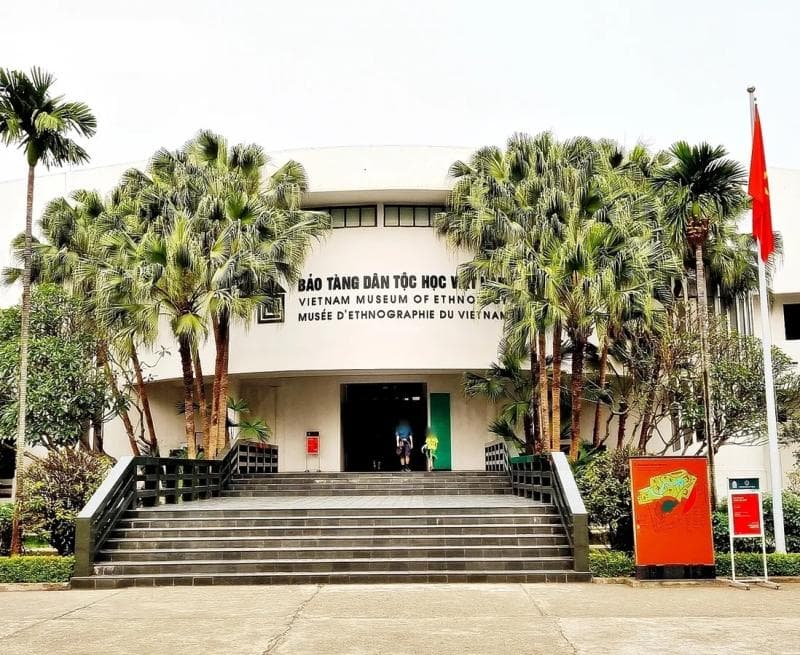
Explore the Cham House at the Vietnam Museum of Ethnology in Hanoi, Vietnam. Discover the unique architecture, cultural rituals, and history of the Cham ethnic group.
Overview
Nestled within the sprawling grounds of the Vietnam Museum of Ethnology in Hanoi, the Cham House offers a captivating glimpse into the rich cultural heritage of the Cham ethnic group. This meticulously reconstructed traditional dwelling is a highlight of the museum's outdoor exhibition, a unique area dedicated to showcasing the diverse architectural styles and living traditions of Vietnam's 54 officially recognized ethnic communities. Visitors to the museum, an esteemed academic institution of the Vietnamese government, often find the Cham House to be one of the most intriguing exhibits, providing a tangible connection to the history and daily life of this ancient people.
The Cham House is not merely a structure; it is an immersive display that transports visitors to the heart of Cham communal life. As part of the outdoor section of the museum, which features life-sized replicas constructed with authenticity by ethnic artisans, the Cham House stands as a testament to the Cham people's architectural ingenuity and profound cultural beliefs.
History & Cultural Background
The Cham people, an ancient ethnic group predominantly found in the central provinces of Ninh Thuan and Binh Thuan in Vietnam, boast a rich and complex history. Their society is largely characterized by a matriarchal system, where family structures and traditions are deeply rooted in maternal lineage.
Cham traditional houses are typically built on the ground, though some feature low stilts, and are characteristically arranged in neat rows within a family compound. The Vietnam Museum of Ethnology has gone to great lengths to preserve this heritage, reconstructing Cham houses within its premises, some of which were faithfully relocated from original family homes in Ninh Thuan.
The construction of a Cham house is steeped in ritual and spiritual significance. Before even beginning to build, the Cham perform ceremonies such as praying to the Land God and seeking permission to fell trees from the forest. A crucial ground-breaking ceremony, known as 'phat moc', marks the auspicious start of construction, underscoring the deep spiritual connection the Cham have with their environment and traditions.
What Makes It Special
The Cham House at the Vietnam Museum of Ethnology is special because it represents a complete family compound, not just a single dwelling. This compound typically consists of several interconnected houses, each serving distinct functions within the family's daily life.
These spacious homes, often containing five to seven chambers or smaller structures, are meticulously oriented along an east-west axis to optimize natural ventilation and lighting, a clever adaptation to the local climate. The internal layout is highly symbolic and reflective of the Cham family structure, featuring dedicated spaces for a sitting room, parents' rooms, children's rooms, married women's quarters, a kitchen, a granary, and even a nuptial room specifically for the youngest daughter. This arrangement subtly illustrates the nuances of their matrilineal extended family system.
Remarkably, traditional Cham houses are constructed without complex rafter structures, tenon joints, or nails, with the entire edifice symbolizing the human body. The roof itself is a marvel of traditional engineering, featuring a thick lower layer made from a mixture of mud and straw, which provides exceptional insulation against the heat and protection against fire.
Stories, Fun Facts & Local Details
Beyond its architectural beauty, the Cham House is brimming with cultural narratives and fascinating details. The very first structure to be built within a Cham family compound is often the kitchen, signifying its central role and symbolizing the essence of family life. This importance is so profound that during wedding ceremonies, tradition dictates that the groom must first acknowledge the kitchen before entering the main house and participating in the rituals.
Inside the kitchen, three ritual stones used for cooking are not just practical implements but are revered as symbols of life itself and the dwelling place of the Kitchen God. Cham families traditionally arrange these stones and worship the Kitchen God at least once every three months, or specifically when children in the family fall ill, seeking blessings for health and prosperity.
The Cham believe that the most critical step in house construction is the erecting of the house pillars, a ritual performed early in the morning, symbolizing the connection between the earthly realm and the heavens. The number of chambers in a Cham house also holds symbolic weight; while dignitaries might have seven chambers, ordinary families typically have up to five, representing the five fingers of a hand or the five essential elements of the universe.
Even the local flora carries deep meaning: the tamarind tree, for instance, is spiritually significant. Infertile couples often pray to it for children, and a tamarind branch is an essential component of cremation ceremonies, symbolizing that Cham people are inextricably linked to the tree from life to death.
Visitor Perspective
For any curious traveler, exploring the Cham House within the Vietnam Museum of Ethnology offers an unparalleled opportunity to step directly into another culture. This outdoor exhibition is designed to provide an immersive and authentic experience, where visitors can walk through life-sized replicas of traditional dwellings.
The museum's commitment to authenticity is evident in its practice of inviting Cham people from villages like Bau Truc to assist with repairs and introduce visitors to their traditional life, architecture, and arts. This direct engagement ensures that the spirit and essence of the Cham culture are accurately conveyed, making the experience deeply educational and emotionally resonant. Guests can appreciate the craftsmanship of the houses, understand the symbolic layouts, and gain insights into the daily rhythms, spiritual beliefs, and community values of the Cham ethnic minority.
Coordinates: 105.7987, 21.0406
View on Google Maps💬 How Travelers Describe This Place
Based on community votes
Must See
847Photogenic
712Beautiful
513Unique
482Interesting
62
Traveler Stories
Discover memorable experiences shared by travelers who have visited this place.
No traveler stories yet.
Be the first traveler to share what made this place memorable.

Tour
By
Spot
Discover amazing places around the world. Your journey starts here.
Explore
© 2026 TourBySpot. All rights reserved.