Ceremonial Staircase
Sarajevo, Bosnia and Herzegovina
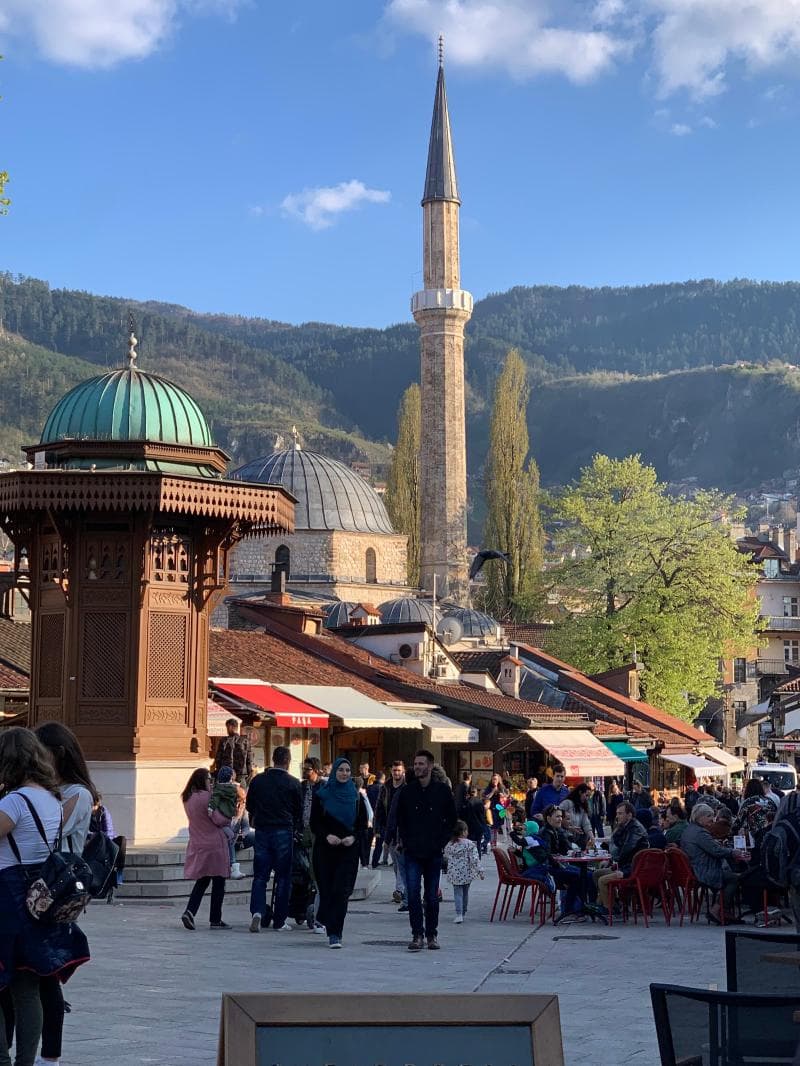
Explore the Ceremonial Staircase of Sarajevo City Hall, a Pseudo-Moorish marvel in Sarajevo, Bosnia and Herzegovina, rich in history and resilience.
Overview
Stepping into the Sarajevo City Hall, known locally as Vijećnica, is an experience that immediately transports visitors into a realm of breathtaking architectural grandeur and profound historical significance. At the heart of this magnificent Pseudo-Moorish masterpiece lies its Ceremonial Staircase, a true focal point of the building's interior. This grand staircase is not merely a means of vertical passage; it is an integral part of the Vijećnica's artistic expression, characterized by its intricate detailing, elegant curves, and the vibrant interplay of colors that reflect the building's unique blend of Eastern and Western influences. As sunlight streams through elaborate stained-glass windows, it casts a warm, ethereal glow upon the carved wood, gilded arabesques, and colorful tilework, highlighting the staircase's exquisite craftsmanship and inviting a moment of contemplation before ascending its historic steps.
History & Cultural Background
The Sarajevo City Hall was constructed between 1892 and 1894, officially opening its doors on April 20, 1896, during the Austro-Hungarian administration. Initially, it served as the city's administrative center, housing the municipal government, city council, and city court. Its design was largely developed by architect Alexander Wittek, who drew inspiration from Mamluk-period buildings in Cairo, aiming to create a modern administrative hub that also acknowledged the region's rich Islamic heritage. This distinctive Pseudo-Moorish style made it the largest and most representative building of its era in Sarajevo.
A pivotal moment in world history unfolded within these walls on June 28, 1914, when Archduke Franz Ferdinand and his wife, Sophie, attended a reception here, just moments before their assassination nearby, an event that tragically triggered the start of World War I. Following World War II, in 1949, the Vijećnica transformed into the National and University Library of Bosnia and Herzegovina, becoming a vital repository of the nation's cultural heritage, housing an extensive collection of up to two million books and manuscripts.
However, during the Siege of Sarajevo, the building faced its darkest hour. On August 25-26, 1992, it was intentionally shelled with incendiary bombs, resulting in a catastrophic fire that destroyed nearly 90% of the library's invaluable collection in what was tragically described as an act of 'bibliocide.' For years, the Vijećnica stood as a skeletal ruin, a poignant symbol of the war's devastation. A painstaking reconstruction effort began in 1996, meticulously restoring every tile, ornament, and stained-glass window according to original plans and photographs. The building was triumphantly reopened on May 9, 2014, marking Europe Day and the Day of Victory over Fascism, symbolizing Sarajevo's remarkable resilience and rebirth.
What Makes It Special
The Ceremonial Staircase of the Sarajevo City Hall is a crowning achievement of the Pseudo-Moorish architectural style that defines the entire edifice. It embodies the building's unique ability to blend Eastern aesthetics with Western functionality, creating a visual symphony of intricate geometric patterns, vibrant colors, and elaborate ornamentation. The staircase's sweeping ascent, framed by graceful arches and decorated columns, offers a panoramic view of the central atrium, which is often bathed in light filtering through an ornate glass dome. Every detail, from the carved railings to the meticulously restored tilework, speaks of the dedication poured into its initial creation and its subsequent resurrection. It is a masterpiece of craftsmanship, designed not just for utility but to evoke a sense of awe and ceremony, making it an unforgettable feature for anyone who walks its steps.
Stories, Fun Facts & Local Details
The creation of the Vijećnica comes with its own fascinating tales. The architect Alexander Wittek, deeply inspired by Islamic art, traveled twice to Cairo to study Mamluk architecture, using structures like the Sultan Hassan Mosque as a model. An urban myth suggests that Wittek tragically took his own life due to criticisms about the lack of light in the main hall, though historical accounts indicate he fell ill and died in Graz in 1894 before the building's completion.
The 'bibliocide' of 1992, when the library's collection was incinerated, is a particularly poignant story. Eyewitnesses recall black, burnt pages fluttering through the air like snow over Sarajevo, a stark reminder of the cultural devastation inflicted during the war. The meticulous restoration, guided by surviving fragments and historical photographs, is a testament to the city's unwavering spirit. The reopening of the Vijećnica on May 9, 2014, on the same day as Europe Day, was not merely the unveiling of a restored building but a powerful statement of hope and resilience, signifying Sarajevo's enduring commitment to its rich cultural identity.
Visitor Perspective
For visitors, the Ceremonial Staircase is often one of the most striking elements upon entering the Sarajevo City Hall. It commands attention, inviting an upward gaze to appreciate the sheer scale and artistry. Ascending the staircase offers varying perspectives of the hall's elaborate interior, from the ground-level view of its grand base to the intricate patterns visible on the upper floors. Many visitors highlight the interior beauty, emphasizing how the stained glass, colorful ceramic tiles, and the overall Pseudo-Moorish style contribute to an almost fairytale-like atmosphere. The feeling of walking these historically charged steps, knowing the building's tumultuous past and its phoenix-like rise from the ashes, adds a profound emotional layer to the visual splendor. It's an immersive journey through history, architectural brilliance, and the resilient spirit of Sarajevo.
Coordinates: 18.431, 43.8587
View on Google Maps💬 How Travelers Describe This Place
Based on community votes
Beautiful
961Photogenic
897Unique
695Interesting
605Must See
336
Traveler Stories
Discover memorable experiences shared by travelers who have visited this place.
No traveler stories yet.
Be the first traveler to share what made this place memorable.

Tour
By
Spot
Discover amazing places around the world. Your journey starts here.
Explore
© 2026 TourBySpot. All rights reserved.