Ceremonial Plaza
Yerevan, Armenia
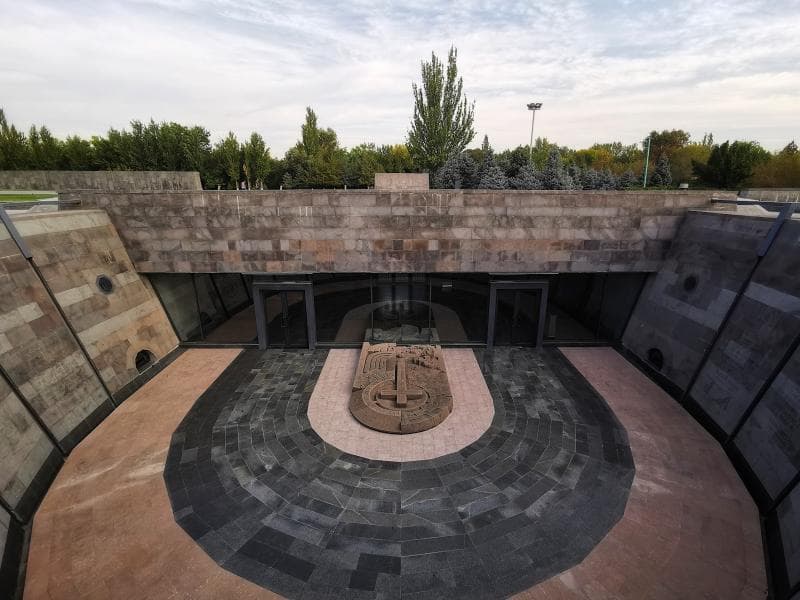
Discover the Ceremonial Plaza at Tsitsernakaberd Armenian Genocide Memorial Complex in Yerevan, Armenia – a poignant site of remembrance and reflection.
Overview
The Ceremonial Plaza at the Tsitsernakaberd Armenian Genocide Memorial Complex in Yerevan, Armenia, stands as the solemn heart of remembrance for the 1.5 million victims of the Armenian Genocide. This revered open space serves as the central gathering point within the larger memorial, drawing hundreds of thousands of visitors annually, especially on April 24, Armenian Genocide Remembrance Day. It is here that the nation and visitors from around the world converge to pay their respects, lay flowers, and reflect upon a pivotal, tragic chapter in Armenian history. The plaza is intentionally designed to evoke contemplation and solidarity, preparing visitors for the profound experience of the memorial itself.
History & Cultural Background
The Tsitsernakaberd Memorial Complex, where the Ceremonial Plaza is located, was conceived in the mid-1960s, following widespread public demand for recognition and commemoration of the Armenian Genocide. Construction began in 1966, and the memorial was officially opened in November 1967. The complex was designed by architects Arthur Tarkhanyan and Sashur Kalashyan, with sculptor Vanik Khachatryan contributing to its impactful elements. Its establishment marked a significant moment for Armenians, allowing for public mourning and remembrance that had been suppressed for decades during the Soviet era. The term 'Tsitsernakaberd' itself, meaning 'Swallow's Fortress,' carries cultural weight, symbolizing eternal return and national resilience, much like swallows returning to their nests even after destruction.
What Makes It Special
The Ceremonial Plaza's most striking feature is the 'Sanctuary of Eternity', a circular arrangement of twelve inward-leaning basalt slabs, each approximately 1.5 meters deep, sheltering an eternal flame at its center. These twelve slabs are widely interpreted to represent the twelve lost provinces of historic Western Armenia, regions where the genocide unfolded. The design creates a powerful sense of enclosure and introspection, guiding visitors towards the flickering flame, a potent symbol of perpetual memory and mourning. The floor of this central monument is set slightly lower than the surrounding walkway, adding to its contemplative atmosphere. This architectural choice ensures that the eternal flame is not merely observed but experienced as a focal point for collective grief and remembrance.
Stories, Fun Facts & Local Details
On April 24th each year, the Ceremonial Plaza transforms into a pilgrimage site as Armenians from across the globe, along with international dignitaries, ascend Tsitsernakaberd hill. They come to place fresh flowers around the eternal flame, forming a colossal carpet of blossoms that vividly represents the collective memory and unwavering spirit of the Armenian people. This tradition, observed since 1968, underscores the memorial's profound role in national identity and collective remembrance. Beyond the main memorial, a 44-meter-high granite stele, known as the 'Reborn Armenia' Memorial Column, pierces the sky, partly split by a deep crevice. This powerful sculpture symbolizes both the tragic dispersion and the ultimate spiritual rebirth and unity of the Armenian nation. From the memorial complex, on a clear day, visitors are often afforded a poignant view of Mount Ararat, the historical symbol of Armenia, now located across the border in modern-day Turkey, further enhancing the site's emotional resonance.
Visitor Perspective
Approaching the Ceremonial Plaza, a visitor is first met with an overwhelming sense of peace and solemnity. The pathway leading up to the main memorial encourages quiet reflection, preparing one for the powerful emotional experience ahead. As you enter the circular space of the Sanctuary of Eternity, the gentle flicker of the eternal flame against the dark basalt slabs immediately commands attention. The design gently draws you inward, creating an intimate space for personal contemplation and shared grief. The sheer scale of the memorial, combined with the visible acts of remembrance, like the countless flowers laid by previous visitors, communicates the immense human cost of the genocide. It is an experience that transcends language, leaving a lasting impression of resilience, memory, and the enduring human spirit in the face of unspeakable tragedy. The Ceremonial Plaza is not merely a monument; it is a living space where history, memory, and hope converge.
Coordinates: 44.4877, 40.1848
View on Google Maps💬 How Travelers Describe This Place
Based on community votes
Photogenic
703Unique
521Must See
477Beautiful
157Interesting
28
Traveler Stories
Discover memorable experiences shared by travelers who have visited this place.
No traveler stories yet.
Be the first traveler to share what made this place memorable.

Tour
By
Spot
Discover amazing places around the world. Your journey starts here.
Explore
© 2026 TourBySpot. All rights reserved.