Ceremonial Guard Area
Bishkek, Kyrgyzstan
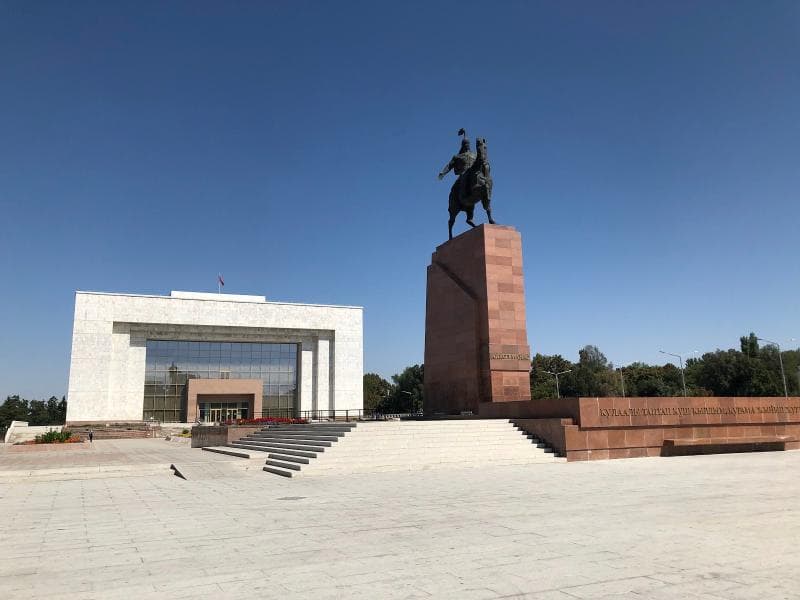
Witness the solemn changing of the guard ceremony at the Ceremonial Guard Area in Ala-Too Square, Bishkek, Kyrgyzstan, a powerful display of national pride.
Overview
At the very heart of Bishkek, Kyrgyzstan's vibrant capital, lies Ala-Too Square, a grand expanse that serves as both a historical canvas and a pulsating center for national life. Within this significant urban space, visitors will find the Ceremonial Guard Area, distinguished by a towering flagpole that proudly flies the national flag. This area is most renowned for its precise and captivating changing of the guard ceremony, a daily ritual performed by the National Guard that embodies the nation's pride and heritage. It is a moment where the modern pulse of Kyrgyzstan connects with its deep-rooted traditions, offering a compelling spectacle for anyone wishing to understand the spirit of the country.
The Ceremonial Guard Area, centered around the impressively tall national flagpole, stands as a focal point in the square. This solemn display of military discipline and national reverence takes place several times a day, drawing observers with its rhythmic movements and symbolic gravity. More than just a military drill, it is a living expression of national identity, carefully choreographed to honor Kyrgyzstan's sovereignty and the sacrifices made for its independence.
History & Cultural Background
Ala-Too Square itself holds a rich and evolving history that mirrors Kyrgyzstan's journey. Established in 1984 to mark the 60th anniversary of the Kirghiz Soviet Socialist Republic, it was initially known as Lenin Square, featuring a monumental statue of Vladimir Lenin. Following Kyrgyzstan's independence from the USSR in 1991, the square underwent a profound transformation, shedding its Soviet past to embrace a new national identity.
The statue of Lenin was relocated in 2003, replaced by the 'Erkindik' (Freedom) monument. This statue, depicting a winged woman holding a tunduk – the circular crown of a traditional Kyrgyz yurt – symbolized the nation's newfound liberty. In 2011, commemorating 20 years of independence, 'Erkindik' gave way to a majestic 10-meter bronze statue of Manas the Noble, the legendary hero of the Kyrgyz national epic. This final change firmly rooted the square's symbolism in Kyrgyz folklore and national heritage, making it a pivotal site for state events, celebrations, and historical commemorations. The Honor Guard company of the National Guard began its duty at the flagpole on Ala-Too Square on August 16, 1998, further solidifying the area's ceremonial importance.
What Makes It Special
The changing of the guard ceremony at Ala-Too Square is a unique spectacle. Conducted by soldiers from the 701st Military Unit of the National Guard's Honor Guard company, it is characterized by their distinctive and precise marching style. Guards move with an exaggerated, slow gait, executing steps with a pronounced 90-degree angle, a hallmark that sets the Kyrgyz Honor Guard apart.
The focal point of this ceremony is the national flagpole, which proudly displays a large Kyrgyz flag. Initially a 45-meter structure, the flagpole was notably upgraded to an impressive 100 meters in 2024, further enhancing the grandeur of the Ceremonial Guard Area. This towering symbol, coupled with the guards' disciplined movements, creates a powerful sense of national dignity and military tradition. The ceremony is not just a display of military prowess but a profound expression of respect for the nation's flag and its people.
Stories, Fun Facts & Local Details
The guards chosen for this prestigious duty are carefully selected, often requiring a height of at least 180 centimeters. Accounts from former guards reveal the immense pride and patriotism associated with this role, viewing it as a significant honor to protect the state symbol in the capital's central square. The ceremony, while solemn, has a human element: the guard duties, once lasting two hours, were made more 'humane' by reducing them to one-hour shifts.
The name 'Ala-Too' itself, meaning 'colorful mountains' in Kyrgyz, hints at the stunning mountainous landscapes that define much of the country, and which can often be seen in the distance from the square on a clear day. This connection to nature, combined with the square's historical layers, offers a holistic view of Kyrgyzstan's identity. The changing of the guard is a key attraction for both locals and tourists, symbolizing continuity and national spirit in a place that has witnessed significant historical shifts.
Visitor Perspective
For visitors, experiencing the changing of the guard at the Ceremonial Guard Area is a highly recommended and accessible cultural immersion. The ceremony takes place hourly during the summer months and every two hours in winter, typically operating between 9 am and 7 pm. Witnessing the guards' synchronized movements, the crisp sound of their boots on the stone, and the solemn exchange at the flagpole provides a memorable and authentic insight into Kyrgyz national identity.
The atmosphere shifts from the general bustle of the square to one of quiet contemplation as onlookers gather. It's not an elaborate, theatrical display with marching bands like some European guard changes, but rather a dignified, understated performance that emphasizes precision and respect. Timing your visit to coincide with this ceremony offers a deeper appreciation for the historical significance and cultural importance of Ala-Too Square, making it a highlight of any trip to Bishkek.
Coordinates: 74.60389, 42.87639
View on Google Maps💬 How Travelers Describe This Place
Based on community votes
Must See
1.0kPhotogenic
804Interesting
563Beautiful
100Unique
63
Traveler Stories
Discover memorable experiences shared by travelers who have visited this place.
No traveler stories yet.
Be the first traveler to share what made this place memorable.

Tour
By
Spot
Discover amazing places around the world. Your journey starts here.
Explore
© 2026 TourBySpot. All rights reserved.