Ceremonial Gates
Ulaanbaatar, Mongolia
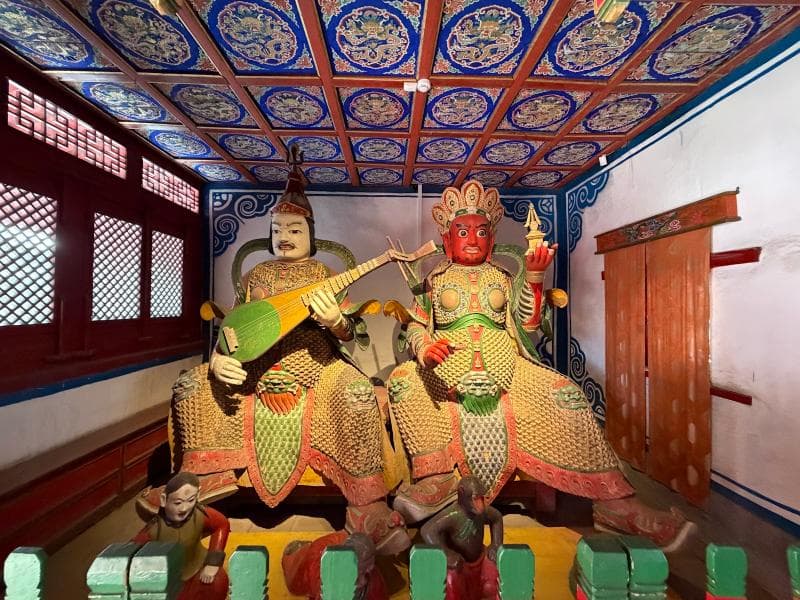
Explore the Ceremonial Gates at Bogd Khan Palace Museum in Ulaanbaatar, Mongolia. Uncover rich history, intricate architecture, and cultural significance.
Overview
Nestled within the sprawling grounds of the Bogd Khan Palace Museum in Ulaanbaatar, Mongolia, stand the revered Ceremonial Gates. More than mere entry points, these gates serve as profound symbols of Mongolian history, independence, and spiritual heritage. They are an integral part of the complex that once served as the winter residence of the 8th Bogd Jebtsundamba Khutuktu, Mongolia's last theocratic ruler. The museum complex itself, often referred to as the 'Green Palace', is a rare survivor of historical purges, offering a unique window into 17th to 20th-century Mongolian life, religion, and politics. Visitors approaching the palace are first greeted by these intricately designed gateways, each telling a story of a nation's journey and belief.
History & Cultural Background
The history of the Ceremonial Gates is deeply intertwined with Mongolia's struggle for independence. The most prominent among them, the Gate of Peacefulness, also known as Andi Men, was constructed between 1912 and 1919. This period immediately followed Mongolia's successful declaration of independence from Manchu domination in 1911 and the coronation of the 8th Bogd Jebtsundamba Khutuktu as the absolute monarch. The gate was a monumental undertaking, built with funds collected from the public, amounting to a significant sum equivalent to 175 kg of silver. Its creation was a direct commemoration of these pivotal events, marking the birth of a new era for the Mongolian state.
Prior to these significant developments, the Bogd Khan Palace complex was constructed between 1893 and 1903. It served as one of four royal residences for the Bogd Khan, but it is the only one to have survived to this day. The palace became a museum in 1924 after the Bogd Khan's death, preserving invaluable historical and cultural artifacts. The gates, therefore, stand as enduring testaments to a rich past, guarding the legacy within.
What Makes It Special
What truly sets the Ceremonial Gates apart is their remarkable construction and symbolic depth. The Gate of Peacefulness, for instance, is a marvel of traditional Mongolian craftsmanship. It was built without a single nail, employing an intricate system of 108 different interlocking joints. This innovative architectural technique speaks volumes about the skill of the architects, constructors, blacksmiths, and artisans who contributed to its creation from across Mongolia.
The gate features eight supporting posts and a magnificent seven-tiered canopy, richly adorned with carved and painted symbols and images drawn from Buddhist symbolism. These elaborate decorations depict scenes from common Buddhist legends and feature protective deities known as 'makhranz'. The artistic style is characteristic of Mongolian art during the Bogd Khaan's reign.
Adjacent to the Gate of Peacefulness, the Three Open Gates (also referred to as Grand Triple Gates or Asart door) are equally significant. Their design, intentionally doorless and permanently unobstructed, symbolizes the perpetual influx of good deeds, fortune, and bliss, embodying the palace's welcoming nature. The Yampai, or 'protective gate', built from blue bricks and decorated with winding dragons and symbolic elements, adds another layer of defense against negative influences, underscoring the deep spiritual protection intended for the palace.
Stories, Fun Facts & Local Details
The careful planning behind the Ceremonial Gates extends to the very flow of people. During the Bogd Khan's time, each of the Three Open Gates had a designated purpose. The central gate was reserved exclusively for the 8th Bogd Jebtsundamba Khutuktu and his closest advisors, signifying his supreme spiritual and temporal authority. The east gate welcomed provincial nobles, high-ranking lamas, and esteemed foreign guests, reflecting the hierarchical yet inclusive nature of the court. The west gate served the royal bodyguards and the military band, highlighting the practical aspects of palace security and ceremonial pomp.
Adding to the ceremonial atmosphere were the 'Chiigan' – two posts standing proudly in front of the Peace Gate. These served as flagpoles, with the state flag of Mongolia flown on the western post and a yellow religious flag on the eastern post, representing the dual spiritual and secular leadership of the Bogd Khan.
The narrative of these gates is also one of national pride. The public's enthusiastic financial contribution to the construction of the Gate of Peacefulness demonstrates the widespread support for Mongolian independence and the Bogd Khan's rule, transforming the gate into a collective monument of national aspirations.
Visitor Perspective
For the modern traveler, a visit to the Ceremonial Gates offers an immersive journey into Mongolia's past. Walking through these magnificent structures provides a palpable connection to the historical grandeur and spiritual reverence that defined the Bogd Khan era. The intricate carvings and vibrant paintings on the Peace Gate invite close inspection, revealing details of Buddhist mythology and traditional Mongolian artistry that are often overlooked in the rush of travel. The sheer scale and craftsmanship of these nail-less constructions inspire awe and contemplation of ancient building techniques.
As you pass through the open arches of the Three Open Gates, one can almost imagine the procession of dignitaries, monks, and the Bogd Khan himself entering the sacred grounds. It is a moment to reflect on the historical significance of the place – not just as a museum, but as a living monument to Mongolia's unique cultural identity and its enduring spirit of independence. The Ceremonial Gates are not just entrances; they are storytellers, inviting curious travelers to listen closely to the whispers of history.
Coordinates: 106.90667, 47.8975
View on Google Maps💬 How Travelers Describe This Place
Based on community votes
Unique
961Interesting
695Photogenic
605Must See
404Beautiful
336
Traveler Stories
Discover memorable experiences shared by travelers who have visited this place.
No traveler stories yet.
Be the first traveler to share what made this place memorable.

Tour
By
Spot
Discover amazing places around the world. Your journey starts here.
Explore
© 2026 TourBySpot. All rights reserved.