Central Dome
Zagreb, Croatia
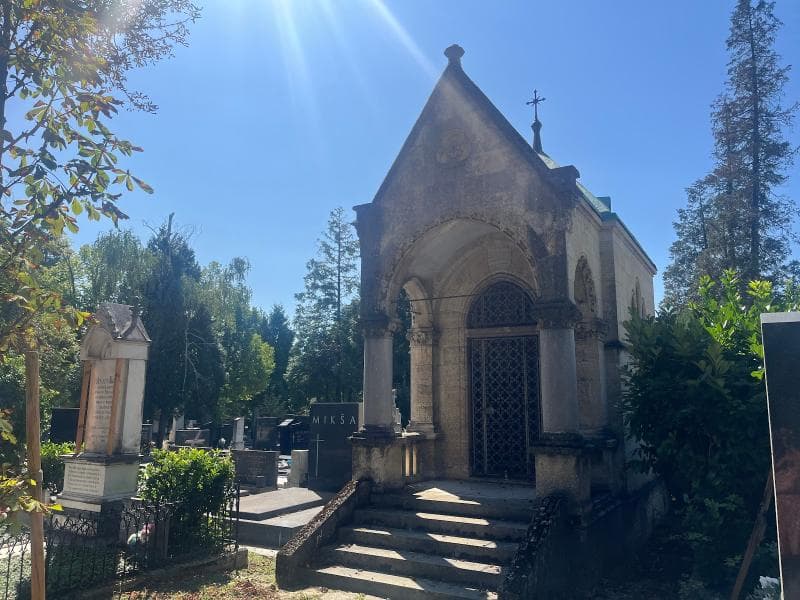
Explore Zagreb's Mirogoj Cemetery and its magnificent Central Dome, a Neo-Renaissance architectural masterpiece and cultural landmark.
Overview
Nestled at the foot of Mount Medvednica in Zagreb, Croatia, Mirogoj Cemetery transcends the traditional concept of a burial ground to stand as a monumental architectural park and a cherished cultural landmark. Often cited as one of Europe's most beautiful cemeteries, its serene pathways and stunning Neo-Renaissance design invite contemplation and admiration. At the heart of this majestic complex lies the Central Dome, a prominent architectural feature that acts as a spiritual and visual anchor, presiding over the vast arcades that gracefully frame the main entrance. Designed by the renowned architect Hermann Bollé, Mirogoj is a testament to the idea of a 'city of the dead,' where artistry, history, and natural beauty intertwine to create a profoundly moving experience.
The Central Dome, specifically part of the Chapel of Christ the King, is not merely a structural element but a symbol of the cemetery's grandeur and its inclusive spirit. It is the focal point that connects the impressive arcades, offering a sense of scale and solemnity upon entering. Visitors will find that the dome's green oxidized copper, combined with intricate internal designs, contributes significantly to Mirogoj's unique aesthetic appeal.
History & Cultural Background
The story of Mirogoj Cemetery begins in 1872 when the city of Zagreb purchased the land, originally owned by linguist Ljudevit Gaj, to establish a new municipal cemetery. Inaugurated on November 6, 1876, Mirogoj was groundbreaking for its time, designed to be a multi-confessional burial ground, welcoming individuals of all faiths – Catholics, Orthodox, Muslims, Jews, Protestants, and even the irreligious – a progressive approach that fostered unity in death.
The visionary behind Mirogoj's architectural splendor was German architect Hermann Bollé, who began his extensive work in 1879. Bollé, also famous for his renovation of Zagreb Cathedral, envisioned Mirogoj not just as a cemetery but as an integrated architectural landscape inspired by Italian and Central European cemeteries. The construction of the magnificent arcades, cupolas, and the church at the entryway, including the Central Dome, was a monumental undertaking that continued for decades. Although Bollé died in 1926, the construction of the central part, including the chapel and the central dome, was completed according to his plans shortly after his death, with the entire complex officially finished in 1929.
This lengthy construction period, spanning half a century, resulted in the cohesive Neo-Renaissance style visible today. The cemetery, including its impressive structures, suffered damage during earthquakes in March and December 2020, highlighting its vulnerability as a historical monument.
What Makes It Special
What truly sets Mirogoj apart, and particularly its Central Dome, is the harmonious blend of architecture, sculpture, and landscape design. The cemetery is often described as an open-air art gallery, featuring works by eminent Croatian sculptors such as Ivan Meštrović, Antun Augustinčić, and Dušan Džamonja. These artistic contributions, integrated within the grand architectural framework of arcades and pavilions, elevate the site beyond a mere resting place to a place of profound aesthetic and historical value.
The Central Dome, as part of the Chapel of Christ the King, is a masterpiece of Bollé's design. Its gigantic, copper-green dome and the overarching Neo-Renaissance style, characterized by symmetry, balance, and clear perspectives, create a visually stunning experience. The architectural elements, including the numerous smaller domes topping the arcades, create a distinctive skyline. This grand central structure not only impresses with its scale but also serves as a poignant gateway to the lives and legacies commemorated within Mirogoj's walls.
Stories, Fun Facts & Local Details
Mirogoj holds a mirror to Croatia's rich history, serving as the final resting place for countless prominent figures – artists, writers, musicians, scientists, sports personalities, and politicians. Among them lies the architect himself, Hermann Bollé, a testament to his life's work.
A particularly moving time to visit is around All Saints' Day (November 1st and 2nd), when thousands of candles are lit and flowers adorn the graves, creating a breathtaking and deeply emotional spectacle that illuminates the entire cemetery.
The design of the domes and arcades subtly incorporates symbols from various faiths—Catholic and Orthodox crosses, Jewish stars—reflecting Mirogoj's founding principle as a supra-denominational burial ground. Bollé's vision was to create a 'Town of the Dead,' mirroring the city of Zagreb itself, a concept that is beautifully realized in the cemetery's layout and monumental architecture.
Visitor Perspective
Visiting Mirogoj Cemetery and its Central Dome offers a remarkably peaceful and contemplative experience, a true respite from the urban bustle of Zagreb. The vast, park-like grounds, with their tree-lined avenues and intricately designed structures, invite visitors to wander and explore at their own pace. The awe-inspiring architecture, particularly the Central Dome and the seemingly endless arcades, evokes a sense of timeless grandeur and reverence.
It's a place where one can appreciate not just the solemnity of a cemetery but also the beauty of funerary art, the richness of Croatian history, and the genius of architectural design. Whether marveling at the green domes, strolling through ivy-clad arcades, or discovering the resting places of historical figures, Mirogoj provides a unique cultural journey. Accessible by bus from Kaptol, the cemetery is open daily and offers free admission, making it an essential and enriching stop for any curious traveler in Zagreb.
Coordinates: 15.98785, 45.83789
View on Google Maps💬 How Travelers Describe This Place
Based on community votes
Interesting
836Photogenic
797Unique
255Must See
231Beautiful
86
Traveler Stories
Discover memorable experiences shared by travelers who have visited this place.
No traveler stories yet.
Be the first traveler to share what made this place memorable.

Tour
By
Spot
Discover amazing places around the world. Your journey starts here.
Explore
© 2026 TourBySpot. All rights reserved.