Central Bridge
Ljubljana, Slovenia
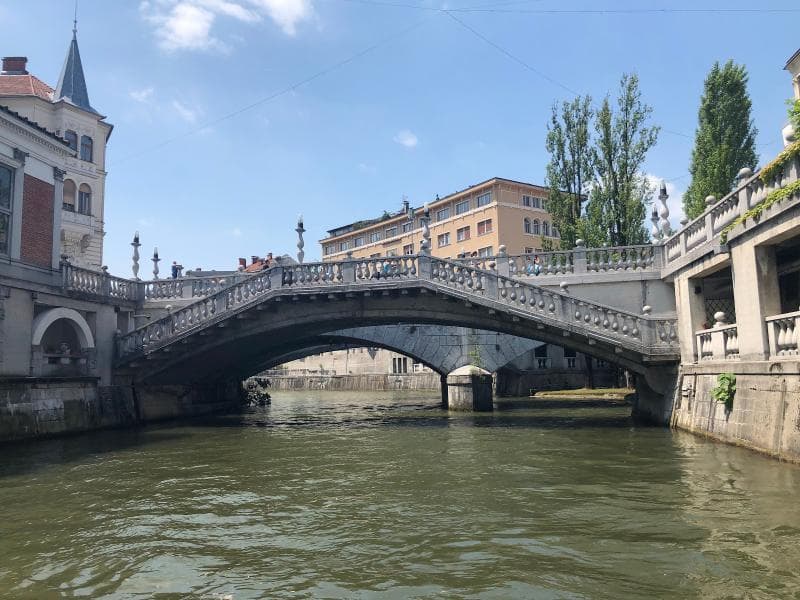
Discover the Central Bridge, the historic heart of Ljubljana's Triple Bridge. Explore its history, unique design, and cultural significance in Slovenia's capital.
Overview
The Central Bridge, a pivotal element of Ljubljana's iconic Triple Bridge (Tromostovje), stands as a testament to the city's rich history and architectural evolution. Located in the heart of Slovenia's capital, this central span forms the core of a unique architectural ensemble that gracefully crosses the Ljubljanica River. It acts as a vital artery, seamlessly connecting the vibrant Prešeren Square on the northwestern bank with the charming historical medieval town on the southeastern side. More than just a crossing, the Triple Bridge, including its central component, is a beloved landmark, renowned for its distinctive design and its role as a bustling public space. In August 2021, the entire Triple Bridge complex was recognized for its outstanding universal value, being added to the UNESCO World Heritage List as part of Jože Plečnik's enduring legacy in Ljubljana.
History & Cultural Background
The history of the Central Bridge dates back to at least the 13th century, with mentions of a wooden bridge at this strategic location as early as 1280. This early structure was known by various names over the centuries, including the Old Bridge, the Lower Bridge, and the Spital Bridge, reflecting its importance and surrounding institutions. After being rebuilt in 1657 following a fire, the wooden bridge was eventually replaced in 1842 by a new stone bridge. This 1842 construction, designed by Italian architect Giovanni Picco, is the very Central Bridge we see today. It was named Franz's Bridge (Frančev most) in honor of Archduke Franz Karl of Austria, a dedication still commemorated by an inscription on its structure. The transformation into the 'Triple Bridge' occurred between 1929 and 1932, under the vision of the celebrated Slovenian architect Jože Plečnik. To alleviate traffic bottlenecks, Plečnik ingeniously added two angled pedestrian bridges on either side of Picco's original stone bridge, creating the distinctive three-pronged layout.
What Makes It Special
The Central Bridge's enduring appeal lies in its blend of historical significance and architectural harmony, particularly as integrated by Jože Plečnik. Though originally built in 1842, it was Plečnik's vision that elevated it into a masterpiece. He removed the metal railings from the 19th-century stone bridge and furnished all three bridges, including the central one, with massive stone balustrades and lamps, creating a unified aesthetic. The central bridge itself is partly constructed from Glinica limestone, a locally sourced material, showcasing Plečnik's commitment to local resources and traditional craftsmanship. The thoughtful design ensures that the central span, while once a standalone structure, now perfectly complements the two pedestrian bridges, forming a cohesive and visually striking architectural landmark. The removal of vehicle traffic in 2007 further solidified its role as a pedestrian-friendly urban space, allowing visitors to fully appreciate its design.
Stories, Fun Facts & Local Details
One of the captivating details of the Central Bridge is the Latin inscription above its central pier: 'ARCHIDVCI. FRANCISCO. CAROLO. MDCCCXLII. CIVITAS.', meaning 'To Archduke Franz Karl in 1842 by the Town'. This inscription serves as a direct link to its past, commemorating the bridge's construction and its dedication. Jože Plečnik famously envisioned the Triple Bridge not merely as a utilitarian crossing but as a 'stage' for urban life. This vision truly comes alive today, as the bridge and its surrounding area frequently host street performers, musicians, and various cultural events, creating a vibrant and dynamic atmosphere. The presence of a small flower shop on the right bank, connected to the Ljubljana Central Market colonnade, and a kiosk on the left bank, further enhances its role as a community hub, where daily life and cultural richness intertwine.
Visitor Perspective
For any traveler exploring Ljubljana, encountering the Central Bridge within the Triple Bridge complex is an essential experience. Walking across this historic span allows for an intimate connection with the city's past and present. From the Central Bridge, visitors can enjoy picturesque views of the Ljubljanica River, the charming Old Town, and the majestic Ljubljana Castle perched atop its hill. Its central location makes it an ideal starting point for further exploration, with Prešeren Square, the Franciscan Church of the Annunciation, and the Central Market all immediately accessible. The pedestrian-only nature of the bridge since 2007 ensures a safe and enjoyable stroll, allowing ample time to pause, take photographs, and soak in the lively atmosphere created by locals and fellow travelers. It serves as a natural meeting point, a place to observe the rhythm of the city, and a beautiful spot to appreciate Plečnik's profound impact on Ljubljana's urban landscape.
Coordinates: 14.506, 46.051
View on Google Maps💬 How Travelers Describe This Place
Based on community votes
Photogenic
583Interesting
404Unique
363Must See
63Beautiful
18
Traveler Stories
Discover memorable experiences shared by travelers who have visited this place.
No traveler stories yet.
Be the first traveler to share what made this place memorable.

Tour
By
Spot
Discover amazing places around the world. Your journey starts here.
Explore
© 2026 TourBySpot. All rights reserved.