Central Arch
Skopje, North Macedonia
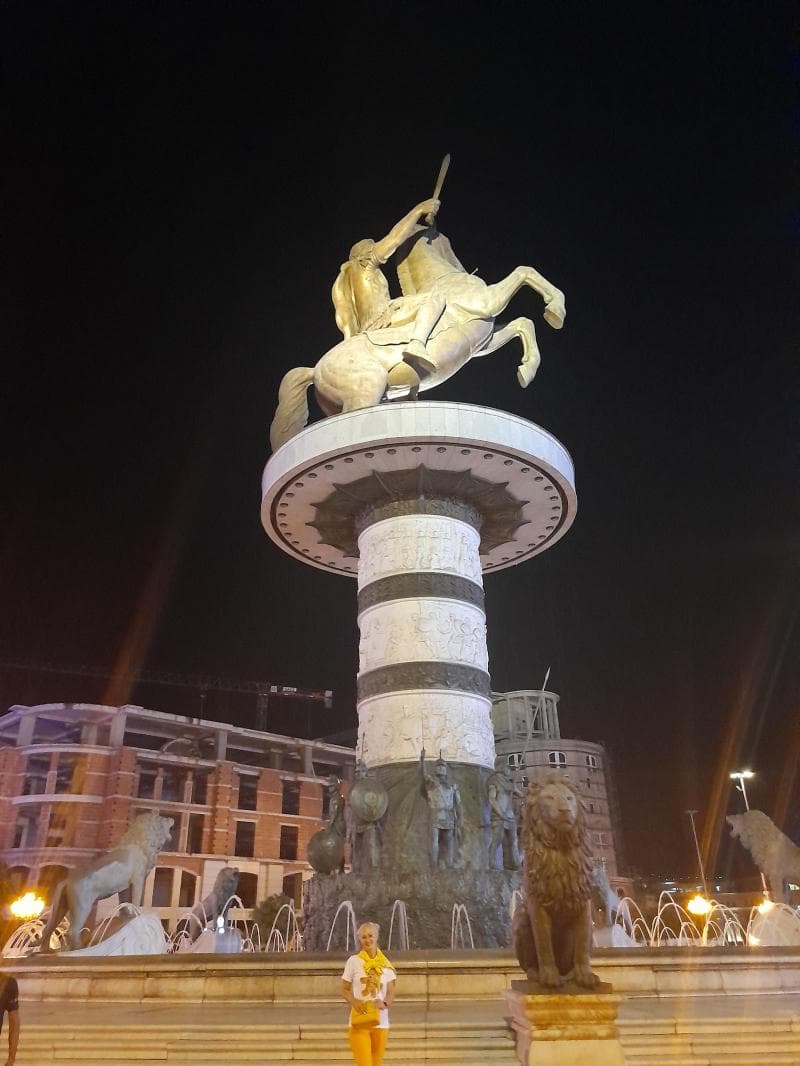
Discover the Central Arch of Skopje's Stone Bridge, an iconic landmark in North Macedonia connecting modern squares with the historic Old Bazaar.
Overview
The Stone Bridge in Skopje, North Macedonia, gracefully spans the Vardar River, acting as an enduring symbol and a vital artery connecting the city's vibrant Macedonia Square with the historic Old Bazaar. Often simply called 'Kamen Most' by locals, meaning 'Stone Bridge', it is far more than just a crossing; it is a profound historical monument. Its robust construction, characterized by a series of impressive stone arches, embodies centuries of history and cultural exchange. While the entire structure is remarkable, the prominent central arches, which allow the Vardar River to flow beneath, are particularly striking. From the riverbank, the full rhythm of these arches creates a visually powerful scene against the water. The bridge itself is a pedestrian link, inviting travelers to walk its ancient stones and take in panoramic views of the river, the city's diverse architecture, and its dynamic life. Its outline is so significant that it appears on Skopje's coat of arms and flag, underscoring its pivotal role in the city's identity.
History & Cultural Background
The Stone Bridge stands on foundations believed to date back to the 6th century, possibly after a catastrophic earthquake in 518 AD during the reign of Emperor Justinian I. However, the bridge as it largely appears today is widely attributed to the Ottoman period, constructed under the patronage of Sultan Mehmed the Conqueror between 1451 and 1469. This blend of historical theories highlights its deep roots and continuous importance through various empires. Over its long existence, the bridge has witnessed countless events and endured significant challenges, including a major earthquake in 1555 which damaged four of its pillars, prompting swift repairs that same year. It has been a silent witness to historical events, such as the execution of the rebel leader Karposh in 1689. In the 20th century, the bridge narrowly escaped destruction when retreating German forces reportedly mined it during World War II, but it was ultimately saved. The bridge's resilience through such tumultuous periods underscores its historical significance and its deep connection to Skopje's narrative.
What Makes It Special
What truly makes the Stone Bridge special is its role as a physical and symbolic link between disparate parts of Skopje. It connects the modern Macedonia Square with the ancient Old Bazaar, effectively bridging what some perceive as 'Ottoman' and 'modern,' 'historic' and 'socialist,' or 'Albanian' and 'Macedonian' parts of the city. This makes a walk across the bridge a journey through Skopje's layered history and diverse cultural fabric. The bridge's architectural marvel lies in its 12 or 13 semicircular arches, constructed from solid stone blocks and supported by robust columns. The craftsmanship involved, with travertine blocks interconnected by iron clamps and fastened with cast lead, speaks to the advanced engineering of its time. One interesting feature is that some of the middle pillars historically contained large, double-function rooms, possibly used to reduce load or even to house cannons. This ingenuity, combined with its enduring presence, makes each arch, especially those central to the river's flow, a testament to centuries of construction and adaptation.
Stories, Fun Facts & Local Details
The Stone Bridge is rich with stories and local lore. It is sometimes referred to as the 'Dušan Bridge', in honor of Stefan Dušan, the Emperor of Serbia, though its Ottoman construction is more widely accepted. For years, the bridge was the venue for a unique local initiative called 'Breakfast on the Bridge', where once a year, on a Sunday morning, a collective breakfast was held for those who reserved a spot. This tradition created a sense of community and celebrated the bridge not just as a passageway, but as a gathering place. It is said that crossing the bridge with a pure heart can bring good luck. The bridge's weathered stone and modest profile stand in stark contrast to some of the more theatrical, recently redeveloped areas around it, making it a genuine historical artifact amidst modern urban development. Its enduring strength against earthquakes and floods is often cited as a metaphor for Skopje's own resilience.
Visitor Perspective
For a visitor, walking across the Stone Bridge is an immersive experience. It's an opportunity to observe the traditional stone architecture, feel the gentle flow of the Vardar River beneath the arches, and soak in the lively atmosphere created by both locals and tourists. The bridge serves as an excellent viewpoint, offering prime photographic opportunities of Macedonia Square, the Old Bazaar, and the surrounding cityscape. Many recommend visiting during sunset or in the evening when the bridge is beautifully illuminated, creating a magical ambiance with lights reflecting on the water. It's easily accessible on foot from central Skopje and requires no special tickets or operating hours, allowing for a spontaneous stroll at any time. As you traverse its length, pausing near the middle allows you to look both ways – to the newer civic center on one side and the winding lanes of the Old Bazaar with its mosques and caravanserais on the other, offering a compressed glimpse into Skopje's diverse character.
Coordinates: 21.2599, 41.9965
View on Google Maps💬 How Travelers Describe This Place
Based on community votes
Must See
898Photogenic
853Beautiful
667Interesting
190Unique
32
Traveler Stories
Discover memorable experiences shared by travelers who have visited this place.
No traveler stories yet.
Be the first traveler to share what made this place memorable.

Tour
By
Spot
Discover amazing places around the world. Your journey starts here.
Explore
© 2026 TourBySpot. All rights reserved.