Cemetery (Petersfriedhof)
Salzburg, Austria
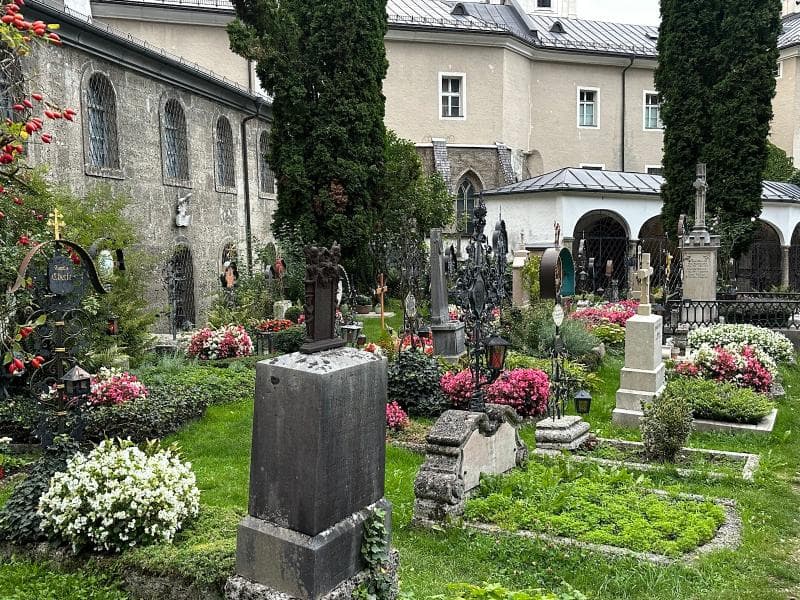
Explore Petersfriedhof, Salzburg's ancient cemetery within St. Peter's Abbey. Discover its rich history, notable graves, stunning architecture, and iconic catacombs in Austria.
Overview
St. Peter's Cemetery, or Petersfriedhof, is a profoundly tranquil and historically rich site nestled within the walls of St. Peter's Abbey in Salzburg, Austria. Situated gracefully at the foot of the Festungsberg, overlooked by the impressive Hohensalzburg Castle, it stands as one of Europe's oldest and most picturesque burial grounds. This unique cemetery is not merely a place of rest, but a beautifully maintained open-air museum, intertwining Salzburg's deep spiritual heritage with stunning Gothic and Baroque artistry. Its serene pathways, lush greenery, and elaborate gravestones invite quiet contemplation, offering a poignant glimpse into centuries of local life and enduring traditions.
History & Cultural Background
The origins of Petersfriedhof stretch back to approximately 700 AD, coinciding with the establishment of the adjacent St. Peter's Abbey by Saint Rupert of Salzburg. While believed to have been a burial site even earlier, its formal mention in deeds dates to 1139, with the oldest existing tombstone from 1288. This makes it, alongside Nonnberg Abbey's burial site, the oldest cemetery in Salzburg. Carved into the towering Mönchsberg cliffs above the cemetery are ancient catacombs, which might trace their existence to the Early Christian days, possibly between 400 and 800 AD, serving as places of worship and refuge. Historically, the cemetery was closed for new burials in 1878 when a municipal cemetery was established, but the monks of St. Peter's successfully petitioned for its reopening in 1930 (or 1938), ensuring its continued legacy as an active burial site.
What Makes It Special
Petersfriedhof stands apart due to its unique blend of natural beauty, profound history, and distinctive architecture. Unlike many cemeteries, it possesses an almost magical and serene atmosphere, with tombstones and chapels displaying intricate Gothic and Baroque styles, often adorned with wrought-iron designs. The graves are meticulously cared for, often featuring vibrant flowers and manicured mini-gardens, reflecting a deep respect for the deceased and a living tradition. Within the cemetery, visitors can find the late Gothic St. Margaret's Chapel and the Romanesque Chapel of the Holy Cross, adding layers of architectural interest. Furthermore, the catacombs, carved directly into the rock face, offer a fascinating journey into early Christian history, featuring chapels like the Maximuskapelle and the Gertraudenkapelle, consecrated in 1178 and dedicated to Thomas Becket. This harmonious integration of burial art, historical structures, and natural rock formations creates an unparalleled sense of place.
Stories, Fun Facts & Local Details
Petersfriedhof is a treasure trove of stories, deeply interwoven with Salzburg's illustrious past. Many notable figures found their final resting place here, including Wolfgang Amadeus Mozart's talented sister, Maria Anna 'Nannerl' Mozart, and the esteemed composer Michael Haydn, younger brother of Joseph Haydn. Santino Solari, the architect of the Salzburg Cathedral, is also buried within these hallowed grounds. Beyond individual graves, the cemetery is widely recognized for its cameo in the iconic film 'The Sound of Music,' where it provided the dramatic backdrop for the Von Trapp family's hiding place from the Nazis. A fascinating local detail is the tradition of grave maintenance; many plots are still lovingly tended by Salzburg families, often adorned with pansies, a flower whose name poetically means 'thoughts,' symbolizing remembrance. It's said that some crypts along the arcade walls are rented, with more elaborate designs corresponding to higher rental fees, ensuring a beautiful resting place for generations.
Visitor Perspective
For a curious traveler, a visit to Petersfriedhof is an immersive experience that transcends a typical cemetery visit. The atmosphere encourages a quiet and respectful demeanor, inviting visitors to wander the peaceful paths, admire the artistry of the grave markers, and absorb the profound sense of history. Exploring the catacombs, accessible for a small admission fee, offers a unique opportunity to step into ancient chambers that once served as early Christian meeting places and refuges. The cemetery is conveniently located in the Old Town, making it an easy and rewarding addition to any Salzburg itinerary. It provides a striking contrast to the bustling city, offering a moment of quiet reflection and a deeper connection to the spiritual and cultural heart of Salzburg.
Coordinates: 13.0451, 47.7966
View on Google Maps💬 How Travelers Describe This Place
Based on community votes
Must See
951Beautiful
491Unique
414Photogenic
310Interesting
277
Traveler Stories
Discover memorable experiences shared by travelers who have visited this place.
No traveler stories yet.
Be the first traveler to share what made this place memorable.

Tour
By
Spot
Discover amazing places around the world. Your journey starts here.
Explore
© 2026 TourBySpot. All rights reserved.