Cave Church
Budapest, Hungary
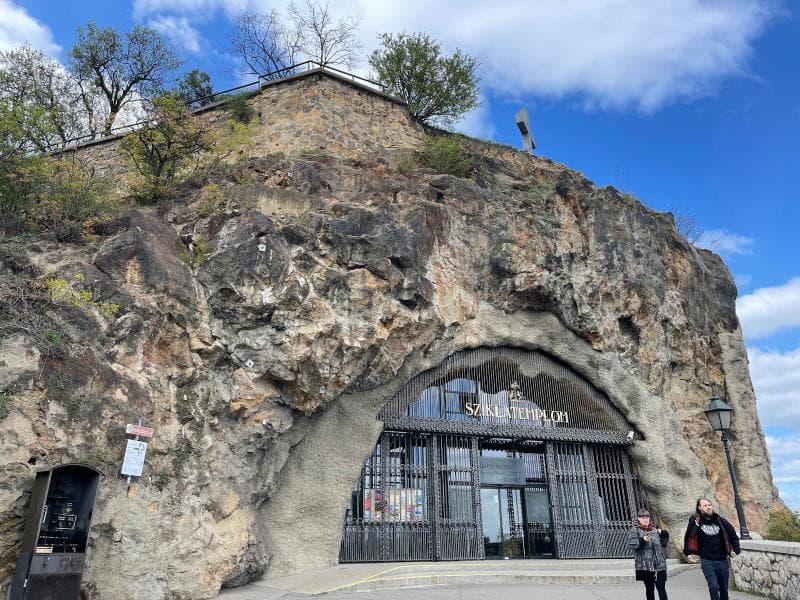
Explore Budapest's Cave Church (Sziklatemplom) on Gellért Hill, a unique spiritual sanctuary carved into natural caves with a rich history.
Overview
Tucked away within the verdant slopes of Gellért Hill in Budapest, Hungary, lies a hidden marvel known as the Cave Church, or Sziklatemplom in Hungarian. This unique spiritual sanctuary, managed by the Order of Pauline Monks, is not merely a church; it is an experience, carved directly into the natural cave system of the hill itself. Offering a serene escape from the bustling city, the Cave Church combines geological wonder with profound religious history, creating an atmosphere unlike any other place of worship. Its strategic location on Gellért Hill also provides visitors with breathtaking panoramic views of the Danube River, the elegant Liberty Bridge, and the Pest side of Budapest, making it a truly captivating destination.
History & Cultural Background
The history of the Cave Church is deeply intertwined with the ancient natural formations of Gellért Hill. The cave system itself, once known as Saint Ivan's Cave, is believed to have been inhabited by a hermit who utilized the thermal waters for healing purposes. The modern Cave Church began its journey in the early 20th century, inspired by a group of Hungarian pilgrims who visited the famous Marian shrine in Lourdes, France, in 1924. Emulating the grotto of Lourdes, construction commenced, with the first version of the chapel consecrated in 1926. The church was formally completed and inaugurated in 1931.
A significant chapter in its history unfolded with the return of the Pauline Fathers, the sole religious order founded in Hungary. After an absence of 150 years, the monks re-established their presence in Hungary in 1934, making the Cave Church their spiritual home. During World War II, the church briefly served an unexpected role as a field hospital for the Nazi army. However, a darker period arrived in 1951 when the Communist regime, aiming to suppress religious institutions, raided the chapel, sealed its entrance with a thick concrete wall, and imprisoned the monks. Tragically, the Pauline Superior, Ferenc Vezér, was executed following a show trial. The church remained closed and forgotten until the fall of communism. In 1989, the Pauline monks were able to return, breaking down the concrete barrier, and the church officially reopened to the public in 1991, with the wall's final remnants removed in 1992. Today, the Pauline monks continue to maintain and operate this historic site, upholding its spiritual legacy.
What Makes It Special
The Cave Church distinguishes itself through its remarkable natural setting. Unlike traditional churches, its interior embraces the rugged beauty of the natural cave walls, creating a uniquely serene and mystical atmosphere. The blend of natural rock formations with thoughtfully designed religious spaces fosters an environment of quiet contemplation. Though the decoration is modest, it enhances the feeling of worship rather than distracting from it. Within its cool interior, visitors can discover intricate frescoes, sculptures depicting Jesus, Mary, and various saints, and a notable replica of the Black Madonna of Częstochowa, Poland—a significant symbol for the Pauline Order. A poignant tribute can be found in the Polish Chapel, dedicated to St. Maximilian Kolbe, who bravely sacrificed his life in Auschwitz. The church also proudly houses valuable relics, including the tibia of Saint Paul the Hermit, further enriching its spiritual importance. Adding to its unique charm, the cave maintains a consistent and comfortable temperature, providing a natural refuge even during Budapest's warmest summer days.
Stories, Fun Facts & Local Details
Gellért Hill itself is steeped in legend, named after Saint Gerard, who, according to lore, was martyred here in 1046 by being rolled down the hill in a barrel. Interestingly, the ancient cave that now houses the church once provided shelter to a poor family who built a rudimentary home within its mouth during the 19th century. The sheer determination of the Communist regime to silence faith is underscored by the two-meter-thick concrete wall they erected to seal off the church's entrance, a stark physical testament to a turbulent era. Outside the entrance, visitors are greeted by a statue of St. Stephen, Hungary's first king, holding a model of a Romanesque church, connecting the site to Hungary's foundational Christian heritage. Local whispers even suggest that the cave system might connect to a vast network of underground tunnels beneath Budapest. For those interested in deeper insights, a Pauline reception center is available, offering historical context and audio guides, and the church also hosts a special exhibit of rare Russian metal icons.
Visitor Perspective
For the curious traveler, the Cave Church offers more than just sightseeing; it provides an opportunity for quiet reflection and spiritual connection. It remains an active religious center, with regular masses and prayers held by the Pauline monks. While generally open year-round, it is always wise to check current opening hours, as access may be restricted during religious services or special events. A modest entry fee typically applies for the visitor's center and guided tour, though donations are always appreciated to support the church's upkeep. Visitors are kindly requested to dress modestly, and often, shawls are provided at the entrance for women whose shoulders are uncovered. The church is conveniently accessible by public transport, with tram and bus stops at Gellért Square just a short walk away. A visit here usually takes around 30 minutes, allowing ample time to soak in the atmosphere. Its proximity to other Gellért Hill attractions, such as the Citadel, the Liberty Statue, and the famous Gellért Thermal Bath, makes it an ideal stop within a broader exploration of this historic part of Budapest.
Coordinates: 19.05205, 47.48477
View on Google Maps💬 How Travelers Describe This Place
Based on community votes
Must See
569Unique
476Interesting
465Photogenic
276Beautiful
128
Traveler Stories
Discover memorable experiences shared by travelers who have visited this place.
No traveler stories yet.
Be the first traveler to share what made this place memorable.

Tour
By
Spot
Discover amazing places around the world. Your journey starts here.
Explore
© 2026 TourBySpot. All rights reserved.