Cathedral Treasury
Split, Croatia
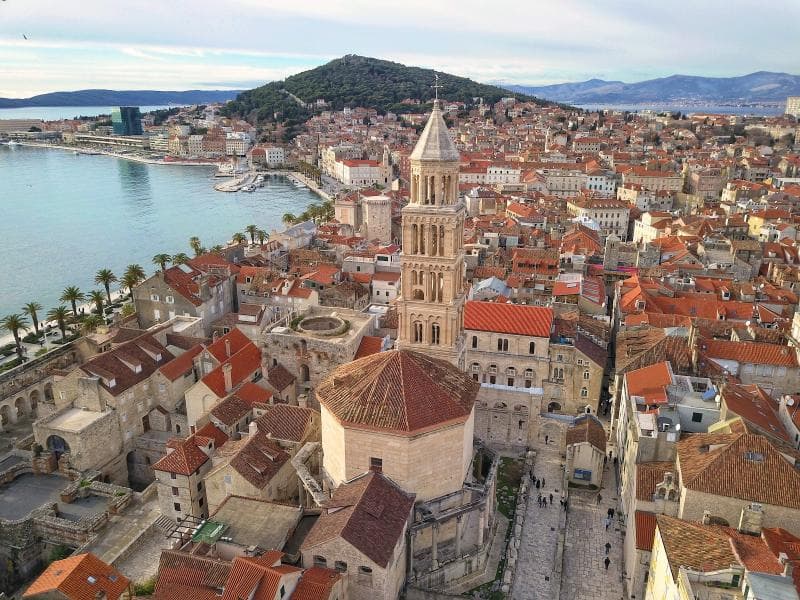
Explore the Cathedral Treasury of Saint Domnius in Split, Croatia, home to priceless religious artifacts, ancient manuscripts, and sacred art.
Overview
Nestled within the ancient walls of Diocletian's Palace in Split, Croatia, the Cathedral Treasury of Saint Domnius offers a profound journey into centuries of religious artistry and historical preservation. This sacred space, located on the first floor of the sacristy within the Cathedral of Saint Domnius, is not merely a collection of objects but a vibrant testament to the enduring faith and rich cultural heritage of the region. Visitors step into a quiet chamber filled with priceless artifacts, each telling a story of devotion, craftsmanship, and historical significance. It is a place where time seems to slow, inviting contemplation on the profound spiritual and artistic legacy of Split.
Considered one of the most valuable cathedral treasuries in Croatia, it safeguards an extraordinary array of sacral artworks, precious liturgical objects, and ancient manuscripts. From glistening goldsmith works to intricately embroidered vestments and venerable texts, the Treasury provides a unique glimpse into the artistic and religious practices that have shaped this iconic city over more than a millennium.
History & Cultural Background
The history of the Cathedral Treasury is inextricably linked with the Cathedral of Saint Domnius itself, which holds a fascinating origin story. The cathedral was originally built as the mausoleum of the Roman Emperor Diocletian in the early 4th century. Ironically, Diocletian was a notorious persecutor of Christians, including Saint Domnius (also known as Saint Duje), who was martyred in 304 AD. Centuries later, in the 7th century, the mausoleum was consecrated as a Catholic cathedral, a poignant transformation from a persecutor's tomb to a saint's shrine.
The Treasury began accumulating its riches as a repository for relics and valuable items used in liturgical ceremonies, reflecting the growing importance and wealth of the Archdiocese of Split-Makarska. Over the centuries, donations from devout patrons, the craftsmanship of local and international artisans, and the foresight of church leaders contributed to its impressive collection. The relics of Saint Domnius himself are among the most revered items, brought to the cathedral after his death, anchoring the Treasury to its foundational narrative of faith and sacrifice.
What Makes It Special
What truly sets the Cathedral Treasury apart is its remarkable collection of historical documents and artworks, some dating back to the earliest centuries of Christianity. It houses the 6th-century 'Book of Gospels', a profoundly significant piece of early Christian writing and among the oldest preserved manuscripts in Croatia. Another invaluable text is the 11th-century 'Supetar Cartulary', offering crucial insights into the legal and administrative history of the region. The 13th-century 'Historia Salonitana' by Thomas the Archdeacon of Split provides a historical account of Salona, the ancient Roman city near Split.
Beyond manuscripts, the Treasury boasts exquisite examples of goldsmith work spanning from the 13th to the 19th centuries, including ornate chalices and reliquaries adorned with precious gemstones. There are also beautiful mass vestments from the 14th to the 19th centuries, showcasing intricate embroidery and design. A 13th-century Romanesque panel painting of the 'Madonna and Child' is another artistic highlight, demonstrating the era's artistic brilliance. The sheer age and excellent preservation of these items, many still bearing profound spiritual weight, make the collection uniquely special.
Stories, Fun Facts & Local Details
The Treasury's collection often feels like a living history book, each artifact whispering tales of past generations. Imagine the hands that crafted the silver 'Madonna with a Child and 11 apostles' from the early 14th century, perhaps an Italian master or a talented local artist, creating a centerpiece for the St. Duje altar. A particularly poignant detail is that the Treasury underwent significant renovation and reopened in 2020, featuring Saint Jerome's translation of the Bible into Latin, known as the Vulgate, a monumental work in Christian history. Saint Jerome, the patron saint of Dalmatia, further connects the local heritage to broader European cultural narratives.
It's a quiet space where visitors are encouraged to absorb the atmosphere. Interestingly, photography is generally not allowed, ensuring that the experience remains deeply personal and respectful of the sacred objects. This policy subtly encourages visitors to truly see and reflect, rather than simply documenting their visit. While the cathedral itself is one of the oldest Catholic cathedrals still in use globally, the Treasury’s contents amplify this historical resonance, representing the ongoing custodianship of a rich spiritual and artistic legacy.
Visitor Perspective
Visiting the Cathedral Treasury is a contemplative experience, a peaceful counterpoint to the bustling energy of Diocletian's Palace outside. It offers a moment to connect with the deep historical and spiritual roots of Split. As you ascend to the first floor of the sacristy, you're stepping into a space dedicated to preserving the sacred. While detailed information directly on display might be limited, as some guides suggest, the sheer visual impact and historical weight of the objects speak volumes.
To truly appreciate the Treasury, approach it with an open mind and a curious heart, allowing the ancient texts, glittering liturgical objects, and solemn relics to transport you through time. It is an essential complement to understanding the Cathedral of Saint Domnius and the broader cultural narrative of Split, revealing the layers of history that have shaped this remarkable Croatian city. The quiet reverence of the space provides a powerful reminder of enduring faith and human creativity across centuries.
Coordinates: 16.44046, 43.50803
View on Google Maps💬 How Travelers Describe This Place
Based on community votes
Unique
965Interesting
629Must See
443Beautiful
184Photogenic
176
Traveler Stories
Discover memorable experiences shared by travelers who have visited this place.
No traveler stories yet.
Be the first traveler to share what made this place memorable.

Tour
By
Spot
Discover amazing places around the world. Your journey starts here.
Explore
© 2026 TourBySpot. All rights reserved.