Cathedral Square
Graz, Austria
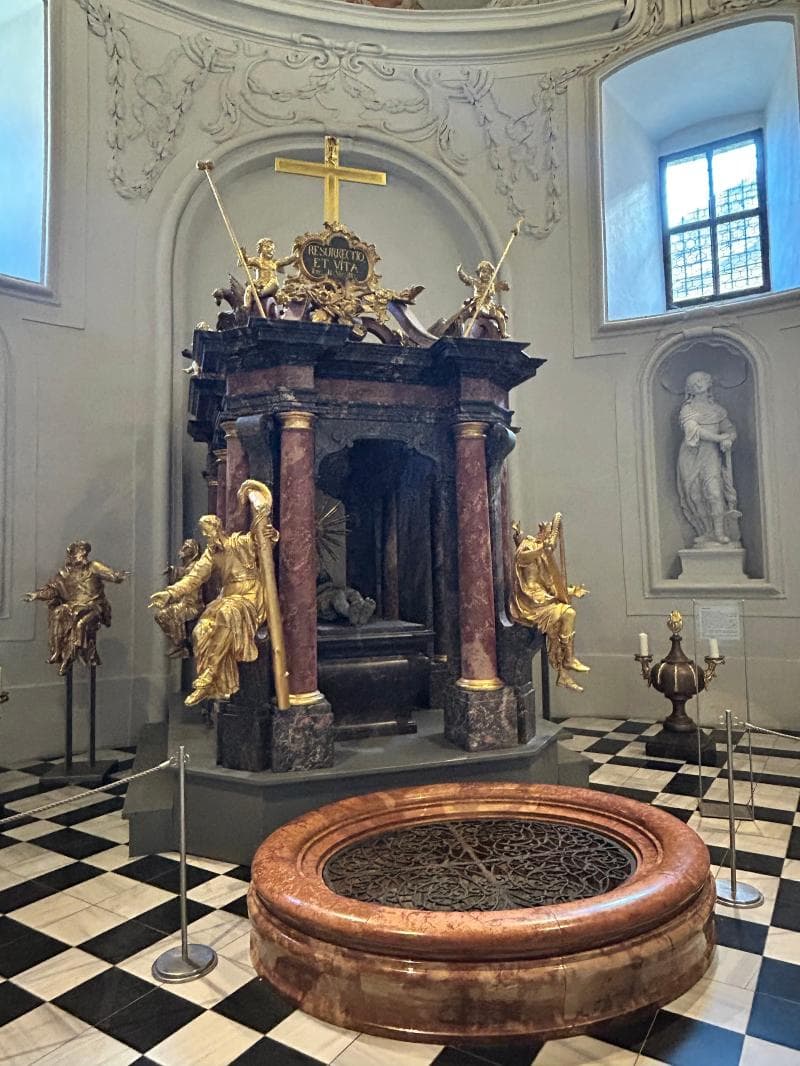
Explore Graz Cathedral in Graz, Austria – a historic blend of Gothic and Baroque architecture, home to the 'Gottesplagenbild' fresco and ancient relics.
Overview
Nestled in the heart of Graz, Austria, the Graz Cathedral, officially known as St. Giles' Cathedral or Grazer Dom, stands as a magnificent testament to centuries of history, faith, and architectural evolution. Dedicated to Saint Giles, the patron saint of Graz, this revered Roman Catholic cathedral serves as the seat of the Diocese of Graz-Seckau. While the term 'Cathedral Square' (Domplatz) commonly refers to the vibrant public space immediately surrounding the cathedral, it is this grand edifice itself that draws visitors with its compelling blend of Gothic majesty and Baroque splendor.
Its seemingly restrained exterior belies a wealth of artistic and historical treasures within, offering a profound journey through time for every curious traveler. The cathedral, together with the adjacent Mausoleum of Emperor Ferdinand II, forms a significant part of the 'Graz city crown' – a collection of historic buildings recognized as a UNESCO World Heritage site, underscoring its pivotal role in the city's cultural landscape.
History & Cultural Background
The site where Graz Cathedral now stands has been sacred since at least the 12th century, with a church dedicated to Saint Giles first documented in 1174. However, the current imposing structure began its life as the Hofkirche, or court church, under the ambitious patronage of Emperor Frederick III. Construction commenced in 1438, resulting in a quintessential Gothic hall church largely completed by 1464.
In the late 16th century, a transformative period began when Archduke Charles II entrusted the church to the Jesuits. For nearly two centuries, from 1577 to 1773, the Jesuits meticulously reshaped the interior, infusing it with the opulent and dramatic aesthetics of the Baroque era. This era introduced lavish stucco work, vibrant frescoes, and ornate altarpieces, creating the distinctive blend of styles seen today. In 1786, with Graz becoming an episcopal seat, the former court church was elevated to the status of a cathedral, cementing its importance as the spiritual heart of the region.
What Makes It Special
The Graz Cathedral is a compelling architectural dialogue between two dominant European styles: the soaring verticality of Gothic design and the dramatic ornamentation of the Baroque. Its seemingly austere, whitewashed Gothic exterior, a stark contrast to its richly decorated past, hides a spectacular interior where every corner reveals artistic brilliance.
A unique exterior highlight is the famed 'Gottesplagenbild' (Image of God's Plagues) fresco, located on the cathedral's south outer wall. Painted in 1485 and attributed to Thomas von Villach, this rare surviving Gothic fresco vividly depicts the three devastating plagues – locusts, war, and the Black Death – that afflicted Styria in 1480. It serves as a powerful historical document and a plea for divine mercy.
Inside, visitors are greeted by a breathtaking Baroque high altar, crafted between 1730 and 1733 by Georg Kraxner, dedicated to Saint Giles. Further artistic treasures include medieval frescoes, among them a fragment of Saint Christopher bearing the likeness of Emperor Frederick III, and two historic ivory reliquaries believed to be 15th-century bridal chests, possibly created by Andrea Mantegna, now used to house sacred relics.
Stories, Fun Facts & Local Details
The 'Gottesplagenbild' fresco offers more than just a historical account; it is a profound piece of storytelling. Painted as a direct response to the devastating events of 1480, it presents a visual narrative, much like medieval 'comics,' illustrating God's wrath and humanity's desperate plea for forgiveness and reconciliation.
Another fascinating detail is the recurring motif of 'AEIOU' found in various places within the cathedral. This enigmatic motto, associated with Emperor Frederick III, is often interpreted as 'Austriae Est Imperare Orbi Universo' (Austria is destined to rule the world) or 'Alles Erdreich Ist Oesterreich Untertan' (All the world is subject to Austria), a subtle imperial signature left by its founder.
The exquisite ivory reliquaries, now holding Christian martyrs' bones, began their journey as luxurious bridal chests belonging to Paola Gonzaga, daughter of the Duke of Mantua. Their journey from aristocratic possessions to sacred vessels adds a layer of romantic and spiritual intrigue to their already impressive craftsmanship.
The cathedral also boasts a magnificent organ, built in 1978 and recently renovated in 2023, featuring 5,354 pipes and 73 stops, ensuring its majestic presence during services and concerts.
Visitor Perspective
Approaching the Graz Cathedral is an experience that begins long before you step through its doors. The open space of Domplatz, the 'Cathedral Square,' allows for an unobstructed view of its impressive, albeit unassuming, exterior. Taking a moment here to appreciate the Gothic lines and, crucially, to observe the 'Gottesplagenbild' on the south wall, sets the stage for the historical depth you are about to encounter.
Once inside, the sheer scale and harmonious blend of Gothic structure with Baroque artistry are immediately apparent. The cathedral invites a contemplative journey, from the grandeur of the high altar to the delicate details of the frescoes and reliquaries. Admission to the cathedral is generally free, making it an accessible historical and spiritual retreat. Whether you are an art enthusiast, a history buff, or a seeker of quiet reflection, Graz Cathedral offers an enriching and memorable visit, allowing you to connect with centuries of Austrian heritage.
Coordinates: 15.4422, 47.072
View on Google Maps💬 How Travelers Describe This Place
Based on community votes
Beautiful
915Interesting
873Photogenic
422Must See
123Unique
53
Traveler Stories
Discover memorable experiences shared by travelers who have visited this place.
No traveler stories yet.
Be the first traveler to share what made this place memorable.

Tour
By
Spot
Discover amazing places around the world. Your journey starts here.
Explore
© 2026 TourBySpot. All rights reserved.