Cathedral
Seoul, South Korea
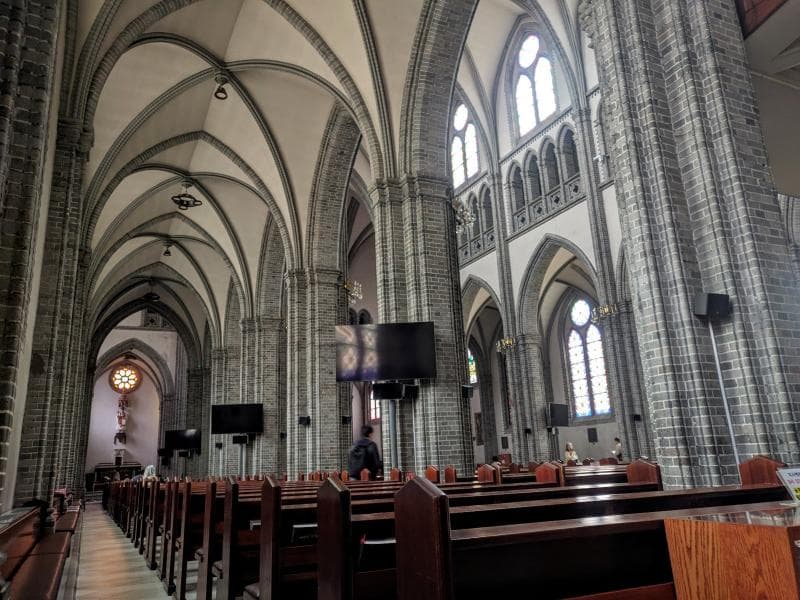
Explore Myeongdong Cathedral in Seoul, South Korea, a historic Gothic Revival landmark and spiritual heart of Korean Catholicism.
Overview
Nestled amidst the vibrant and energetic streets of Myeongdong, Seoul, stands the majestic Myeongdong Cathedral, officially known as the Cathedral Church of the Virgin Mary of the Immaculate Conception. This revered landmark serves as the national cathedral of the Archdiocese of Seoul and is a profound symbol of Catholic faith and Korean history. It offers a striking architectural contrast to the modern cityscape, inviting visitors into a realm of peace and historical significance. Its Gothic Revival architecture, the first of its kind in Korea, makes it a unique visual spectacle in the heart of the capital.
More than just a place of worship, Myeongdong Cathedral is a living monument that embodies centuries of Korean Catholic heritage and a beacon of hope during periods of social and political unrest. Its serene presence in one of Seoul's busiest shopping districts creates a unique juxtaposition, drawing both pilgrims and curious travelers seeking a moment of reflection.
History & Cultural Background
The history of Myeongdong Cathedral is deeply intertwined with the remarkable story of Catholicism in Korea. Unlike many other nations where Christianity was introduced by foreign missionaries, Catholicism in Korea began organically. Approximately 250 years ago, Korean scholars encountered Western literature and, inspired by concepts of equality and spiritual truth, independently embraced these ideas, forming the nation's first Catholic community in 1784 at the very site where the cathedral now stands.
This early community faced severe persecution during the Joseon Dynasty, when Christianity was prohibited, leading to many martyrs. The land itself became spiritually significant, having been home to Thomas Kim Bum-woo, regarded as Korea's first Catholic martyr.
Construction of the cathedral began in 1894 and was completed in 1898, under the direction of French priest Father Eugène-Gabriel Coste. It was dedicated on May 29, 1898, and at the time, it stood as the tallest building in Seoul, even towering over the royal palace. The South Korean government officially designated Myeongdong Cathedral as Historic Site No. 258 on November 22, 1977, recognizing its immense cultural and historical value.
Beyond its religious role, the cathedral played a pivotal part in Korea's modern history, particularly during the military dictatorships of the 1970s and 1980s. It became a sanctuary and a rallying point for pro-democracy activists and critics of the regime, earning it the nickname 'Mecca of pro-democracy activists.'
What Makes It Special
Myeongdong Cathedral stands out for several compelling reasons. Architecturally, it is celebrated as Korea's first Gothic-style church and the first Western-style brick building in the country. While European Gothic cathedrals are typically built from stone, Myeongdong Cathedral uniquely utilizes over twenty types of locally fired red and gray bricks. This choice of material gives the facade a distinctive warmth and depth, especially when illuminated by natural light, blending European design with indigenous Korean materials.
The interior features a cruciform floor plan with a 23-meter-high nave, ribbed vaulting, pointed arches, and beautiful stained-glass windows depicting biblical scenes and the Mysteries of the Rosary, which were restored to their original condition in 1982. Beneath the main altar lies a crypt, a solemn space containing the relics of nine Korean martyrs, including Bishop Laurent-Joseph-Marius Imbert and Father Maubant, who perished during the 1866 persecutions. This crypt offers a powerful connection to the sacrifices made for faith in Korea.
Its location is also incredibly unique; providing a tranquil oasis of spiritual contemplation directly adjacent to the bustling commercial hub of Myeongdong, it serves as a profound symbol of stillness amid urban dynamism.
Stories, Fun Facts & Local Details
A fascinating aspect of Myeongdong Cathedral is its hidden cultural complex, the '1898 Plaza,' located beneath the church. Named after the year of the cathedral's consecration, this underground space houses a Catholic-themed bookstore, cafes, and shops selling religious items and souvenirs. It provides a contemporary extension to the spiritual experience, allowing visitors to delve deeper into Korean Catholic culture.
The cathedral's impressive steeple, reaching 45 meters, once made it the tallest structure in Seoul, a fact that resonated significantly during its completion. Its construction was a monumental undertaking, funded by the Paris Foreign Missions Society, and overseen by a French priest who unfortunately passed away before its completion.
The unique, self-initiated beginning of Catholicism in Korea, born from intellectual curiosity rather than foreign evangelism, is a compelling narrative that sets Korean Catholicism apart globally. The cathedral stands as a testament to the resilience of this faith.
Visitor Perspective
Myeongdong Cathedral welcomes visitors of all faiths. There is no entrance fee, allowing everyone to explore its grounds, admire the architecture, and find a quiet space for contemplation. Modest dress and quiet conduct are expected, especially within the sanctuary, out of respect for worshippers. The cathedral also offers an English Mass every Sunday, catering to international visitors.
The best times to visit are typically mornings or late afternoons, when the crowds are thinner, and the light enhances the cathedral's beautiful red-brick facade. While photography is generally permitted, it is advised to be discreet, particularly during services. Venturing inside, you'll find a serene atmosphere that provides a profound contrast to the lively streets of Myeongdong just outside its gates, offering a unique cultural and spiritual experience in the heart of Seoul.
Coordinates: 126.98733, 37.56328
View on Google Maps💬 How Travelers Describe This Place
Based on community votes
Photogenic
683Beautiful
536Must See
489Unique
251Interesting
88
Traveler Stories
Discover memorable experiences shared by travelers who have visited this place.
No traveler stories yet.
Be the first traveler to share what made this place memorable.

Tour
By
Spot
Discover amazing places around the world. Your journey starts here.
Explore
© 2026 TourBySpot. All rights reserved.