Cathedral Museum
Frankfurt, Germany
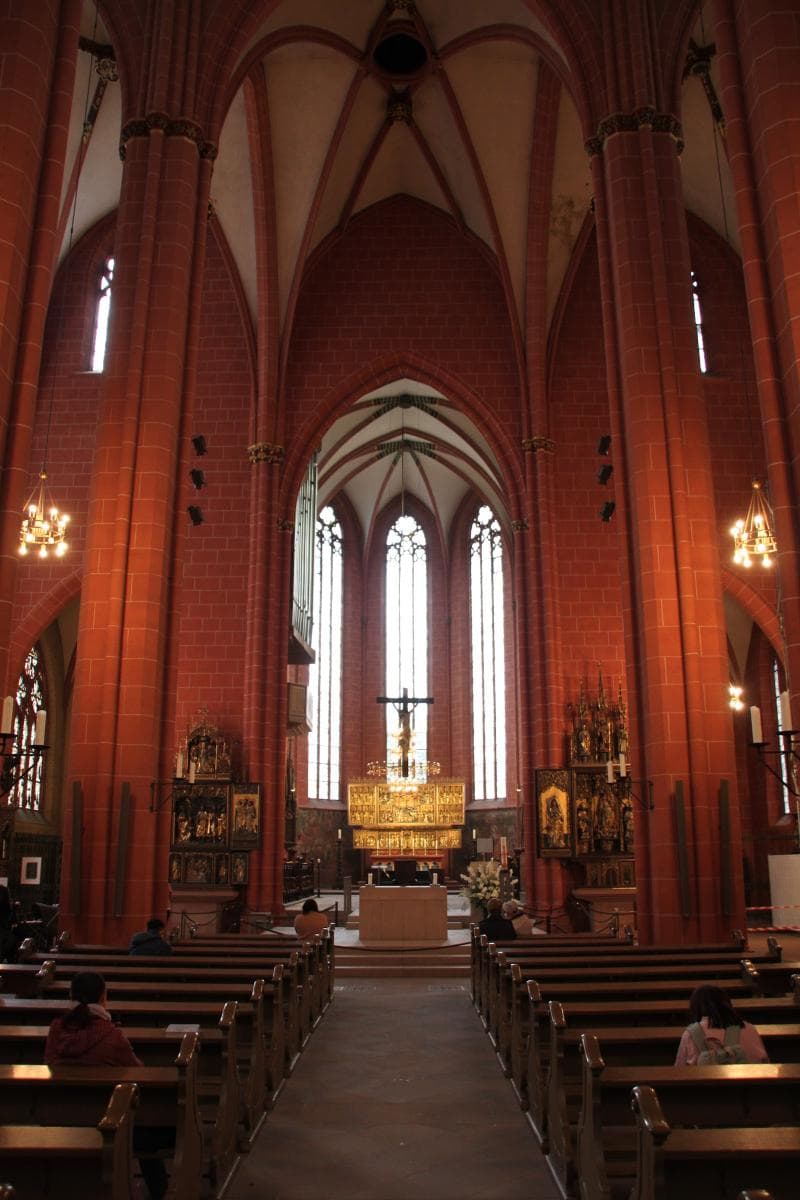
Discover the Cathedral Museum in Frankfurt, Germany. Explore sacred art, imperial treasures, and ancient artifacts from the historic Frankfurt Cathedral.
Overview
Nestled within the venerable walls of the Imperial Cathedral of Saint Bartholomew (Kaiserdom St. Bartholomäus) in Frankfurt, Germany, lies the captivating Cathedral Museum, or Dommuseum. It serves as a guardian of centuries of religious art, cultural heritage, and profound historical narratives directly tied to one of Germany's most significant ecclesiastical structures. Far from being a mere collection of artifacts, the museum offers a unique journey through time, showcasing the spiritual and political importance of the Cathedral in the Holy Roman Empire and the city of Frankfurt. It's an essential stop for any curious traveler seeking to understand the deep roots of this dynamic city's past.
The Dommuseum primarily exhibits treasures from the three collegiate churches of Frankfurt: St. Bartholomew, St. Leonhard, and Liebfrauen. These aren't just relics; they are tangible pieces of history that tell stories of faith, power, and artistry that flourished across generations. The museum's carefully curated displays provide an intimate look at the liturgical life and the grand imperial ceremonies that defined the Cathedral's role for hundreds of years.
History & Cultural Background
The history of the Frankfurt Cathedral, and by extension its museum, stretches back far beyond its Gothic facade. Archaeological findings reveal that the site itself has been continuously inhabited since the Neolithic era. A Merovingian palace chapel stood here in the 6th century, laying the groundwork for what would become a pivotal site in European history.
While never officially a bishop's seat, the Cathedral earned its 'Imperial' moniker due to its central role in the Holy Roman Empire. From 1356, it was the designated site for the election of German kings, and from 1562 until 1792, it hosted the coronations of ten Holy Roman Emperors. Imagine the splendor and gravitas of these events unfolding within these very walls. The Cathedral Museum, opened in 1987, was established to preserve and interpret the rich legacy of this extraordinary past, housing objects that witnessed, and were indeed part of, these momentous occasions.
The museum's collection reflects the fervent devotion and generous patronage of Frankfurt's citizens, clergy, patricians, and nobility. Over the centuries, they commissioned and donated exquisite pieces of gold and silver liturgical equipment, richly embroidered vestments for various feast days, illuminated books, intricate paintings, and sculptures, all of which now constitute the museum's precious treasury.
What Makes It Special
What truly sets the Dommuseum apart is its ability to bring history to life through its exceptional exhibits. One of its most poignant and fascinating displays includes artifacts discovered during restoration work between 1991 and 1994: the contents of a grave belonging to two children, dating back to around 700 CE. Among these early medieval finds are small pots, jars, fragments, and remarkably, a gold chain, golden earrings, a gold disc clasp (fibula), and three gold rings. These precious items offer a rare and touching glimpse into the lives, and indeed the deaths, of early inhabitants of Frankfurt, hinting at a past that predates the grand cathedral we see today.
Beyond the archaeological wonders, the museum houses accessories directly linked to the imperial elections and coronations, allowing visitors to connect with the immense political and ceremonial significance of the Cathedral. The exhibits are not merely static displays; they evoke the profound spiritual and temporal power that radiated from this sacred space. They tell a story of artistic mastery meeting religious devotion, creating objects of breathtaking beauty and historical weight.
Stories, Fun Facts & Local Details
The discovery of the children's grave is a particularly evocative story. Imagine archaeologists unearthing not just bones, but also delicate golden jewelry, suggesting a burial of considerable importance, perhaps even 'royalty' from a time long before modern Frankfurt existed. While some informally refer to the deceased as the 'Frankfurt princess,' the official records denote them as two children, whose grave relics are carefully preserved and presented in the museum's first showcase.
Another interesting detail is that the museum's main exhibition space is housed within the medieval cloister of the Cathedral, offering a beautiful and historically resonant setting for its collections. The museum also showcases how the Cathedral was meticulously equipped for festive worship throughout the centuries, from the elaborate vestments worn by clergy to the intricate altar pieces. These details paint a vivid picture of the vibrant religious life that pulsed through the Cathedral's stone arteries.
Visitor Perspective
Visiting the Cathedral Museum is an enriching experience that complements any exploration of the Frankfurt Cathedral. Located centrally in Frankfurt am Main, near the historic Römerberg square, it is easily accessible by public transport, with the Dom/Römer U-Bahn station just a few steps away.
Visitors can typically explore the museum in conjunction with the Cathedral and its tower climb, with an average visit lasting between one to two hours, depending on one's interest in the detailed exhibits. The museum provides insights into the Cathedral's architecture and history, often with information available in English to cater to international visitors. To make the experience even more accessible, the museum participates in 'Satourday,' offering free admission for children and families on the last Saturday of every month, and visitors with a Frankfurt Card can enjoy reduced admission rates. The Dommuseum is generally open from Wednesday to Friday, 10 a.m. to 5 p.m., and on Saturdays, Sundays, and holidays from 11 a.m. to 5 p.m., remaining closed on Mondays and Tuesdays.
Coordinates: 8.685420398244057, 50.11082477034031
View on Google Maps💬 How Travelers Describe This Place
Based on community votes
Unique
791Interesting
514Beautiful
457Must See
252Photogenic
207
Traveler Stories
Discover memorable experiences shared by travelers who have visited this place.
No traveler stories yet.
Be the first traveler to share what made this place memorable.

Tour
By
Spot
Discover amazing places around the world. Your journey starts here.
Explore
© 2026 TourBySpot. All rights reserved.