Castle Ruins
Vilnius, Lithuania
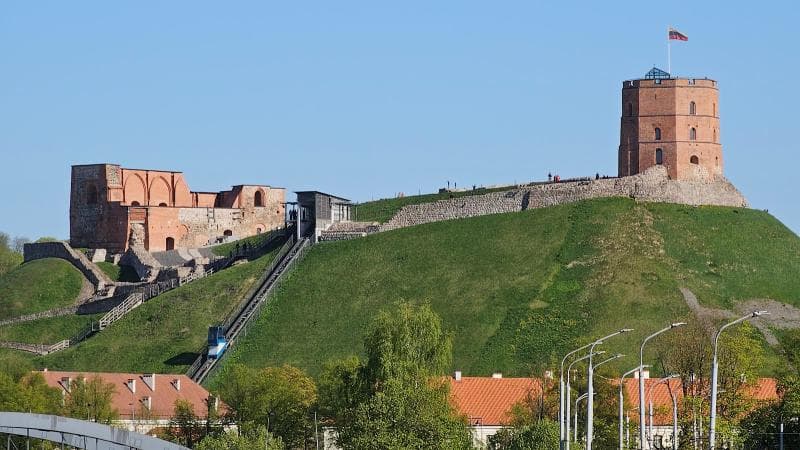
Explore the historic Castle Ruins on Gediminas Hill in Vilnius, Lithuania, home to Gediminas Castle Tower and panoramic city views.
Overview
Perched majestically atop Gediminas Hill in Vilnius, Lithuania, lie the evocative Castle Ruins, a testament to centuries of Lithuanian history. While the iconic Gediminas Castle Tower stands as the most prominent surviving structure, the broader site encompasses the archaeological remains of what was once the sprawling Upper Castle. This historic complex offers visitors not only a breathtaking panoramic vista of Vilnius's Old Town, the winding Neris River, and the modern city skyline, but also a tangible connection to the nation's profound past. The area, often referred to as the Gediminas Castle complex, serves as a powerful symbol of Lithuanian statehood and resilience, housing a museum within its tower that beautifully narrates the story of Vilnius and the Grand Duchy of Lithuania.
History & Cultural Background
The origins of the Castle Ruins trace back to ancient times, with archaeological research revealing human habitation on Gediminas Hill since the Neolithic period. The legend of Vilnius's founding is intrinsically linked to this very spot: Grand Duke Gediminas, after a prophetic dream of an iron wolf howling on the hill, was advised by a pagan priest to establish a city whose fame would spread worldwide. Following this vision, wooden fortifications were first erected here by Gediminas himself around the 13th century.
The transformation to a more formidable brick castle began in the 14th century, with the first brick castle being completed by Grand Duke Vytautas the Great in 1409. Historically, the Vilnius Castle complex comprised not just the Upper Castle (of which the tower and ruins remain), but also the Lower Castle and the now-lost Crooked Castle. This strategic location made it a crucial defensive stronghold, particularly during the arduous wars with the Teutonic Knights, where it played a vital role in protecting the city. However, after enduring significant damage during the mid-17th century wars with Moscow, the castle's defensive function waned, and its walls and towers gradually fell into ruin, leaving behind the archaeological remnants we see today. The site even served as a prison for nobles during some periods.
What Makes It Special
What truly sets the Castle Ruins and Gediminas Castle Tower apart is their profound symbolic significance for the Lithuanian nation. This site is not merely an ancient landmark; it is the enduring emblem of Lithuanian independence and national identity. The Lithuanian tricolor flag was first raised atop the tower in 1919, symbolizing the nation's fight for freedom, and again in 1988 during the independence restoration movement, marking pivotal moments in the country's history.
Beyond its symbolism, the location offers unparalleled panoramic views that are a photographer's delight, showcasing the charming red roofs of Vilnius Old Town, the meandering Vilnia and Neris Rivers, and the evolving modern cityscape. The museum inside the tower provides a rich educational experience, displaying archaeological findings from the hill, intricate models of the Vilnius castles from various centuries, and historical armaments, allowing visitors to visualize the castle's former glory. The preserved ruins themselves, albeit largely excavated foundations and remnants, speak volumes of the architectural and military prowess of the Grand Duchy of Lithuania, inviting reflection on its storied past.
Stories, Fun Facts & Local Details
The legend of Grand Duke Gediminas's iron wolf dream, which inspired the founding of Vilnius, is perhaps the most cherished local tale associated with these ruins, weaving a mystical narrative into the city's very inception. A poignant discovery made during restoration work in 2017 revealed the remains of 20 rebels from the 1863-1864 uprising, who had been executed and buried on the hill. Their ceremonial reburial in 2019 underscored the site's ongoing connection to national struggle and remembrance.
Such was the importance of Gediminas Castle Tower that it was once depicted on the former national currency, the Litas, solidifying its place in the national consciousness. Furthermore, the tower's function evolved dramatically over time; from a vital defensive outpost, it transitioned into a noble prison, and later even served as a post for the city's fire-watch service in the 19th century, highlighting its adaptability through history. It is also said that the renowned Lithuanian artist M.K. Čiurlionis and his fiancée once greeted the dawn from Gediminas Hill, adding a romantic artistic touch to its historical tapestry.
Visitor Perspective
Visiting the Castle Ruins and Gediminas Castle Tower is an enriching experience for any traveler. Access to the top of Gediminas Hill is convenient, either by a pleasant walk up a well-maintained footpath or by taking a modern funicular for a more relaxed ascent. Once at the summit, the sweeping views of Vilnius are truly unforgettable, with clear mornings and late afternoons often providing the best light for photography and appreciation. Inside the three-story tower, visitors can explore the museum's exhibits by climbing its narrow steps, encountering a range of artifacts and interactive displays that bring the history of the castle and the Grand Duchy of Lithuania to life. Audiovisual guides are available, making the historical journey accessible and engaging. The entire experience offers a profound journey through time, allowing one to literally walk through the layers of history that have shaped Vilnius and Lithuania.
Coordinates: 25.2907, 54.6867
View on Google Maps💬 How Travelers Describe This Place
Based on community votes
Unique
1.0kMust See
869Beautiful
309Interesting
100Photogenic
63
Traveler Stories
Discover memorable experiences shared by travelers who have visited this place.
No traveler stories yet.
Be the first traveler to share what made this place memorable.

Tour
By
Spot
Discover amazing places around the world. Your journey starts here.
Explore
© 2026 TourBySpot. All rights reserved.