Carpet Museum Area
Baku, Azerbaijan
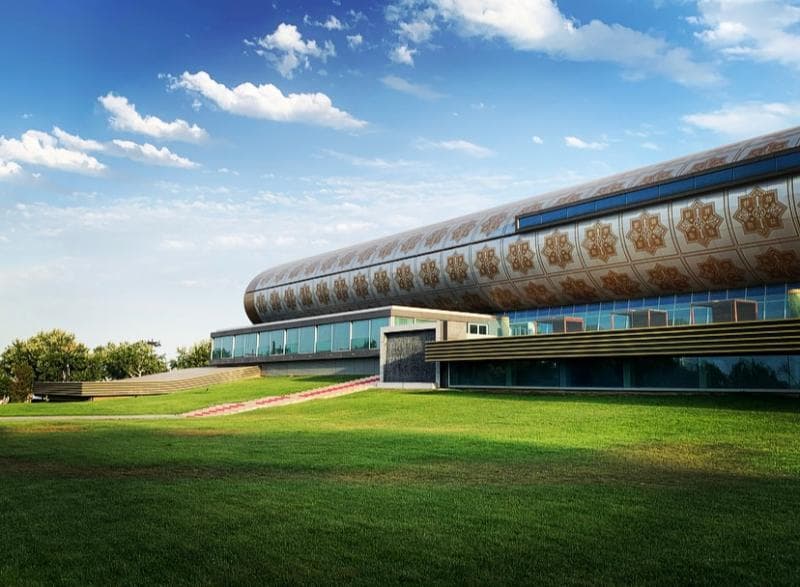
Explore the Azerbaijan National Carpet Museum in Baku, Azerbaijan, a rolled-carpet-shaped marvel showcasing ancient weaving traditions.
Overview
Nestled gracefully within the expansive Baku Boulevard, the Carpet Museum Area centers around the Azerbaijan National Carpet Museum, a truly unique cultural institution in Baku, Azerbaijan. This architectural marvel, resembling a colossal rolled-up carpet, immediately captivates visitors with its distinctive design by Austrian architect Franz Janz. More than just a museum, it stands as a vibrant testament to Azerbaijan's rich heritage of carpet weaving, an art form deeply ingrained in the nation's identity and recognized by UNESCO. It serves as a custodian of an extraordinary collection, showcasing the evolution, artistry, and profound cultural significance of Azerbaijani carpets across centuries.
As the world's first specialized museum dedicated solely to carpets, it offers an immersive journey into a craft that has shaped the Azerbaijani spirit for millennia. The museum houses the largest collection of Azerbaijani carpets globally, presenting an intricate tapestry of history through its vibrant exhibits. Its strategic location on the picturesque Seaside Boulevard makes it an accessible and iconic landmark, inviting curious travelers to delve into the intricate world of Azerbaijani textile art.
History & Cultural Background
The story of the Azerbaijan National Carpet Museum began in 1967, established with the foresight to preserve and popularize Azerbaijan's ancient carpet weaving traditions. Initially, the museum found its home within the historic Juma Mosque in Baku's Old City, later moving to the former Lenin Museum. Its journey culminated in 2014 with the inauguration of its purpose-built structure on Baku Boulevard, a move that solidified its prominence as a modern cultural hub.
Azerbaijani carpet weaving is an art form whose roots stretch back to the Bronze Age, with archaeological findings testifying to its ancient origins. For generations, this craft has been a cornerstone of Azerbaijani life, traditionally passed down orally and practically, often within families, particularly by women. Carpets were not merely decorative items; they were integral to daily life, serving as floor coverings, symbols of wealth and status, and even diplomatic gifts. The artistry reached new heights by the 16th century, with carpets woven with gold and silver threads, depicting scenes that elevated them to the status of fine art. This profound cultural significance was formally recognized in 2010 when Azerbaijani carpet weaving was inscribed on UNESCO's Representative List of the Intangible Cultural Heritage of Humanity.
What Makes It Special
The Azerbaijan National Carpet Museum is extraordinary not only for its world-class collection but also for its symbolic architecture. The building itself is a work of art, a giant rolled carpet that visually expresses its purpose. This design, envisioned by Franz Janz, creates a captivating prelude to the treasures housed within.
Inside, the museum boasts over 10,000 items, including some dating back to the Bronze Age, with the majority from the 17th to 20th centuries. It comprehensively covers seven regional carpet weaving schools of Azerbaijan, each with its distinct styles, motifs, and color palettes. Visitors can explore various sections dedicated to pile carpets, flat-woven carpets, artistic metalwork, ceramics, textiles, costumes, embroidery, and jewelry, providing a holistic view of Azerbaijani applied arts.
The museum's commitment to preserving and promoting this heritage extends beyond static displays. It functions as a dynamic research center, hosting international symposiums, conferences, and workshops that draw scholars and art enthusiasts worldwide.
Stories, Fun Facts & Local Details
One fascinating aspect of Azerbaijani carpets is their ability to 'speak' through intricate patterns and symbols. Motifs such as 'buta' (paisley), dragons, the tree of life, and various geometric and Islamic symbols are not just decorative; they convey messages related to fertility, protection, spirituality, and the natural world, telling stories of the Azerbaijani people's beliefs and values.
A notable figure in the museum's history is Latif Karimov, a celebrated carpet designer and scientist who was instrumental in its establishment. He is often referred to as the 'father of Azerbaijani carpet science'. Some carpets displayed in the museum are family heirlooms, including a carpet bag gifted to a bride in 1724 and a horse-cover from 1727, offering a personal glimpse into the past. The museum also proudly displays a permanent collection from the Shusha Museum of History, including pieces that were saved during conflict and are now part of an exhibition titled 'Burned Culture', highlighting the resilience of cultural heritage.
Visitor Perspective
For the curious traveler, a visit to the Carpet Museum Area offers an enriching and aesthetically pleasing experience. The museum's engaging layout guides you through the evolution of carpet weaving, from simple ancient techniques to the complex masterpieces of later eras. Live demonstrations of carpet making allow visitors to witness this ancient craft firsthand, providing a deeper appreciation for the skill and dedication involved.
Beyond the visual spectacle, the museum ensures accessibility, with exhibition texts available in Braille for visitors with visual impairments. A well-stocked gift shop offers authentic Azerbaijani carpet souvenirs, allowing travelers to take a piece of this rich cultural heritage home. Located conveniently on the Seaside Boulevard, the museum is easily reachable by public transport, including the nearby Icherisheher metro station, making it a perfect addition to any Baku itinerary.
Coordinates: 49.83556, 40.35972
View on Google Maps💬 How Travelers Describe This Place
Based on community votes
Interesting
1.0kBeautiful
869Unique
309Photogenic
100Must See
33
Traveler Stories
Discover memorable experiences shared by travelers who have visited this place.
No traveler stories yet.
Be the first traveler to share what made this place memorable.

Tour
By
Spot
Discover amazing places around the world. Your journey starts here.
Explore
© 2026 TourBySpot. All rights reserved.