Carpet Displays
Ashgabat, Turkmenistan
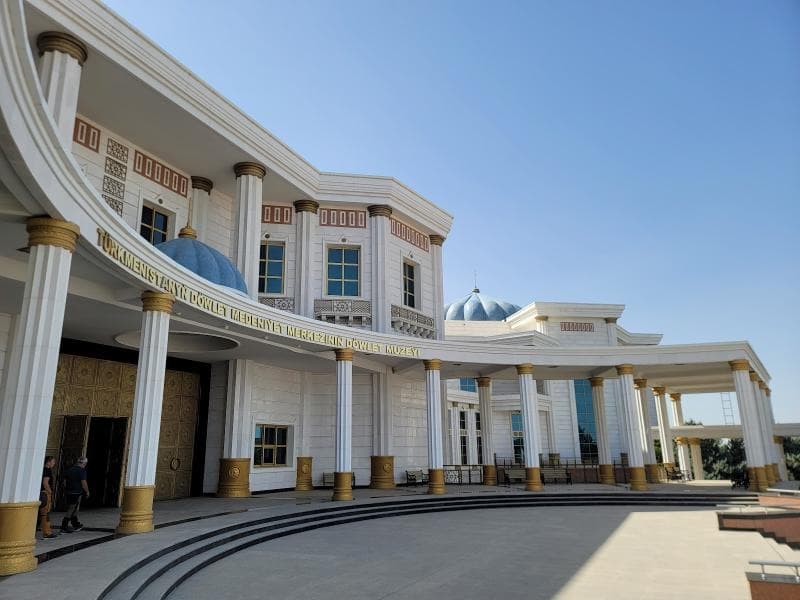
Explore the exquisite Carpet Displays at the National Museum of Turkmenistan in Ashgabat, showcasing centuries of Turkmen weaving artistry and tribal identity.
Overview
Deep within the expansive National Museum of Turkmenistan in Ashgabat, visitors uncover a captivating world dedicated to the nation's most revered art form: carpet weaving. This grand institution, also known as the State Museum of the State Cultural Center of Turkmenistan, serves as a comprehensive repository of the country's rich history, culture, and ethnography. Among its diverse exhibits, the Carpet Displays stand out as a vibrant testament to the enduring legacy and profound significance of Turkmen carpets. Here, intricately woven masterpieces tell stories of nomadic life, tribal identity, and a heritage meticulously preserved through generations.
The museum's carpet section offers a unique opportunity to appreciate the artistry and cultural depth embedded in each knot and pattern. Far more than mere floor coverings, these textiles are considered the 'soul of the Turkmens,' embodying their spiritual values and historical narrative. From ancient fragments to monumental contemporary works, the displays provide a visual journey through centuries of unparalleled craftsmanship, showcasing why Turkmen carpets hold such a distinguished place in global textile art.
History & Cultural Background
The art of Turkmen carpet weaving boasts a history spanning thousands of years, with archaeological evidence suggesting its practice since ancient times. Originating from the nomadic tribes of Central Asia, these carpets were crafted almost entirely from local materials, primarily wool from their herds, dyed with natural pigments. The distinct geometric patterns, known as 'göls,' served as visual signatures, differentiating the works of various tribes such as the Teke, Yomut, Saryk, Salur, and Ersari.
The cultural importance of Turkmen carpets is immense; they are not just decorative items but integral to the social and spiritual fabric of the Turkmen people. Used for practical purposes like tent coverings, door hangings, and bags, they also played significant roles in life events such as births, weddings, and rituals. Marco Polo, the famed 13th-century Italian traveler, was among the first to praise these exquisite textiles, describing them as 'the most delicate and beautiful in the world.' Recognizing this profound heritage, the traditional Turkmen carpet making art was inscribed on the UNESCO Representative List of the Intangible Cultural Heritage of Humanity in 2019, cementing its global cultural importance.
What Makes It Special
The Carpet Hall within the National Museum of Turkmenistan showcases a remarkable collection that illuminates the unique qualities of Turkmen carpets. A central highlight is a magnificent giant carpet with a 'gushly gel' main pattern, spanning an impressive 266 square meters. This exemplifies the scale and ambition of Turkmen weavers, who have traditionally created some of the world's largest hand-woven carpets.
Visitors can observe the incredible density of weaving, the vibrant, long-lasting colors derived from natural dyes, and the precise arrangement of tribal 'göls'. Each 'göl' is more than a design; it's a symbolic emblem, often representing one of the five major Turkmen tribes. These powerful symbols are so central to the nation's identity that they are proudly featured on the national flag and emblem, reflecting the unity and heritage of the Turkmen people. The museum's displays allow one to trace the evolution of these patterns, understanding how the environment and daily life of the weavers are subtly reflected in the designs.
Stories, Fun Facts & Local Details
Among the most profound expressions of Turkmen culture is the proverb: 'Water is the life of Turkmens, a horse is the wings of Turkmens, and a carpet is the soul of Turkmens.' This adage beautifully encapsulates the deep reverence the people hold for their carpets, elevating them beyond mere craft to a spiritual embodiment of their identity. The intricate designs found on each carpet are not random; they are a form of ancient nomadic language, where each 'göl' can represent elements like the sun, moon, stars, or the wheel of fate. These patterns and techniques have been passed down orally from mother to daughter for centuries, ensuring the continuity of this intangible cultural heritage.
Turkmenistan celebrates its cherished weaving tradition annually on National Carpet Day, a public holiday that underscores the art's importance to the nation. The museum often participates in this celebration, reinforcing the connection between the historical artifacts and contemporary cultural life. Another interesting detail is the tradition among some Islamic artists to deliberately include a small imperfection in their work, a subtle nod to the belief that only Allah can create perfection. Such nuanced stories bring the silent artistry of the carpets to life, offering a deeper understanding of the Turkmen worldview.
Visitor Perspective
A visit to the Carpet Displays within the National Museum of Turkmenistan is an immersive cultural experience. Travelers are guided through halls filled with a rich collection of carpets and rugs, primarily dating from the 17th to 20th centuries. The exhibits not only showcase the finished products but also provide insight into the meticulous process of carpet making, sometimes featuring looms and traditional tools. While wandering through the displays, visitors can appreciate the distinct styles of different Turkmen tribes, recognizing the specific 'göls' that define their craftsmanship. The sheer variety and historical depth offer a unique educational opportunity to connect with the artistic soul of Turkmenistan. Engaging with these displays leaves one with a profound appreciation for the skill, history, and cultural resonance that each Turkmen carpet carries, making it an unforgettable part of any journey to Ashgabat.
Coordinates: 58.3491, 37.8852
View on Google Maps💬 How Travelers Describe This Place
Based on community votes
Beautiful
951Unique
491Must See
427Interesting
414Photogenic
277
Traveler Stories
Discover memorable experiences shared by travelers who have visited this place.
No traveler stories yet.
Be the first traveler to share what made this place memorable.

Tour
By
Spot
Discover amazing places around the world. Your journey starts here.
Explore
© 2026 TourBySpot. All rights reserved.