Carpathian Huts
Lviv, Ukraine
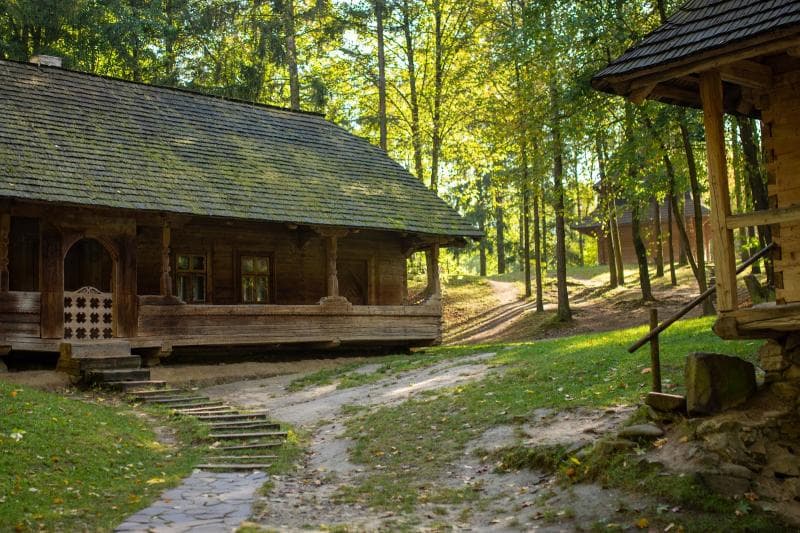
Explore the Carpathian Huts at Shevchenkivskyi Hai Open-Air Museum in Lviv, Ukraine, and discover traditional wooden architecture and rural life.
Overview
Deep within the verdant landscape of the Shevchenkivskyi Hai Open-Air Museum in Lviv, Ukraine, lies a captivating section dedicated to the ‘Carpathian Huts’. This immersive area offers a unique glimpse into the traditional rural life and distinct architectural heritage of the Ukrainian Carpathians, showcasing the dwellings of ethnic groups like the Hutsuls, Boykos, and Lemkos. The museum itself, also known as the Museum of Folk Architecture and Rural Life, acts as a living repository, preserving over a hundred architectural objects and tens of thousands of artifacts that collectively tell the story of Western Ukraine's past.
Spread across a picturesque, hilly terrain on the northeastern edge of Lviv, the museum is divided into several ethnographic zones, each meticulously arranged to represent a miniature village from a specific region. The Carpathian Huts zone brings to life the resourcefulness and unique building traditions forged in the challenging mountain environment. Visitors can wander through a collection of authentic wooden structures, including residential homes, outbuildings, and even churches, all carefully relocated and restored from their original sites.
History & Cultural Background
The vision for preserving Ukraine's folk architecture began to take shape in the 1920s, with scholars like Ilarion Svientsitskyi championing the cause. The Shevchenkivskyi Hai Museum was officially established in 1971, marking a significant step in safeguarding the country's cultural heritage. Its collection grew through dedicated efforts to rescue and relocate rural buildings threatened by time and modernization. The Carpathian region, with its dense forests, naturally led to the prevalence of wooden architecture, contrasting with the clay huts found in other parts of Ukraine.
These wooden houses, often referred to as ‘khatas’, were not merely shelters but sophisticated systems of survival tailored to the harsh mountain climate. Their design evolved over centuries, blending practical necessity with traditional aesthetics. Each ethnic group within the Carpathians developed slightly different building styles, influenced by local materials, climate, and cultural practices, all of which are thoughtfully represented within the museum's ethnographic zones.
What Makes It Special
The Carpathian Huts stand out due to their distinct wooden architecture and the ingenious ways they demonstrate adaptation to mountain life. Unlike the whitewashed clay homes common elsewhere in Ukraine, these dwellings are built from sturdy logs and beams, their construction techniques reflecting generations of wisdom. For instance, Lemko houses often feature an elongated, ‘train car’-like plan, sometimes stretching up to 20 meters, with additional thin walls called ‘zagats’ where hay and straw were stored for insulation and livestock feed. Their high, four-pitched roofs served a dual purpose: protecting against harsh weather and providing ample space for storing hay.
Hutsul houses, while also wooden and rectangular, were often built to be solitary in the vast mountain landscapes, with some larger farmhouses known as ‘Grazhda’. These architectural nuances highlight the deep connection between the people of the Carpathians and their environment. The museum's careful reconstruction of these homes, complete with authentic interiors, offers a rare and tangible connection to a bygone era, allowing visitors to step directly into the daily lives of the region's inhabitants from the 18th to the 20th centuries.
Stories, Fun Facts & Local Details
Imagine a time when the very structure of a house was a testament to survival. In the Carpathian Huts, you'll discover details that tell captivating stories. For example, some historical accounts mention that traditional Carpathian stoves were designed not only for cooking and heating but also to trap smoke under the ceiling, effectively smoking meats and preserving them. The high-gabled roofs, often covered with shingles, weren't just for aesthetics; their elevated design was crucial for storing large quantities of hay, a lifeline for wintering livestock. Even the fences with roofs served a practical purpose, offering protection against thieves, strong winds, and heavy snowdrifts.
The traditional layout of these homes often included a central entrance hall ('siny') leading to the main living quarters ('svitlytsia') and a storage room ('komora'). These elements reveal a structured approach to peasant life, where every space had a clear function. The museum also showcases numerous household artifacts, from tools and textiles to pottery and traditional clothing, all contributing to the rich tapestry of stories embedded within these wooden walls.
Visitor Perspective
Visiting the Carpathian Huts section of Shevchenkivskyi Hai is like embarking on a journey through time. The experience is incredibly immersive, allowing you to walk along winding paths, surrounded by the tranquil beauty of the Lviv plateau. You can peer into the windows of these centuries-old wooden dwellings, imagining the families who lived there, their daily routines, and their deep connection to the land. The ambiance is one of serene reflection, far removed from the hustle and bustle of modern Lviv. You're encouraged to take your time, explore each structure, and absorb the atmosphere. Sturdy footwear is advisable, as the museum's natural setting involves walking on pathways that wind through groves of pine and oak. This unique open-air museum offers not just a visual spectacle, but a profound cultural immersion into the soul of Western Ukraine, fostering a deeper understanding and appreciation for its enduring heritage.
Coordinates: 24.0661, 49.84461
View on Google Maps💬 How Travelers Describe This Place
Based on community votes
Interesting
674Must See
546Unique
503Beautiful
92Photogenic
49
Traveler Stories
Discover memorable experiences shared by travelers who have visited this place.
No traveler stories yet.
Be the first traveler to share what made this place memorable.

Tour
By
Spot
Discover amazing places around the world. Your journey starts here.
Explore
© 2026 TourBySpot. All rights reserved.