Cannon Platforms
Dubrovnik, Croatia
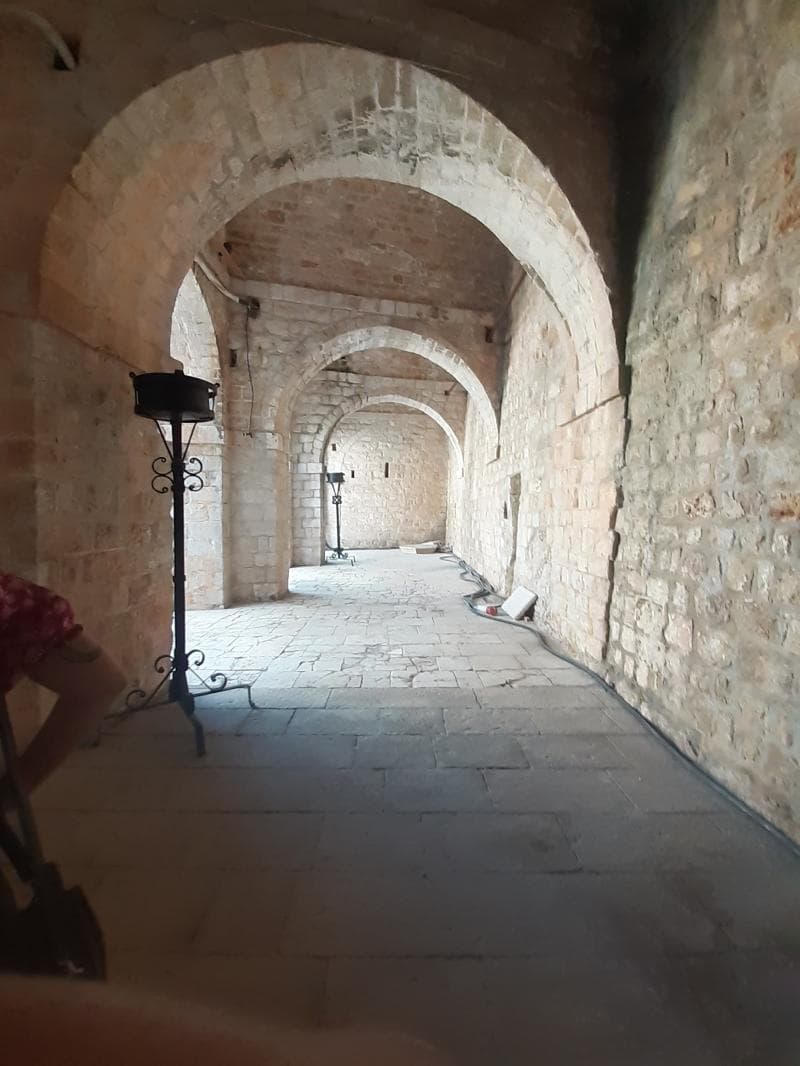
Explore the historic Cannon Platforms of Fort Lovrijenac in Dubrovnik, Croatia. Discover its defense against invaders and the legend of the 'Lizard' cannon.
Overview
Perched majestically on a craggy outcrop rising 37 meters (121 feet) above the glistening Adriatic Sea, Fort Lovrijenac stands as a resolute guardian of Dubrovnik, Croatia. Often dubbed 'Dubrovnik's Gibraltar,' this formidable fortress is a testament to the city's enduring spirit and strategic prowess. While the entire fort commands attention, its Cannon Platforms, strategically positioned across multiple terraces, are particularly compelling. These platforms once housed the Republic of Ragusa's powerful artillery, overlooking the crucial Kolorina Bay and the western approaches to the city. Today, they offer visitors unparalleled panoramic views of Dubrovnik's iconic city walls and the vast expanse of the sea, blending historical significance with breathtaking scenery.
Fort Lovrijenac is more than just a historical monument; it's a living stage that continues to play a vital role in Dubrovnik's cultural life. Beyond its role in safeguarding the city's freedom, it is renowned as a primary venue for the Dubrovnik Summer Festival, famously hosting performances of Shakespeare's 'Hamlet.' For many modern travelers, it's also instantly recognizable as a filming location for popular cultural productions, cementing its place as a must-visit landmark in this historic Croatian city.
History & Cultural Background
The origins of Fort Lovrijenac are steeped in a tale of swift action and determination. Historical records first mention the fort in 1301, though chronologists suggest its construction began much earlier, possibly between 1018 and 1038. Legend has it that the citizens of Dubrovnik, then the Republic of Ragusa, learned of a Venetian plan to build a fortress on this very spot to assert control over the city. In a remarkable feat of collective effort, the resourceful Ragusans rallied and constructed their own fort in a mere three months, foiling the Venetian ambitions. When Venetian ships arrived with building materials, they were met with an already established stronghold, a symbol of Dubrovnik's unyielding desire for independence.
Throughout the centuries, Fort Lovrijenac underwent various reinforcements and repairs, particularly after the devastating earthquake of 1667. Its primary purpose remained unwavering: to defend Dubrovnik from both sea and land incursions. The fortress's design itself reflects strategic genius; its seaward walls are an imposing 12 meters thick, while the walls facing the city are a mere 60 centimeters, a deliberate design flaw intended to prevent any commander from turning the fort's formidable power against Dubrovnik itself. This architectural detail underscores the deep trust and vigilance that characterized the Republic's governance.
What Makes It Special
What truly sets the Cannon Platforms of Fort Lovrijenac apart is their profound connection to Dubrovnik's hard-won freedom. These platforms weren't merely structural elements; they were the nerve center of the city's defense, armed with ten powerful cannons. Among these, the legendary 'Lizard' (Gušter in Croatian) was the most formidable. Cast in 1537 by the master Ivan Rabljanin, this bronze behemoth measured five meters in length and weighed over three tons, instilling fear in potential invaders.
The very presence of these cannons on the fort's terraced levels symbolized Dubrovnik's military might and its unwavering commitment to self-governance. From these elevated positions, Ragusan defenders could survey the entire bay, protecting vital trade routes and ensuring the city's prosperity. The platforms represent a historical intersection of engineering, military strategy, and civic pride, offering a tangible link to a bygone era when liberty was fiercely guarded.
Stories, Fun Facts & Local Details
The story of the 'Lizard' cannon is one of the most captivating tales associated with Fort Lovrijenac. Despite its fearsome reputation, historical accounts suggest the 'Lizard' was never fired in actual battle during the Republic's independent rule. Instead, its sheer size and intimidating presence served as a potent deterrent.
The cannon's ultimate fate adds another layer of intrigue. During the 19th-century Austrian occupation, attempts were made to transport the 'Lizard' to Vienna. However, as it was being lowered onto a raft from the fort's seaside, the ropes holding it snapped, and the massive cannon plunged into the depths of the Adriatic Sea, never to be recovered. A local legend whispers that the townspeople, unwilling to see their symbol of freedom removed, deliberately sabotaged the ropes. This act, whether fact or folklore, perfectly encapsulates the spirit of defiance embodied by Dubrovnik.
Another profound detail that resonates on the fort's grounds is the powerful inscription above its main entrance: 'NON BENE PRO TOTO LIBERTAS VENDITUR AURO,' meaning 'Freedom is not to be sold for all the gold in the world.' This motto of the Republic of Ragusa serves as a constant reminder of the values for which the fort, and indeed the city, stood.
Visitor Perspective
Ascending to the Cannon Platforms of Fort Lovrijenac is an essential part of the Dubrovnik experience. The climb, while involving several steps, is well worth the effort, revealing increasingly spectacular vistas with each level. Visitors are rewarded with expansive views that stretch across the shimmering Adriatic, encompass the full sweep of Dubrovnik's ancient city walls, and capture the charming rooftops of the Old Town.
Standing on these historic platforms, one can almost hear the echoes of the past – the strategic discussions of Ragusan commanders, the vigilant watch of sentinels, and perhaps even the legendary splash of the 'Lizard' cannon disappearing beneath the waves. It's a place for reflection, for appreciating the architectural ingenuity of centuries past, and for marveling at the enduring beauty of the Dalmatian coast. The fort's inclusion in the City Walls ticket makes it a natural extension of exploring Dubrovnik's rich defensive heritage, offering a deeper understanding of its history and an unforgettable visual spectacle.
Coordinates: 18.104412, 42.640731
View on Google Maps💬 How Travelers Describe This Place
Based on community votes
Unique
674Beautiful
503Photogenic
261Must See
92Interesting
49
Traveler Stories
Discover memorable experiences shared by travelers who have visited this place.
No traveler stories yet.
Be the first traveler to share what made this place memorable.

Tour
By
Spot
Discover amazing places around the world. Your journey starts here.
Explore
© 2026 TourBySpot. All rights reserved.