Cannon Bastions
Oslo, Norway
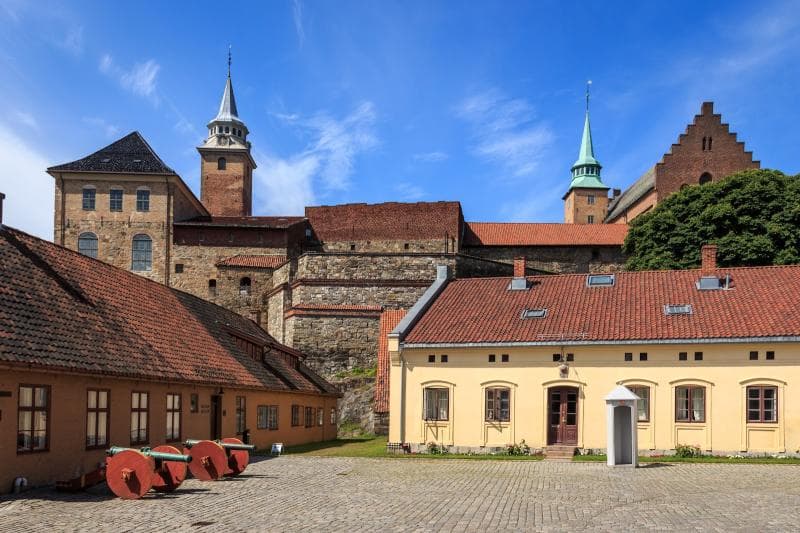
Explore the Cannon Bastions at Akershus Fortress in Oslo, Norway. Discover centuries of military history, strategic defenses, and stunning fjord views.
Overview
Perched majestically above the Oslofjord, within the historic walls of Akershus Fortress, lie the formidable Cannon Bastions. These robust defensive structures are not merely remnants of a bygone era; they are testament to centuries of military engineering and a crucial part of Norway's rich history. Offering panoramic views of Oslo's harbor and city, these bastions once stood as the primary guardians of the capital, their cannons poised to repel invaders from land and sea. Today, they invite curious travelers to step back in time, exploring the very positions from which Norway's sovereignty was defended.
The term 'Cannon Bastions' refers to the strategically placed, outward-projecting parts of the fortress walls, specifically designed to withstand and deploy heavy artillery. Walking along the ramparts, one can encounter several such bastions, each playing a vital role in the overall defensive strategy of Akershus Fortress.
History & Cultural Background
Akershus Fortress, initially a medieval castle commissioned by King Håkon V in the late 13th century, underwent a significant transformation in the 16th and 17th centuries. During the reign of King Christian IV (1588–1648), influenced by contemporary Italian military engineering, the fortress was extensively remodeled. This period marked the conversion from a medieval castle to a Renaissance bastion fortress, adapting its defenses to the advent of gunpowder and cannon warfare.
New towers, ramparts, and casemates were constructed, transforming Akershus into a modern defensive stronghold. Specific bastions, such as Kronprinsens bastion (Crown Prince's Bastion), Prins Carls Bastion, and Hornverk, were added or enhanced to create a more formidable defensive perimeter. The Skarpenort Bastion, for instance, housed a large powder tower for safely storing gunpowder. These architectural adaptations were crucial for the fortress to withstand numerous sieges, particularly from Swedish forces, underscoring its strategic importance in Norwegian history.
What Makes It Special
What truly makes the Cannon Bastions special is their embodiment of a pivotal shift in military architecture. They represent the transition from medieval defensive strategies to modern artillery warfare, showcasing impressive walls up to three meters thick and stone-faced casemates built to absorb and return cannon fire. The strategic placement of these bastions allowed for crossfire, ensuring that any approaching enemy was met with a devastating barrage from multiple angles, a crucial innovation in an era dominated by gunpowder.
These bastions are not just static structures; they are active storytellers of a time when the fate of a nation hinged on its fortifications. Their commanding position above the fjord allowed the defenders to control access to Oslo, making Akershus Fortress, and by extension its cannon bastions, indispensable to Norway's defense.
Stories, Fun Facts & Local Details
One of the most remarkable facts about Akershus Fortress, and directly related to its robust cannon bastions, is that it was never successfully captured in active combat. Despite enduring multiple sieges, including a notable attack in 1716 by Charles XII of Sweden, the fortress's defenses, heavily reliant on its cannon emplacements, proved impregnable. King Karl XII's forces reportedly lacked sufficient siege cannons to overcome the Norwegian defenses within the fortress, forcing him to retreat.
The design of the bastions was so effective that it allowed for optimal firing ranges and angles, a testament to the skilled engineers who modernized the fortress. The cannons seen today, while perhaps not all original, evoke the powerful presence that once deterred invaders. Exploring these areas, visitors can almost hear the echoes of cannon fire and the strategic shouts of commanders safeguarding their land.
Visitor Perspective
For the modern traveler, the Cannon Bastions offer a unique blend of historical immersion and breathtaking scenery. As you stroll along the ramparts and peer over the edges of these ancient emplacements, you gain a tangible connection to Oslo's past. The views of the Oslofjord, Aker Brygge, and the city center are spectacular, making it a popular spot for both historical reflection and scenic photography.
Exploring the bastions is a highlight of any visit to Akershus Fortress, providing a free and accessible way to experience centuries of history. Visitors are encouraged to walk the grounds, imagine the strategic battles, and appreciate the enduring legacy of these powerful defensive structures.
Coordinates: 10.73667, 59.90762
View on Google Maps💬 How Travelers Describe This Place
Based on community votes
Beautiful
836Unique
797Photogenic
396Interesting
286Must See
255
Traveler Stories
Discover memorable experiences shared by travelers who have visited this place.
No traveler stories yet.
Be the first traveler to share what made this place memorable.

Tour
By
Spot
Discover amazing places around the world. Your journey starts here.
Explore
© 2026 TourBySpot. All rights reserved.