Campanile
Dublin, Ireland
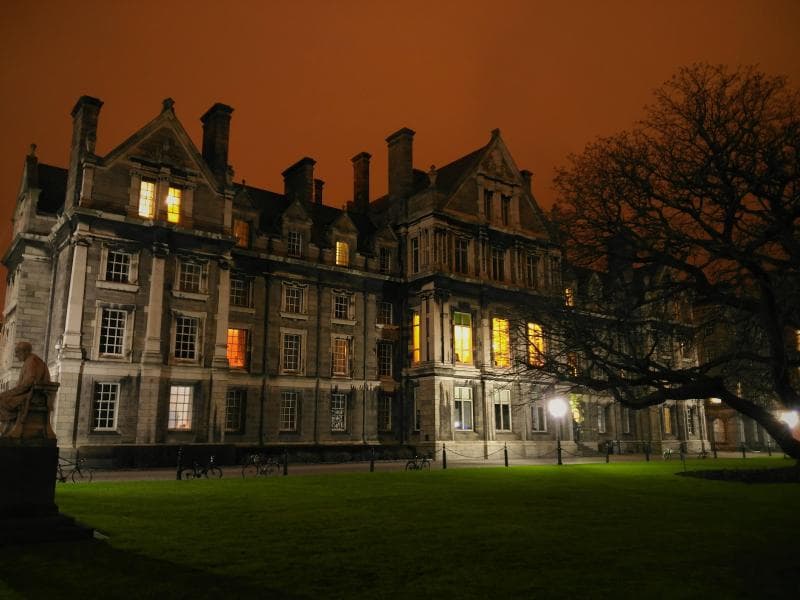
Discover the iconic Campanile at Trinity College Dublin, Ireland. Explore its rich history, stunning architecture, and unique student superstitions.
Overview
Nestled in the historic heart of Dublin, within the prestigious grounds of Trinity College, stands the magnificent Campanile. This iconic bell tower, rising approximately 30.5 meters (100 feet) into the Dublin skyline, serves as a central landmark and a powerful symbol of Ireland's oldest university. Erected in 1853, the Campanile is a masterpiece of Victorian architecture, drawing the eye with its intricate details and commanding presence in the tranquil Library Square, also known as Parliament Square. Its grandeur is immediate, greeting visitors as they transition from the bustling city streets into the serene academic oasis of Trinity College. More than just a structure, it embodies centuries of scholarship, tradition, and a unique charm that captivates every traveler.
Designed by the renowned architect Sir Charles Lanyon and featuring sculptures by Thomas Kirk, the Campanile is a testament to the artistry of its era. It's constructed predominantly from granite, with exquisite carvings of Portland stone that add to its elegant facade. The tower replaced earlier bell structures, one of which was deemed unsafe and subsequently demolished, making way for the enduring monument we see today.
History & Cultural Background
The history of the Campanile is deeply intertwined with that of Trinity College itself. The site upon which the current tower stands has a profound lineage, believed to have been home to the All Hallows Monastery before the university's founding in 1592. This layering of history gives the Campanile an almost sacred quality, anchoring it to Dublin's ancient past. The tower that currently graces Trinity's grounds was completed in 1853, following a generous donation from Lord John Beresford, then Archbishop of Armagh.
Sir Charles Lanyon's design for the Campanile was both ambitious and symbolic. While an initial plan to link the tower to the Old Library and the Graduates Memorial Building with an arcaded screen never materialized, the freestanding structure emerged as a potent symbol of academic life. Its construction marked a period of significant change within the university, with new professorships emerging and a shift in academic focus. The architectural style, a blend of neoclassical and neo-Gothic elements, harmonizes beautifully with the surrounding Georgian buildings of the campus.
What Makes It Special
The Campanile's special allure lies not only in its architectural splendor but also in its profound symbolic meaning. At its base, visitors can observe four carved keystone heads depicting ancient Greek figures – Homer, Socrates, Plato, and Demosthenes – representing the liberal arts that formed the core of traditional undergraduate education. Further up, at the angles of the base, four figures sculpted by Thomas Kirk personify Divinity, Science, Medicine, and Law, illustrating the key faculties of the university.
The intricate design includes a belfry encircled by Corinthian columns and two domes topped by a gilded cross. Four carved coats of arms, representing significant historical entities such as the United Kingdom, Trinity College Dublin, Lord John Beresford, and the Archbishopric of Armagh, are also visible, facing different prominent locations within the college. These details collectively tell a story of the university's foundations, its benefactors, and its enduring intellectual pursuits. The Campanile houses 13 bells, cast by the same Whitechapel Bell Foundry in London that produced the bells for Big Ben, with the largest known as the 'Great Bell of Trinity'.
Stories, Fun Facts & Local Details
Perhaps the most famous aspect of the Campanile is the local superstition surrounding it. A long-held belief among Trinity students dictates that any student who passes beneath the Campanile when its bells toll will inevitably fail their exams. This tradition is so deeply ingrained that even on the rainiest days, students often choose to walk around the tower rather than risk tempting fate. It's a charming quirk that adds a layer of cultural richness to the otherwise serious academic atmosphere. On graduation day, however, graduates often embrace the opportunity to walk beneath it, symbolically shedding the superstition as they mark the end of their academic journey.
The bells of the Campanile hold their own significance, tolling for special university events like degree conferrals and examinations, marking the rhythm of academic life. Beyond its scholarly associations, the Campanile has also witnessed pivotal moments in Irish history. During the 1916 Easter Rising, for example, British troops utilized the tower's strategic vantage point as a lookout over the city, making it a silent observer of Ireland's fight for independence.
Visitor Perspective
For visitors to Trinity College Dublin, the Campanile is often the first historical structure encountered upon entering the campus, making an immediate and lasting impression. Its central position in Library Square provides a natural focal point for exploration and an excellent spot for photography. While the interior is rarely accessible to the public, occasional guided tours may offer a glimpse inside and provide panoramic views of Dublin. Visitors can freely roam the campus, allowing for an unhurried appreciation of the Campanile's architecture and its surrounding historic buildings.
Experiencing the Campanile is about more than just seeing a structure; it's about soaking in the atmosphere of a place where history and learning converge. Taking a moment to observe the students navigating their daily routines, perhaps consciously avoiding the tower during exam season, offers a unique insight into the vibrant life of this ancient university. The Campanile stands as a magnificent sentinel, inviting curious travelers to delve into the stories and traditions that make Trinity College Dublin such a cherished destination.
Coordinates: -6.2573, 53.3444
View on Google Maps💬 How Travelers Describe This Place
Based on community votes
Beautiful
585Unique
546Photogenic
503Interesting
92Must See
56
Traveler Stories
Discover memorable experiences shared by travelers who have visited this place.
No traveler stories yet.
Be the first traveler to share what made this place memorable.

Tour
By
Spot
Discover amazing places around the world. Your journey starts here.
Explore
© 2026 TourBySpot. All rights reserved.