Ca’ D’Oro
Venice, Italy
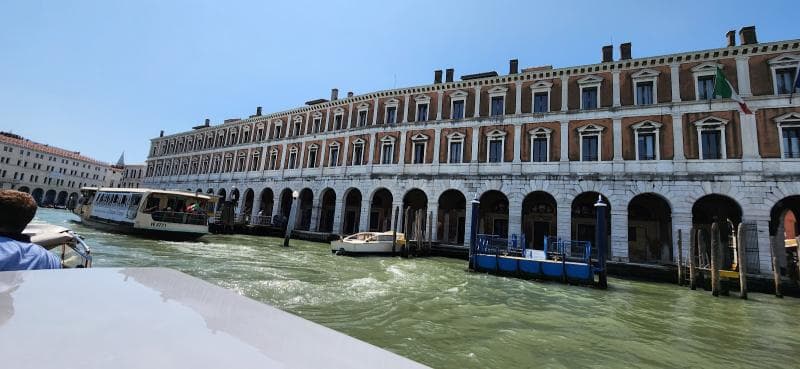
Explore Ca’ D’Oro, Venice, Italy's stunning 'House of Gold' on the Grand Canal, a magnificent example of Venetian Gothic architecture and a rich art museum.
Overview
Along the bustling waterways of Venice's Grand Canal stands the magnificent Ca’ D’Oro, often called the 'House of Gold'. This iconic palazzo, a stunning example of Venetian Gothic architecture, captures the essence of the city's rich history and artistic grandeur. Today, it serves as the Galleria Giorgio Franchetti, a public museum showcasing an impressive collection of art and offering visitors a glimpse into centuries of Venetian heritage.
Its distinctive facade, once adorned with dazzling gold leaf and vibrant polychromy, continues to mesmerize those who glide past on gondolas or vaporettos, embodying a unique blend of historical artistry and cultural significance.
History & Cultural Background
The construction of the Ca’ D’Oro, or Palazzo Santa Sofia, began in 1421 and was completed around 1437 (or 1440). It was commissioned by Marino Contarini, a wealthy merchant and a prominent member of a noble Venetian family, who sought to assert his family's status through this grand residence.
- The palace was designed by a father-and-son team of architects, Giovanni Bon and Bartolomeo Bon, alongside Matteo Raverti.
- Its original appearance was incredibly opulent, earning it the name 'House of Gold' ('Ca’ D’Oro' in Venetian dialect) due to the extensive use of gilding on its facade, complemented by rich polychrome decorations in red, ultramarine blue, black, and white.
- Over centuries, the palace changed hands multiple times and suffered significant neglect and damaging renovations, especially after the Napoleonic occupation in 1797.
- A pivotal moment in its history occurred in 1894 when Baron Giorgio Franchetti acquired the dilapidated palace. He dedicated his life and fortune to its meticulous restoration, aiming to return it to its original splendor. Franchetti later bequeathed the Ca’ D’Oro and his extensive art collection to the Italian State in 1916, leading to its opening as a public museum, the Galleria Giorgio Franchetti alla Ca’ D’Oro, in 1927.
What Makes It Special
The Ca’ D’Oro is considered one of the finest surviving examples of Venetian Gothic architecture, characterized by its ornate, lacelike facade.
- Its design features a ground-floor loggia and two upper stories with balconies, each adorned with five columns and distinct quatrefoil window designs, mirroring the iconic tracery of the Doge's Palace.
- The palace exhibits a fascinating asymmetry, with a wide, open section of porticoes and loggias on the left, contrasting with a narrower, more solid section with single windows on the right. This arrangement allowed for larger reception rooms in the open, highly decorated areas.
- Among its remarkable features is the beautiful red Verona marble wellhead by Bartolomeo Bon, dating from 1427, which Franchetti painstakingly recovered and returned to the palace's courtyard. This wellhead is decorated with acanthus leaves and allegorical figures representing Faith, Hope, and Charity.
- Another unique element is the Cosmatesque mosaic floor in the courtyard, designed by Franchetti himself, drawing inspiration from ancient Roman and early Christian basilicas.
Stories, Fun Facts & Local Details
The name 'Ca’ D’Oro' is more than just a poetic title; it refers to the literal gold leaf that once shimmered on its facade. Imagine the sight of this 'House of Gold' reflecting the Venetian sun, a beacon of wealth and power on the Grand Canal. While the gold and original polychromy have long faded due to centuries of exposure, the palace's legendary reputation endures.
Baron Giorgio Franchetti's dedication was legendary. He wasn't just a collector; he was a passionate restorer who personally oversaw much of the work. His quest to find the original wellhead, sold off during a period of neglect, reads like a treasure hunt, finally culminating in its triumphant return to the palace. He even created a chapel to house his most prized possession, Andrea Mantegna's dramatic 'Saint Sebastian', which remains a highlight of the museum's collection today.
Visitor Perspective
Today, the Ca’ D’Oro offers visitors a captivating journey through art and history. As you approach by water, its intricate Gothic facade stands out, even without its original gold, against the backdrop of the Grand Canal. Inside, the Galleria Giorgio Franchetti houses a diverse collection spanning Venetian, Tuscan, and Flemish schools, alongside sculptures, bronzes, and ceramics.
Walking through its halls, you can admire masterpieces like Mantegna's 'Saint Sebastian' and other significant works. The central courtyard, with its intricate mosaic floor and the beautifully restored wellhead, provides a peaceful respite and a tangible connection to the palace's rich past. From the loggias, visitors are treated to unparalleled views of the Grand Canal, offering a unique perspective of Venice's main artery and its surrounding architecture. It's an experience that truly connects you with the artistic and historical soul of Venice.
Coordinates: 12.33389, 45.44056
View on Google Maps💬 How Travelers Describe This Place
Based on community votes
Beautiful
836Unique
797Photogenic
396Interesting
286Must See
255
Traveler Stories
Discover memorable experiences shared by travelers who have visited this place.
No traveler stories yet.
Be the first traveler to share what made this place memorable.

Tour
By
Spot
Discover amazing places around the world. Your journey starts here.
Explore
© 2026 TourBySpot. All rights reserved.