Byzantine Churches
Athens, Greece
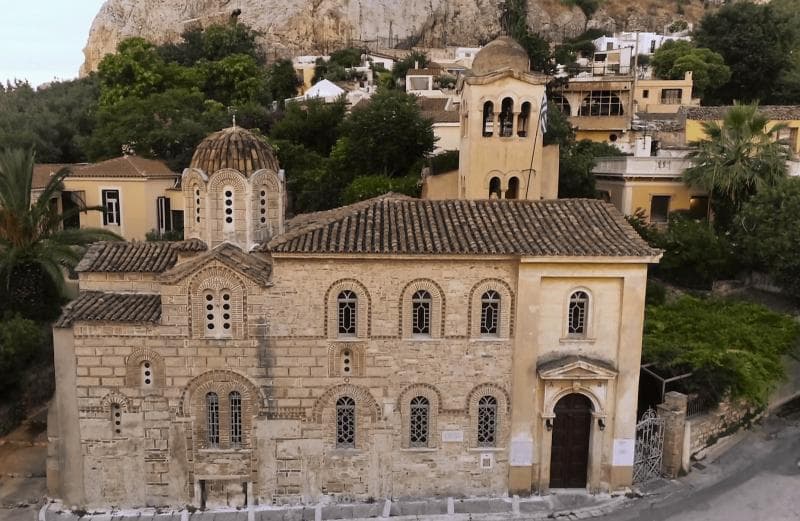
Explore the historic Byzantine Churches of Plaka, Athens, Greece. Discover 11th-century architecture, rich history, and unique cultural stories.
Overview
Tucked within the charming labyrinthine streets of Plaka, Athens, a visit to the Byzantine Churches offers a profound journey back in time. These remarkable structures, predominantly dating from the 11th century, stand as enduring testaments to Athens' rich medieval past, gracefully interwoven with the city's ancient and modern fabric. Far from being mere relics, they are active places of worship and vital cultural landmarks, inviting curious travelers to discover a lesser-known chapter of Athenian history. Each church, with its distinctive architecture and serene ambiance, reveals stories of faith, resilience, and artistic heritage in the 'Neighborhood of the Gods'.
History & Cultural Background
The Byzantine period marked a significant era for Athens, especially from the 10th century onwards when the city flourished and numerous churches were constructed. These churches were often built upon the ruins of ancient Greek temples, a common practice symbolizing the triumph of Christianity over paganism. For instance, the Church of Panagia Kapnikarea was erected over a site possibly dedicated to Athena or Demeter, while Agia Aikaterini stands on the remains of an ancient temple to Artemis. This architectural continuity speaks volumes about Athens' layered history. Many of these churches served as the spiritual heart of Byzantine Athens, playing a crucial role in the daily lives of its inhabitants. They have witnessed centuries of change, surviving periods of foreign rule, such as the Ottoman occupation, and even threats of demolition during early modern urban planning in the 19th century. Their perseverance through various upheavals underscores their deep cultural and historical significance to the city.
What Makes It Special
The Byzantine churches of Plaka are architectural gems, showcasing the distinctive Middle Byzantine style that emerged in the 11th and 12th centuries. A hallmark of their design is the 'cross-in-square' plan, often crowned by an 'Athenian type' dome – an octagonal dome supported by slender columns. A striking feature of their exteriors is the 'cloisonné masonry', where dressed stones are intricately framed by bricks, creating beautiful decorative patterns. The Church of Panagia Kapnikarea, one of Athens' oldest, exemplifies this with its complex structure of three units and a dome. Inside, visitors can often find post-Byzantine frescoes, and in some cases, modern iconography influenced by Byzantine traditions, such as the works of Fotis Kontoglou and his pupils in Kapnikarea. Agios Nikolaos Rangavas, another 11th-century marvel, is noted for its elegant design and intricate stonework. These architectural and artistic details offer a tangible connection to the skilled craftsmen and profound religious artistry of the Byzantine Empire.
Stories, Fun Facts & Local Details
Each Byzantine church in Plaka holds unique stories and intriguing details. The name 'Kapnikarea' itself is a fun historical mystery, possibly deriving from 'kapnikon', a Byzantine smoke tax, or 'Kapnikares', the tax collector, or even 'kapnismeni' (smoked) due to fire marks. This church was famously saved from demolition plans in the 19th century by the intervention of Ludwig I, the King of Bavaria. Agios Nikolaos Rangavas bears the name of a prominent aristocratic Byzantine family. During the Venetian siege of the Acropolis in 1687, it suffered damage from a cannonball. Notably, its bell holds a significant place in modern Greek history as it was the first church bell to ring in Athens after the liberation from Ottoman rule in 1833 and again after the liberation from German occupation in 1944. Agia Aikaterini, initially dedicated to Agioi Theodoroi, later became associated with the Monastery of Saint Catherine on Mount Sinai in the 18th century, which is believed to be when the iconic palm trees in its courtyard were planted, creating a unique oasis. The Church of the Transfiguration of the Savior, sometimes affectionately called 'Sotirakis' due to its smaller size, is rumored to be the secret burial place of Greek War of Independence hero Odysseus Androutsos. Many of these ancient churches ingeniously incorporated marble columns and other materials salvaged from older Greek and Roman structures, making them living mosaics of Athens' layered past.
Visitor Perspective
Wandering through the Plaka district and discovering its Byzantine churches is an experience that transcends typical sightseeing. It's an opportunity to step away from the bustling tourist paths and immerse oneself in centuries of devotion and artistry. These churches, often unexpectedly encountered amidst neoclassical buildings and ancient ruins, offer moments of quiet contemplation and reflection. Visitors are often struck by their small, intimate scale compared to grand Western European cathedrals, yet their rich history and intricate details leave a lasting impression. Observing the 'cloisonné' brickwork, the distinctive Athenian domes, and the ancient marble fragments repurposed into their walls provides a tangible connection to the city's continuous narrative. These aren't just museums; they are vibrant places where local Orthodox traditions continue, offering a unique glimpse into the spiritual heart of modern Athens, nestled within its most ancient quarter. It's a journey that allows you to appreciate the enduring spirit of a city that has been a cradle of civilization for millennia.
Coordinates: 23.73056, 37.97222
View on Google Maps💬 How Travelers Describe This Place
Based on community votes
Unique
551Beautiful
547Must See
336Interesting
298Photogenic
212
Traveler Stories
Discover memorable experiences shared by travelers who have visited this place.
No traveler stories yet.
Be the first traveler to share what made this place memorable.

Tour
By
Spot
Discover amazing places around the world. Your journey starts here.
Explore
© 2026 TourBySpot. All rights reserved.