Buyongji Pond
Seoul, South Korea
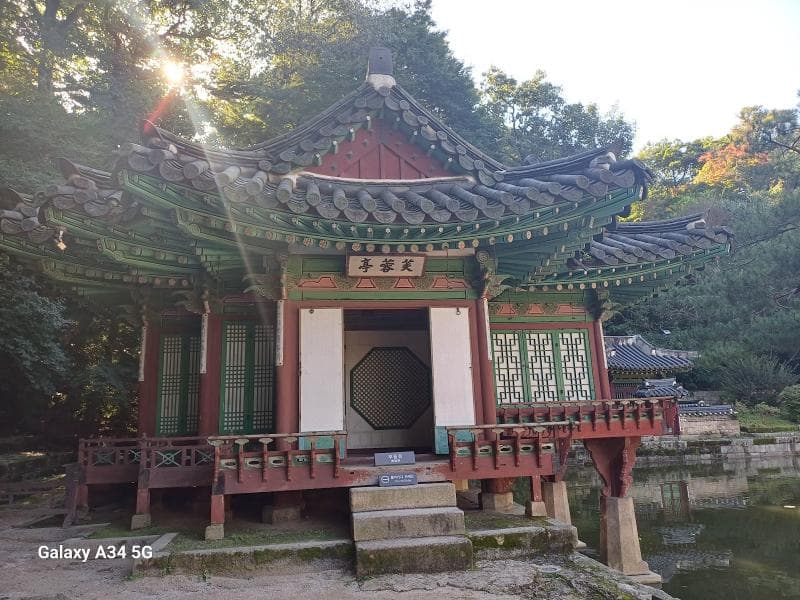
Discover Buyongji Pond, a serene and historically rich oasis within Changdeokgung Palace's Secret Garden in Seoul, South Korea. Explore its unique design, royal history, and tranquil beauty.
Overview
Nestled within the exquisite Changdeokgung Palace in Seoul, South Korea, Buyongji Pond is a tranquil centerpiece of the Secret Garden, also known as Huwon. As part of a UNESCO World Heritage Site, this picturesque pond and its surrounding pavilions embody a profound harmony between human artistry and the natural world. The larger Changdeokgung Palace itself stands as one of the best-preserved royal palaces of the Joseon Dynasty, celebrated for its integration with the landscape rather than imposing upon it. Buyongji Pond, with its distinctive shape and serene atmosphere, invites visitors to step into a historical realm where nature and culture intertwine seamlessly. It is often experienced in conjunction with the elegant Buyongjeong Pavilion, Juhamnu Pavilion, and the symbolic Eosumun Gate, forming a cohesive and deeply meaningful landscape.
History & Cultural Background
Changdeokgung Palace was initially established in 1405 as a secondary royal villa to Gyeongbokgung Palace. However, after its meticulous reconstruction following the devastations of the Imjin War (1592-1598), it ascended to become the principal residence for many Joseon monarchs for nearly three centuries. The Secret Garden, where Buyongji Pond resides, traces its origins to King Taejong's reign in the early 1400s. Buyongji Pond, whose name translates to 'Floating Lotus', was specifically developed in 1707 under King Sukjong, originally named Taeksujae. Later, during the reign of King Jeongjo (1776-1800), it was rebuilt and received its current name, Buyongji. Its design is steeped in traditional Korean cosmological beliefs, featuring a rectangular pond with a small, circular island at its center, symbolizing the ancient concept of a 'round heaven and square earth'. This thoughtful layout also subtly incorporates Confucian principles of balance and Taoist ideals of natural flow, alongside the geomantic principles of pungsu, which guided the strategic placement of the palace within its environment.
What Makes It Special
Buyongji Pond is truly exceptional, not merely as a body of water but as a profound philosophical statement rendered in landscape architecture. It stands as an outstanding example of East Asian garden design, celebrated for its unparalleled harmony with the surrounding natural environment, adapting to the topography rather than altering it drastically. The pond's unique geometry—a square pond encompassing a round island—is a deliberate physical manifestation of the traditional Korean worldview, embodying the celestial and terrestrial forces. The elegant Buyongjeong Pavilion, partially cantilevered over the water, together with the scholarly Juhamnu Pavilion, creates a captivating vista that shifts with the seasons. Remarkably, the pond's depth and curvature were meticulously engineered to perfectly reflect the pavilion's roof in calm conditions, a testament to ancient Korean landscape engineering that fused aesthetics with geomantic precision. The deliberate planting of lotus and water lilies was also carefully considered to ensure a vibrant and harmonious display of seasonal colors, making it an early example of integrated environmental design.
Stories, Fun Facts & Local Details
For centuries, Buyongji Pond served as more than just a beautiful landscape; it was a vibrant stage for royal life and intellectual pursuits. Joseon kings found respite and inspiration here, engaging in leisurely activities like fishing, boating, and even holding impromptu poetry contests with their court officials. King Jeongjo, in particular, was known for his fondness for this area, often visiting to admire the flowers, enjoy fishing, and even hosting banquets for those who excelled in the state civil service examinations. The Secret Garden, in fact, historically served as a venue for these important examinations, where candidates were challenged to interpret philosophical meanings embedded within the landscape itself. Visitors today can almost hear the 'hushed but alive' soundscape that once permeated the area: the rustling of leaves, the gentle trickle of streams, and the soft creak of ancient timber. In summer, the pond is adorned with blooming lotus flowers, while in autumn, the reflection of vibrant maple leaves transforms the water into what has been described as 'liquid fire'. This blend of natural beauty and historical anecdote makes Buyongji Pond an 'enlightenment made visible', reflecting the Korean soul for over five centuries.
Visitor Perspective
Visiting Buyongji Pond offers a deeply contemplative and enriching experience, allowing travelers to connect with centuries of Korean history and culture. As part of the Secret Garden (Huwon) of Changdeokgung Palace, access typically requires a separate admission ticket and is often restricted to guided tours to preserve its delicate environment. These tours, offered in various languages, ensure a meaningful journey through this historically significant area. Visitors are encouraged to take their time and truly immerse themselves in the tranquility, observing how the natural surroundings and the architectural elements seamlessly blend. The early morning or late afternoon light casts a particularly soft and enchanting glow over the water, enhancing the reflections of the surrounding pavilions and trees. Autumn is especially recommended for its breathtaking display of fall foliage. Standing at the edge of Buyongji, gazing at its still waters, visitors can witness the perfect mirroring of the sky and structures, creating an illusion where the distinction between the built environment and nature gently blurs. It is a moment for quiet reflection and mindfulness, offering a unique 'still point' in the heart of a bustling city.
Coordinates: 126.99278, 37.57944
View on Google Maps💬 How Travelers Describe This Place
Based on community votes
Photogenic
972Unique
726Interesting
720Must See
597Beautiful
300
Traveler Stories
Discover memorable experiences shared by travelers who have visited this place.
No traveler stories yet.
Be the first traveler to share what made this place memorable.

Tour
By
Spot
Discover amazing places around the world. Your journey starts here.
Explore
© 2026 TourBySpot. All rights reserved.