Burj Khalifa
Dubai, United Arab Emirates
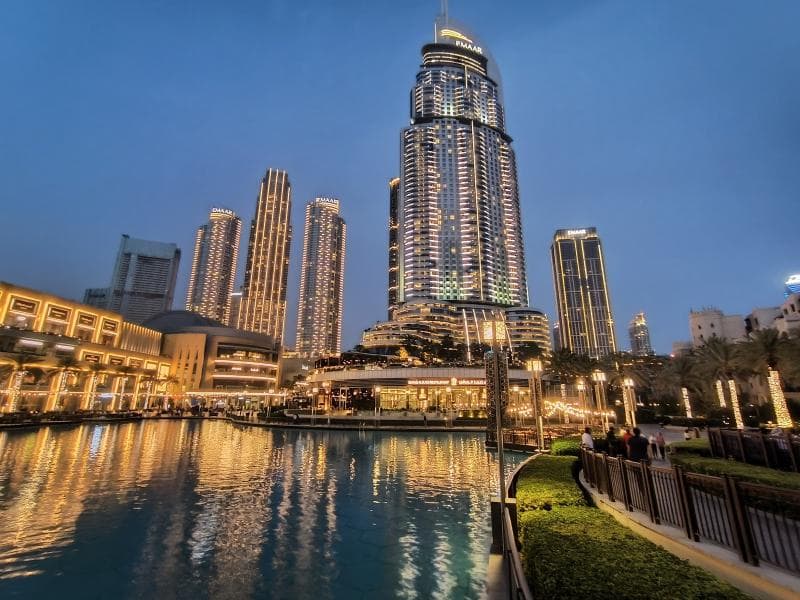
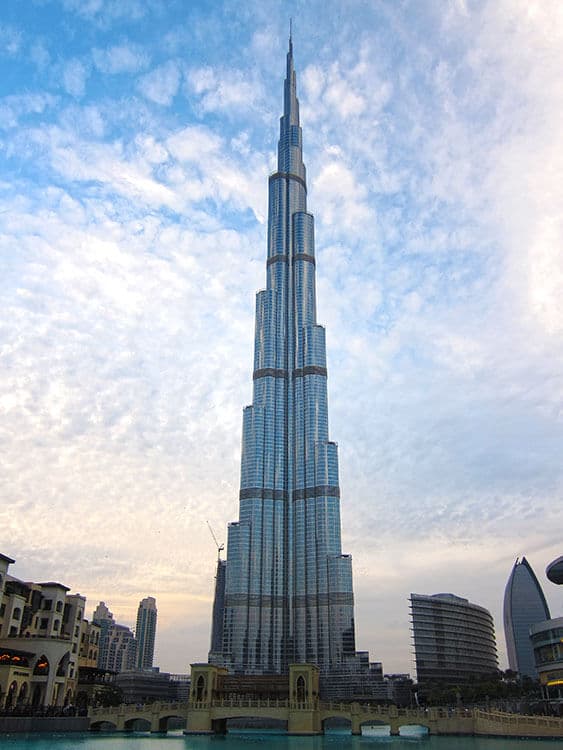
Discover the Burj Khalifa in Dubai, United Arab Emirates – the world's tallest building. Explore its record-breaking height, stunning design, history, and incredible views from its observation decks.
Overview
Soaring majestically into the Dubai skyline, the Burj Khalifa is more than just the world's tallest building; it's a powerful emblem of human ambition and innovation, located in the vibrant city of Dubai, United Arab Emirates. Standing at an astounding 828 meters (2,717 feet) to the top of its spire, with a total height of 829.8 meters (2,722 feet) to its tip, this architectural marvel redefines what's possible in modern construction. Completed in 2010, it quickly became a global icon, housing a luxurious hotel, prestigious residential spaces, corporate suites, and world-class observation decks that offer unparalleled panoramic views of the city and beyond.
Its striking silhouette, a neo-futurist design deeply influenced by Islamic architecture, serves as a testament to Dubai's rapid growth and its vision as a leading global metropolis. The Burj Khalifa is not merely a structure; it's a dynamic hub that attracts millions of visitors annually, all eager to witness this feat of engineering and experience its unique offerings.
History & Cultural Background
The vision for the Burj Khalifa emerged in the early 2000s, a period when Dubai was rapidly establishing itself as a center for finance, tourism, and luxury. The project was spearheaded by Emaar Properties, with the ambitious goal of constructing the world's tallest man-made structure as the centerpiece of the new Downtown Dubai district. Construction commenced in January 2004, a monumental undertaking that, at its peak, involved approximately 12,000 workers daily. The exterior of the building was completed in October 2009, with its official grand opening following on January 4, 2010.
Designed by American architect Adrian Smith of Skidmore, Owings & Merrill (SOM), the tower's architectural form is inspired by the Hymenocallis, a regional desert flower often referred to as the 'spider lily.' This inspiration is evident in its triple-lobed footprint and the tapering, spiraling design that not only pays homage to local culture but also plays a crucial role in its structural stability, reducing wind forces at extreme heights. Originally known as Burj Dubai during its construction, it was renamed Burj Khalifa to honor Sheikh Khalifa bin Zayed Al Nahyan, the then-President of the United Arab Emirates and ruler of Abu Dhabi, for his significant support.
What Makes It Special
The Burj Khalifa holds numerous world records, affirming its status as an engineering marvel. It is not only the tallest existing structure and tallest skyscraper but also boasts the highest number of floors (163) and the highest occupied floor in the world. Its advanced structural system, featuring a buttressed central core and Y-shaped wings, is a testament to innovative design, allowing for its immense height while efficiently distributing weight and resisting wind. The exterior is clad with over 26,000 reflective glass panels, each individually cut and silver-coated to enhance insulation and withstand Dubai's intense desert heat.
The tower features 57 elevators, some of the fastest globally, traveling at speeds of up to 10 meters per second. This allows visitors to reach the observation decks on the 124th and 125th floors, known as 'At The Top,' and the even higher 'At The Top SKY' on the 148th floor, in just about a minute. The spire, a prominent feature at the building's apex, is made of over 4,000 tonnes of structural steel and houses critical communications equipment. Beyond its records, the Burj Khalifa is special for its role as a global symbol of ambition, reflecting the UAE's transformation from a regional hub to a powerful international presence, merging traditional Islamic motifs with cutting-edge futurism.
Stories, Fun Facts & Local Details
Building the Burj Khalifa was an incredible undertaking, consuming an estimated 22 million man-hours, over 110,000 tons of concrete, and 39,000 tonnes of steel rebar. If all the rebar used were laid end-to-end, it would stretch a quarter of the way around the world. The total weight of aluminum used in its construction is equivalent to five Airbus A380 aircraft.
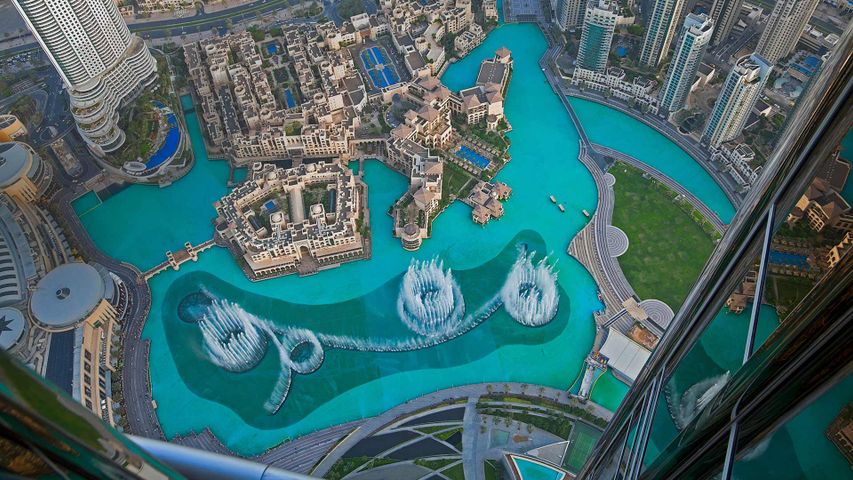
A unique fun fact is that the tip of the Burj Khalifa's spire can be seen from up to 95 kilometers away on a clear day. Furthermore, due to its immense height, there can be a noticeable temperature difference between the ground level and the observation decks, sometimes nearly 15°C cooler at the top. The building is also highly sustainable, collecting approximately 15 million gallons of condensate water annually, which is then used for irrigation of the surrounding landscapes, the cooling system, and to supply the spectacular Dubai Fountain. The fountain itself, designed by the same company as the Bellagio fountains in Las Vegas, puts on dazzling sound and light shows, offering a magnificent foreground to the towering skyscraper.
Visitor Perspective
A visit to the Burj Khalifa offers an unforgettable experience, allowing travelers to ascend to incredible heights and witness breathtaking vistas. The journey typically begins from the Dubai Mall, providing access to the various observation decks. The 'At The Top' observation decks on floors 124 and 125 provide expansive indoor and outdoor viewing areas, equipped with powerful telescopes to explore the city's intricate details. For an even more exclusive experience, the 'At The Top SKY' on the 148th floor offers the highest outdoor observation deck in the world, often accompanied by complimentary refreshments and a more serene atmosphere. It's highly recommended to book tickets in advance, especially if you wish to visit during popular times like sunset, to ensure availability and avoid long queues.
Beyond the observation decks, the Burj Khalifa also houses the luxurious Armani Hotel and the fine-dining restaurant 'At.mosphere' on the 122nd floor, providing culinary experiences with stunning backdrops. The entire facility is wheelchair accessible, ensuring a welcoming experience for all visitors. Whether you're admiring the intricate interior design, inspired by local culture and heritage, or simply gazing out at the sprawling cityscape, the Burj Khalifa provides a profound sense of wonder and a unique perspective on Dubai's extraordinary transformation.
Coordinates: 55.274111, 25.197139
View on Google Maps💬 How Travelers Describe This Place
Based on community votes
Unique
836Interesting
797Photogenic
286Beautiful
255Must See
86
Traveler Stories
Discover memorable experiences shared by travelers who have visited this place.
No traveler stories yet.
Be the first traveler to share what made this place memorable.
Things to see at Burj Khalifa




Tour
By
Spot
Discover amazing places around the world. Your journey starts here.
Explore
© 2026 TourBySpot. All rights reserved.