Buddhist Art Collection
Ulaanbaatar, Mongolia
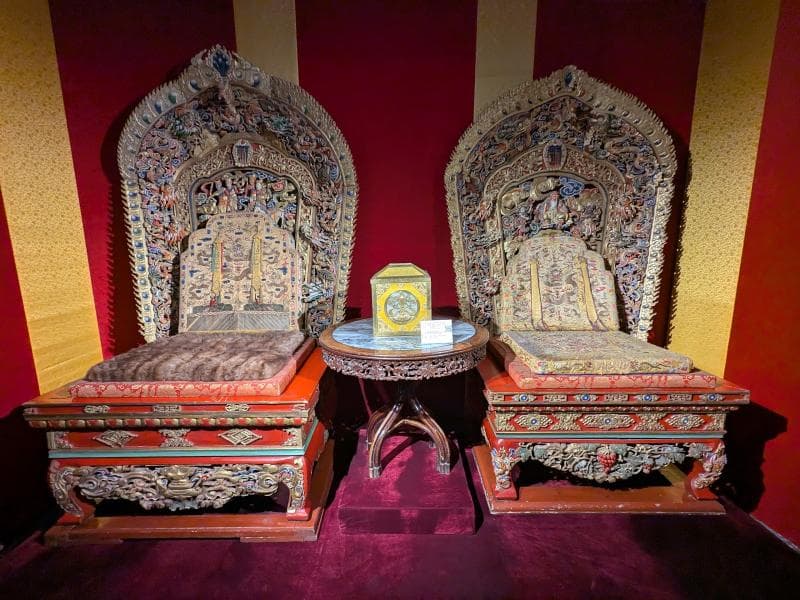
Explore the Buddhist Art Collection at Bogd Khan Palace Museum in Ulaanbaatar, Mongolia, with unique Zanabazar sculptures and thangkas.
Overview
Nestled in Ulaanbaatar, Mongolia, the Bogd Khan Palace Museum stands as a preserved testament to Mongolia's royal past and rich spiritual heritage. As the only remaining palace of the Bogd Khan, Mongolia's last ruler, it offers a rare glimpse into a pivotal period of the nation's history. The complex is distinctively divided into two main sections: a European-style Winter Palace and a collection of seven Chinese-style temples and pagodas that together form the Summer Palace. Within this historical setting lies the remarkable Buddhist Art Collection, a cornerstone of the museum's over 8,000 exhibits. This collection is not merely an assemblage of artifacts; it is a vibrant narrative of Mongolian Buddhist artistic expression, showcasing unique pieces that reflect centuries of faith and craftsmanship.
History & Cultural Background
The Bogd Khan Palace complex was constructed between 1893 and 1903, serving as the winter residence for the eighth Bogd Javzandamba, who was not only a spiritual leader but also, from 1911, the head of the Mongolian state. After the Bogd Khan's passing in 1924, the palace transitioned into a state museum by 1926, a critical move that preserved it from the widespread destruction of religious sites during the communist era. Re-established as an independent museum in 1961, it has since been dedicated to exhibiting the historical, cultural, and religious legacy of Mongolia. The Buddhist art displayed here is a fusion of Vajrayana (Tibetan) Buddhist traditions with indigenous Mongolian beliefs, creating a distinctive style. Mongolian Buddhist art developed its own characteristics, notably seen in the works of the First Bogd Khaan Zanabazar, who is celebrated for his unique sculptural style.
What Makes It Special
The Buddhist Art Collection within the Bogd Khan Palace Museum is particularly distinguished by its inclusion of 72 pieces certified as national heritage, highlighting their immense cultural value. Among the most celebrated items are the exquisite sculptures by Zanabazar, often referred to as the Michelangelo of Asia. His works, including the iconic 21 Taras, are renowned for their lifelike expressions, broad shoulders, and sensuous forms, setting them apart from their Tibetan counterparts. Beyond sculpture, the collection boasts an array of thangka paintings, silk appliqués, and papier-mâché masterpieces, many created by master craftsmen under the direction of the Bogd Jebtsundamba Khutuktu incarnations. Mongolian thangka art uniquely adapted Tibetan iconography, incorporating rolling grasslands and hills into backgrounds and featuring figures with more Mongolian facial traits, demonstrating a distinct artistic evolution. The blend of Chinese-style temple architecture, with its ornate arches and painted timbers, alongside the European-style Winter Palace, creates a visually stunning and culturally rich environment that is rare to find.
Stories, Fun Facts & Local Details
The Bogd Khan and his queen, Dondogdulam Khatan, spent twenty winters in the European-style palace, making it a home filled with royal life and traditions. The museum now preserves their personal belongings, ceremonial costumes, and jewelry, offering intimate insights into the lives of Mongolia's last monarchs. Fascinating diplomatic gifts from foreign dignitaries, including Tsar Nicholas II and the 5th Dalai Lama, are also part of the exhibition, underscoring Mongolia's historical international relations. Adding a touch of humor and everyday life, the collection includes drawings by Marzan Sharav, which comically depict scenes from early 20th-century Mongolian society. The complex itself features symbolic architectural elements, such as the Yampai, a 'protective gate' meant to ward off evil, and the three permanently open gates, symbolizing an invitation for good fortune and happiness to enter. The museum's library once held numerous volumes of Mongolian, Tibetan, Sanskrit, Manchu, and Chinese sutras, reflecting the intellectual and spiritual depth of the Bogd Khan's era.
Visitor Perspective
A visit to the Bogd Khan Palace Museum typically takes between two to three hours for a thorough exploration, allowing ample time to appreciate its extensive collections and architectural grandeur. Located in the southern part of Ulaanbaatar, the museum can be conveniently combined with a visit to the nearby Zaisan Memorial, offering panoramic views of the city. While generally accessible, some traditional architectural elements like stairs might present challenges for visitors with mobility concerns. Photography is often permitted, though a special pass may be required. As you wander through the courtyards and halls, you're not just observing artifacts; you're stepping into a bygone era of Mongolian royalty and spiritual devotion, experiencing a unique intersection of history, art, and culture. The museum provides a profound connection to Mongolia's rich past, making it an essential stop for any curious traveler.
Coordinates: 106.90667, 47.8975
View on Google Maps💬 How Travelers Describe This Place
Based on community votes
Interesting
804Photogenic
733Unique
563Must See
100Beautiful
63
Traveler Stories
Discover memorable experiences shared by travelers who have visited this place.
No traveler stories yet.
Be the first traveler to share what made this place memorable.

Tour
By
Spot
Discover amazing places around the world. Your journey starts here.
Explore
© 2026 TourBySpot. All rights reserved.