Buddha Statues
Vientiane, Laos
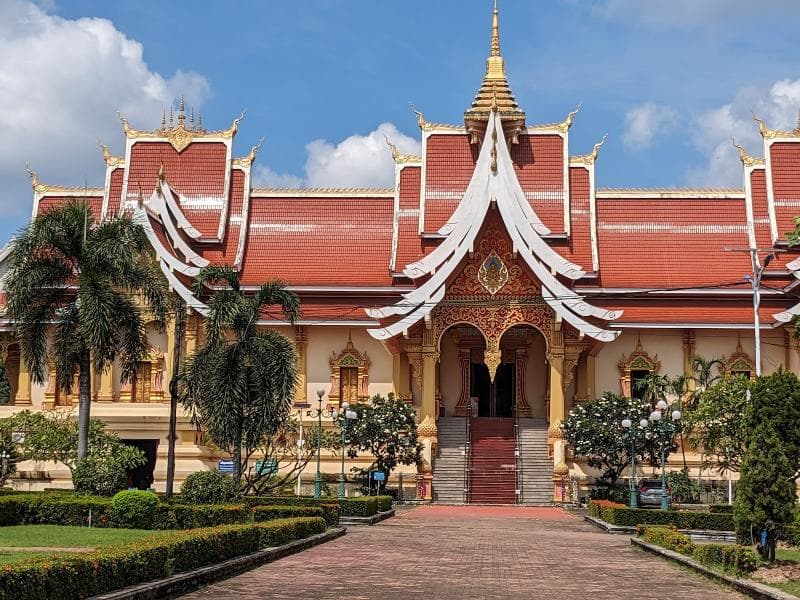
Discover the serene Buddha statues within Pha That Luang in Vientiane, Laos, offering a profound glimpse into Lao Buddhist history and culture.
Overview
Within the golden embrace of Pha That Luang in Vientiane, Laos, a collection of Buddha statues stands as a profound testament to the nation's spiritual heart. While the Great Stupa itself is the iconic symbol, these revered statues, nestled within its cloisters and surrounding temples, offer a more intimate glimpse into Lao Buddhist practice and artistry. They are not merely decorative elements but active participants in the daily devotions of pilgrims and a focal point for understanding the rich cultural tapestry of Laos. These statues embody centuries of faith, each one a silent storyteller of enlightenment and tradition.
Visitors to Pha That Luang will discover numerous Buddha images, ranging from smaller figures in prayer halls to larger, more prominent sculptures within the temple grounds. They collectively create an atmosphere of deep reverence, inviting contemplation and reflecting the unwavering devotion of the Lao people to Theravada Buddhism.
History & Cultural Background
The history of Buddha statues within Pha That Luang is intrinsically linked to the stupa's own ancient origins, which are believed to date back to the 3rd century BCE when Indian Buddhist missionaries brought a sacred relic of the Buddha—a breastbone—to the region. While the current magnificent gold-covered stupa was largely commissioned in 1566 by King Setthathirath, who moved the capital to Vientiane, the site has been a place of worship for far longer.
Over the centuries, as Pha That Luang endured numerous reconstructions following invasions and damages, the presence of Buddha statues has remained a constant. These statues represent the enduring Buddhist teachings and serve as a physical connection to the spiritual path. They reflect various artistic styles influenced by Khmer and traditional Lao craftsmanship, evolving with the nation's history.
Buddhism arrived in Laos over two millennia ago, profoundly shaping its culture, art, and national identity. The Buddha statues within Pha That Luang are central to this heritage, representing the wisdom, compassion, and enlightenment taught by the Buddha. Their placement within the complex, particularly in prayer halls and surrounding areas, facilitates meditation and offering rituals, cementing their role in the living tradition of Lao Buddhism.
What Makes It Special
The Buddha statues at Pha That Luang are special not just for their artistic merit but for their collective spiritual significance within Laos' most revered national monument. Unlike a single grand statue, the power here lies in their pervasive presence throughout the complex. From the images housed within the four vaulted prayer halls on the first level, symbolizing the material world, to those found in the surrounding temples like Wat That Luang Tai and Wat That Luang Neua, each statue contributes to a comprehensive spiritual landscape.
The integration of these statues into the architectural symbolism of Pha That Luang is particularly noteworthy. The entire stupa is designed in three tiers, representing the path to enlightenment: the underworld, the perfections, and ultimately, enlightenment itself. The Buddha figures within these tiers guide the spiritual journey, acting as points of focus for prayer and reflection.
One notable example is the Reclining Buddha statue, often found within the Wat That Luang Tai temple located on the compound. This pose, depicting the Buddha's entry into Parinirvana, signifies ultimate peace and liberation from the cycle of rebirth, offering a powerful visual representation of Buddhist doctrine. The statues, often adorned with offerings of flowers and incense, are vibrant focal points that bring the ancient complex to life.
Stories, Fun Facts & Local Details
The Buddha statues of Pha That Luang are steeped in local reverence and ritual. While specific legends about individual statues are less documented than the stupa itself, their collective presence reinforces the deep cultural connection between the Lao people and their Buddhist faith. Many visitors and locals engage in the practice of offering prayers and leaving small gifts—such as flowers, candles, and incense—before these statues, believing it brings good fortune and merit.
A fun fact for curious travelers is to observe the varying styles and ages of the statues. While some might be newer additions, others may date back decades or even centuries, each bearing the marks of time and devotion. This visual progression tells a subtle story of continuous worship and artistic evolution within the Buddhist tradition of Laos. The act of circumambulation, walking clockwise around the main stupa, often brings devotees past many of these Buddha figures, integrating them into a holistic spiritual experience. During the annual That Luang Festival in November, the statues become even more central to the vibrant ceremonies and candlelight processions, drawing thousands of participants.
Locally, these statues are not just static objects; they are seen as conduits for spiritual connection. Their serene expressions encourage a sense of peace and introspection, reflecting the core tenets of Theravada Buddhism practiced in Laos. The rich gold hues of some statues complement the dazzling gold leaf of the main stupa, creating a harmonious and awe-inspiring visual spectacle, especially as the sunlight shifts throughout the day.
Visitor Perspective
For the traveler, encountering the Buddha statues at Pha That Luang is an enriching and contemplative experience. As you walk through the cloistered galleries and visit the temples surrounding the main stupa, you'll find yourself amidst a tranquil array of these sacred figures. Their presence encourages a moment of quiet reflection, a pause from the bustling world outside. Observing locals making offerings and bowing in reverence provides a genuine insight into the spiritual life of Vientiane.
The statues, often housed in dimly lit prayer halls or beneath open-air pavilions, evoke a sense of timeless devotion. Pay attention to the details—the different hand gestures (mudras) representing various aspects of the Buddha's life and teachings, and the serene expressions that convey peace and enlightenment. This sub-spot within Pha That Luang is not about grand scale but about intimate spiritual connection. It offers a chance to feel the pulse of Lao Buddhism, away from the more monumental aspects of the stupa itself, fostering a deeper appreciation for the cultural and religious significance of this national treasure.
Coordinates: 102.6339, 17.9724
View on Google Maps💬 How Travelers Describe This Place
Based on community votes
Photogenic
894Beautiful
748Interesting
304Must See
73Unique
35
Traveler Stories
Discover memorable experiences shared by travelers who have visited this place.
No traveler stories yet.
Be the first traveler to share what made this place memorable.

Tour
By
Spot
Discover amazing places around the world. Your journey starts here.
Explore
© 2026 TourBySpot. All rights reserved.