Brown Thomas
Dublin, Ireland
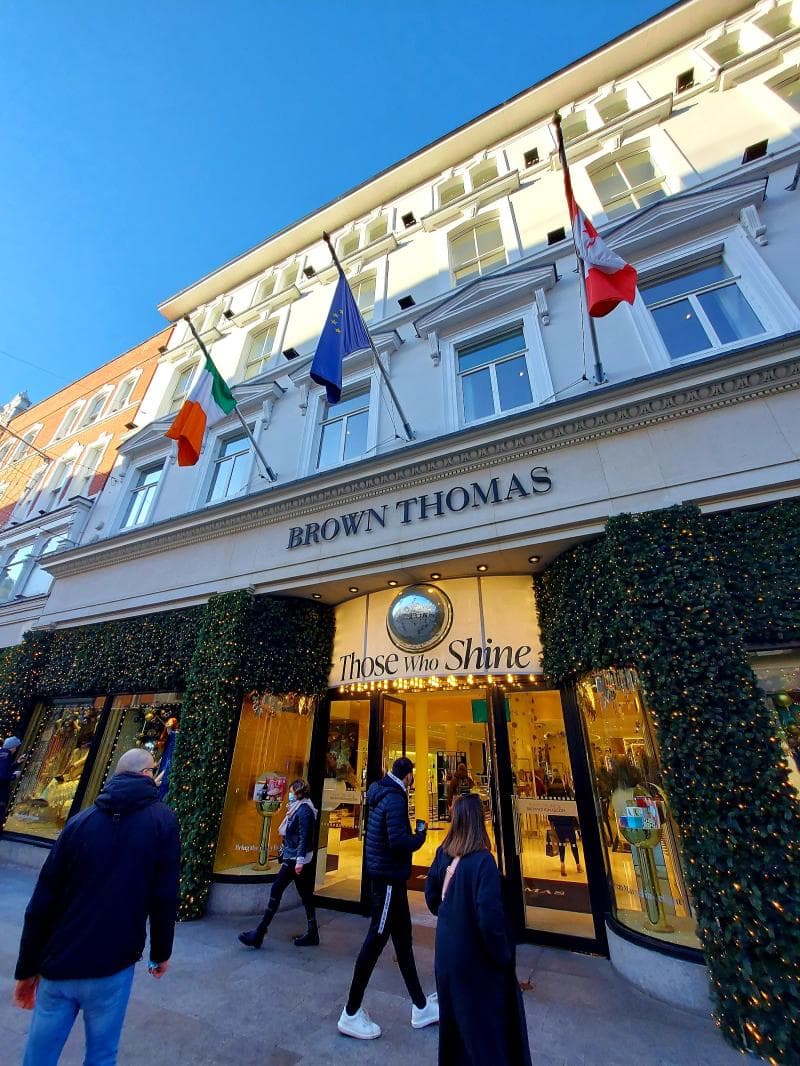
Discover Brown Thomas, Dublin's premier luxury department store on historic Grafton Street, offering high-end fashion, beauty, and homewares. Explore Irish retail heritage.
Overview
Nestled in the vibrant heart of Dublin's iconic Grafton Street, Brown Thomas stands as Ireland's premier luxury department store, a beacon for fashion enthusiasts and discerning shoppers. More than just a retail space, it is a cultural institution offering an exquisite selection of high-end fashion, beauty products, accessories, and homewares. The flagship store in Dublin is celebrated for its opulent interior and impeccable service, drawing both local patrons and international visitors alike.
Grafton Street itself is one of Dublin's two main shopping thoroughfares, stretching from St. Stephen's Green to College Green. It is a bustling pedestrianized street, famous not only for its array of shops but also for its lively atmosphere, often filled with the sounds of street performers, known locally as buskers. A visit to Brown Thomas is intrinsically linked to the broader experience of exploring this dynamic and historically rich area of Dublin.
History & Cultural Background
The story of Brown Thomas begins in 1848, when Hugh Brown and James Thomas, former buyers for another Dublin drapery, established their haberdashery and general drapery at 16 Grafton Street. The following year, they expanded into number 17, and by the mid-1850s, they had acquired number 15, progressively enlarging their presence on the street.
This venture commenced during a challenging period in Irish history, amidst the Great Famine, yet it represented an optimistic vision for Dublin's commercial future. The store quickly grew to become a significant name in Irish retailing. In 1919, the renowned department store visionary, Harry Gordon Selfridge, purchased Brown Thomas, incorporating it into his Selfridge Provincial Stores group. The ownership later passed to the McGuire family in 1933, under whom it cultivated its reputation for elegance and sophistication, and subsequently to Galen Weston in 1971. A significant move occurred in 1995 when Brown Thomas relocated to the larger premises formerly occupied by Switzer's department store, which it had acquired, solidifying its dominant position on Grafton Street.
Grafton Street's own history dates back to the early 18th century, originally developed from a country lane by the Dawson family in 1708. It evolved from a fashionable residential street to a crucial commercial artery after the construction of O'Connell Bridge (then Carlisle Bridge) connected it across the River Liffey. Over centuries, it has witnessed Dublin's transformation, maintaining its status as a prominent and lively urban space.
What Makes It Special
Brown Thomas distinguishes itself as Ireland's leading luxury department store through several key aspects. It houses an unparalleled array of international designer brands, including names like Louis Vuitton, Chanel, Gucci, Prada, and Hermès, across its various departments encompassing womenswear, menswear, accessories, beauty, and homewares. The store's interior is renowned for its elegance and sophisticated design, creating an inviting and luxurious shopping environment.
Beyond its extensive product offerings, Brown Thomas provides exceptional services tailored to enhance the visitor experience. These include complimentary personal shopping appointments and beauty experiences, offering personalized guidance for wardrobe updates or discovering the latest in luxury cosmetics. For international guests, the Brown Thomas Tourist Club offers a curated selection of benefits, such as a welcome gift and exclusive offers, alongside tax-free shopping opportunities for non-EU visitors.
Culturally, Brown Thomas plays a significant role in Dublin's festive season, particularly with its eagerly anticipated, award-winning Christmas window displays, which are meticulously hand-dressed and become a major attraction along Grafton Street. Its ability to adapt through changing economic and social climates while maintaining its core identity as a hub for luxury and style underscores its enduring special appeal.
Stories, Fun Facts & Local Details
Brown Thomas holds a unique place in Dublin's cultural tapestry, even being immortalized in literature. James Joyce, in his epic novel 'Ulysses,' describes Leopold Bloom gazing into the windows of Brown Thomas, a 'silk mercers' full of 'cascades of ribbons' and 'gleaming silks,' capturing the store's allure in 1904 Dublin. Its establishment during the severe conditions of the Great Famine in 1849 highlights the entrepreneurial spirit and optimism of its founders.
Grafton Street itself is famous for its vibrant street performers, or 'buskers,' whose music and artistry create a unique and ever-present soundtrack to the shopping experience. This tradition contributes significantly to the street's lively and welcoming atmosphere.
Historically, Grafton Street was also home to the beloved Molly Malone statue, a well-known tourist attraction inspired by the popular Irish song 'Cockles and Mussels.' Though the statue has since moved to nearby Suffolk Street, its association with Grafton Street remains a part of local lore. Another cherished institution on the street is Bewley's Oriental Café, which has been a prominent landmark since 1927.
Fascinatingly, Grafton Street has consistently been ranked among the most expensive main retail streets in the world to rent, underscoring its prime commercial importance.
Visitor Perspective
For visitors to Dublin, Brown Thomas offers far more than just a shopping trip; it is an immersive experience into the world of luxury and Irish retail heritage. Travelers frequently note the store's elegant ambiance, impeccable service, and the sheer breadth of high-end brands available as highlights of their visit.
Many consider a stroll through Brown Thomas to be a must-do, even if just for window shopping, to appreciate the carefully curated displays and the store's architectural grandeur. Its position on Grafton Street means it is seamlessly integrated into Dublin's bustling city center, making it an easy and enjoyable stop while exploring other nearby attractions like St. Stephen's Green and Trinity College.
The store is perceived as a destination for those seeking quality, sophistication, and a taste of Dublin's finer side. It provides a luxurious contrast to the lively street scenes outside, yet both contribute to a comprehensive and memorable understanding of Dublin's vibrant culture and commercial heart.
Coordinates: -6.26028, 53.34139
View on Google Maps💬 How Travelers Describe This Place
Based on community votes
Beautiful
951Unique
491Must See
427Interesting
414Photogenic
277
Traveler Stories
Discover memorable experiences shared by travelers who have visited this place.
No traveler stories yet.
Be the first traveler to share what made this place memorable.

Tour
By
Spot
Discover amazing places around the world. Your journey starts here.
Explore
© 2026 TourBySpot. All rights reserved.