Brooklyn Bridge Towers
New York, United States
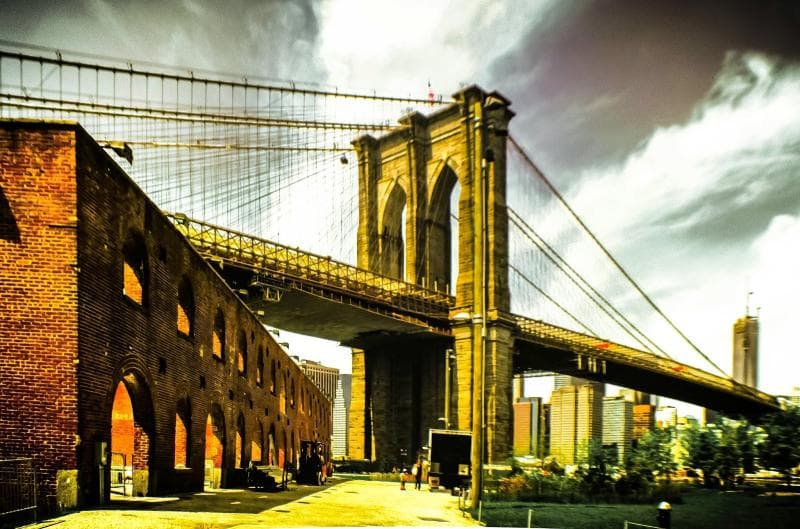
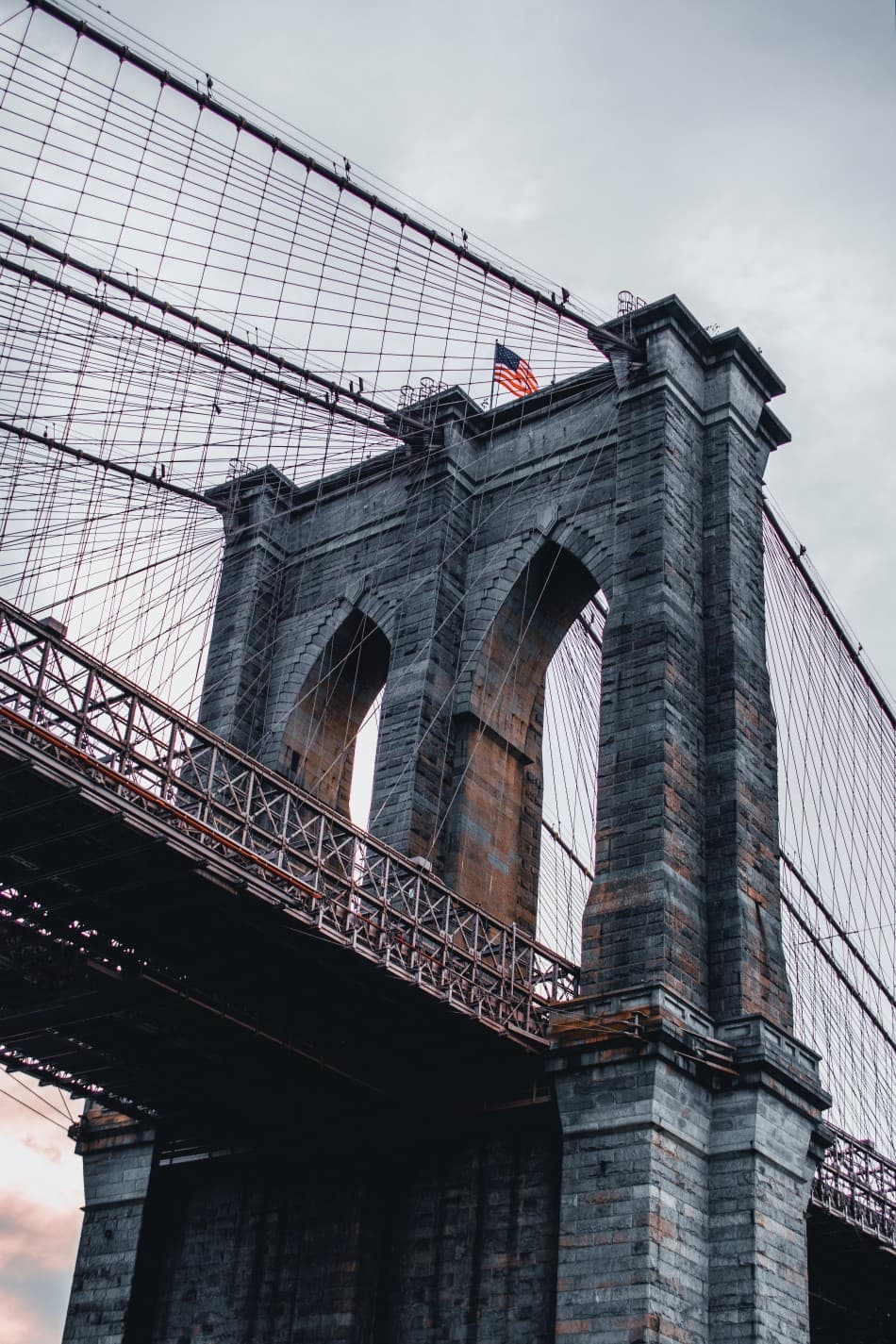
Explore the iconic Brooklyn Bridge Towers in New York, United States. Discover their Gothic Revival architecture, rich history, and stunning views.
Overview
The Brooklyn Bridge Towers stand as monumental sentinels of one of New York City's most iconic landmarks, the Brooklyn Bridge. These impressive stone structures, central to the bridge's design, majestically span the East River, connecting the bustling borough of Manhattan with the historic streets of Brooklyn. Opened in 1883, the Brooklyn Bridge, with its distinctive Gothic Revival towers, was an engineering marvel of its time, holding the title of the longest suspension bridge in the world. Rising approximately 276 to 278 feet above mean high water, the towers are constructed from a blend of limestone, granite, and cement, showcasing a formidable architectural presence. They support the intricate network of cables that carry five lanes of vehicular traffic, alongside a dedicated pedestrian promenade and a protected bicycle path, serving as a vital artery for daily commuters and a captivating pathway for visitors.
History & Cultural Background
The story of the Brooklyn Bridge Towers is deeply intertwined with a saga of visionary engineering, human perseverance, and profound sacrifice. Construction of the bridge commenced in 1869, culminating 14 years later in its grand opening in 1883. The original architect, John A. Roebling, tragically died early in the project due to complications from an accident. His son, Washington Roebling, took the helm as chief engineer but soon fell victim to 'caisson disease,' also known as 'the bends,' caused by working in the pressurized underwater caissons used to lay the towers' foundations. Confined to his bed, Washington's remarkable wife, Emily Warren Roebling, stepped in. She became an indispensable figure, effectively overseeing the project's completion by managing workers, contracts, and mastering engineering principles herself, becoming a pioneering woman in a male-dominated field. The use of pneumatic caissons for the foundations was a groundbreaking, yet perilous, technique, claiming the lives of at least 20 workers during the bridge's arduous construction. The towers' design, initially envisioned with an Egyptian aesthetic by John Roebling, evolved into the dramatic Gothic Revival style that stands today, adding to its timeless appeal. Recognized for its monumental significance, the Brooklyn Bridge was designated a National Historic Landmark in 1964 and a National Historic Civil Engineering Landmark in 1972.
What Makes It Special
What truly sets the Brooklyn Bridge Towers apart is their extraordinary blend of architectural grandeur and engineering innovation. They are not merely functional supports but majestic Gothic Revival structures, meticulously crafted from massive blocks of limestone and granite. At the time of its completion, the Brooklyn Bridge was a groundbreaking achievement: the first steel-wire suspension bridge and the longest of its kind globally. This engineering marvel demonstrated an audacious use of new materials and construction techniques, particularly the pioneering application of pneumatic caissons for foundation work deep beneath the East River. Beyond their structural prowess, the towers embody a powerful human story—a testament to the Roebling family's unwavering dedication, intellect, and profound sacrifices. The bridge's unique hybrid design, combining elements of both suspension and cable-stayed bridge technologies, was an ingenious solution to spanning such a wide and busy waterway. The sheer scale and enduring beauty of these 90,000-ton stone towers have cemented their status as an enduring symbol of New York City, inspiring countless artists, writers, and filmmakers over the decades.
Stories, Fun Facts & Local Details
The Brooklyn Bridge Towers are steeped in fascinating stories and intriguing details that bring its history to life. One of the most famous anecdotes involves Emily Warren Roebling, who, as a symbol of victory and to prove the bridge's safety, was the first person to officially cross the newly completed bridge in a carriage, reportedly carrying a rooster. This gesture was later reinforced by the legendary showman P.T. Barnum, who, in 1884, paraded 21 elephants across the bridge to further assuage public fears about its stability. During construction, the colossal stone anchorages on both sides of the bridge contained cavernous vaults. These spaces were ingeniously rented out for commercial storage, most notably for champagne, which benefited from the stable temperatures within. A stark reminder of the challenges faced during construction is the 'caisson disease' that afflicted many workers, including Washington Roebling. This mysterious illness, now understood as decompression sickness, was a severe occupational hazard. Each of the bridge's four main cables, which drape gracefully over the towers, is an astonishing feat in itself, composed of over 5,000 parallel galvanized steel wires bundled together. The bridge's structure is surprisingly dynamic; it can 'elongate and contract' by 14 to 16 inches due to temperature fluctuations. Today, the bridge continues its monumental service, carrying an average of over 100,000 vehicles, nearly 30,000 pedestrians, and thousands of cyclists across the East River every day.
Visitor Perspective
Experiencing the Brooklyn Bridge Towers firsthand is a quintessential New York City activity, offering a unique blend of historical immersion and breathtaking views. Walking across the Brooklyn Bridge is entirely free and provides unparalleled panoramic vistas of the Manhattan skyline, the Statue of Liberty, and the expansive harbor. The pedestrian promenade, elevated above the roaring vehicle lanes, offers a safe and enjoyable path. Visitors can access the bridge from various points: on the Brooklyn side, entrances are available at Washington Street and Prospect Street (near DUMBO) or via a ramp at Tillary Street and Adams Street. On the Manhattan side, the pedestrian entrance is conveniently located at Centre Street and Park Row, close to City Hall. A walk across the entire span typically takes between 25 to 40 minutes, depending on your pace and how many photo stops you make. For the most serene experience and optimal lighting for photographs, it's highly recommended to go in the early morning or around sunset, when crowds tend to be lighter. While enjoying your stroll, be mindful of the clearly marked, separate lanes for pedestrians and cyclists. For those interested in delving deeper into the bridge's rich history, the Center for Brooklyn History (formerly Brooklyn Historical Society) offers educational programs and exhibits related to this magnificent structure.
Coordinates: -73.9964, 40.7057
View on Google Maps💬 How Travelers Describe This Place
Based on community votes
Beautiful
981Unique
617Interesting
357Photogenic
147Must See
28
Traveler Stories
Discover memorable experiences shared by travelers who have visited this place.
No traveler stories yet.
Be the first traveler to share what made this place memorable.

Tour
By
Spot
Discover amazing places around the world. Your journey starts here.
Explore
© 2026 TourBySpot. All rights reserved.