Brooklyn Bridge
New York, United States
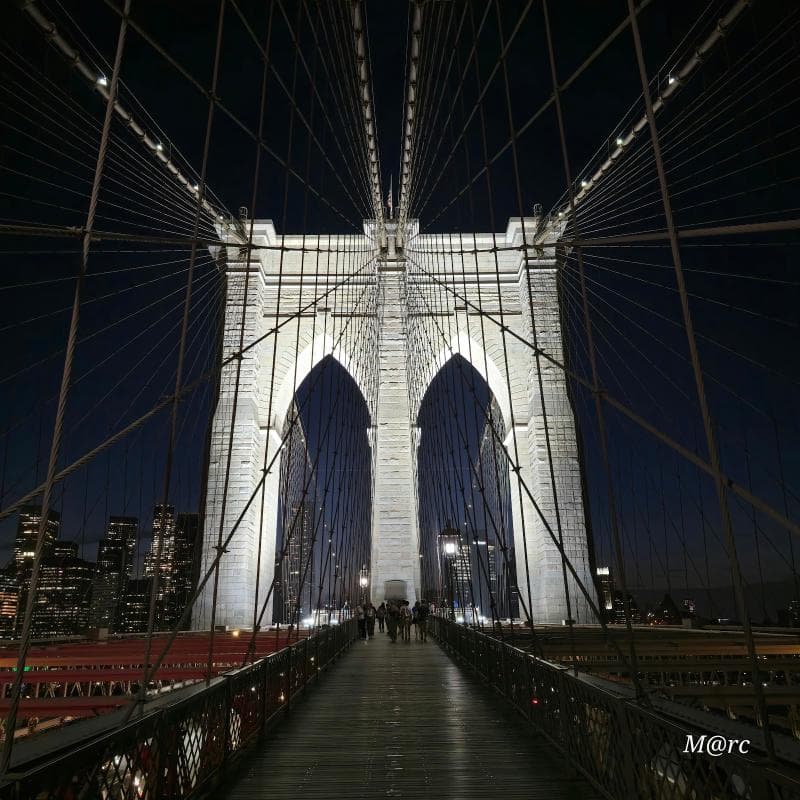
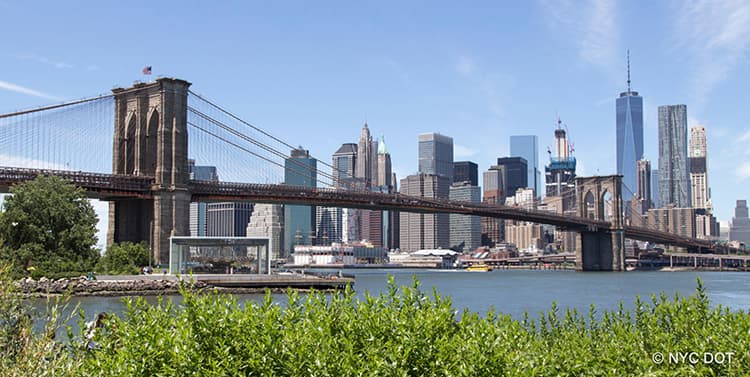
Discover the iconic Brooklyn Bridge in New York, United States. Explore its incredible history, pioneering engineering, and stunning views of the city.
Overview
The Brooklyn Bridge, a majestic landmark in New York City, United States, spans the East River, connecting the boroughs of Manhattan and Brooklyn. Opened on May 24, 1883, it was a monumental achievement in 19th-century engineering, setting new standards for bridge construction worldwide. This iconic structure is not merely a means of passage but a symbol of ingenuity and urban connectivity, offering breathtaking views of the city skyline and the Statue of Liberty.
History & Cultural Background
The vision for a bridge connecting Manhattan and Brooklyn emerged in the mid-19th century, driven by the need to overcome the East River's challenging crossings, often hampered by ice or fog. German immigrant engineer John Augustus Roebling, a pioneer in suspension bridge design, conceived the revolutionary project in 1852. Construction officially began on January 2, 1870. Tragically, Roebling died early in the project due to an on-site accident, and his son, Washington Roebling, took over as chief engineer. Washington, however, suffered a debilitating illness known as caisson disease, or 'the bends', from working in the pressurized underwater foundations. His wife, Emily Warren Roebling, played an instrumental role in the bridge's completion, serving as his liaison and developing a deep understanding of engineering, materials, and cable fabrication. The construction, which lasted 14 years and cost $15 million, was fraught with challenges and claimed the lives of at least 20 workers. Upon its opening, the Brooklyn Bridge was hailed as a symbol of American progress and became a crucial link, contributing significantly to the consolidation of New York and Brooklyn into a single metropolis. Its neo-Gothic architecture and innovative design inspired artists, poets, and writers, cementing its place in the cultural fabric of New York City.
What Makes It Special
The Brooklyn Bridge stands out for several groundbreaking achievements. It was the first suspension bridge in the world to use steel for its cable wires, a pioneering application of steel in construction that paved the way for future architectural marvels like skyscrapers. The bridge features a unique hybrid design, combining elements of both cable-stayed and suspension bridges, with vertical and diagonal suspender cables. Its magnificent neo-Gothic towers, constructed from limestone, granite, and cement, rise 272 feet (82.9 meters) above the East River, making them prominent landmarks. At the time of its completion, its main span of 1,595.5 feet (486.3 meters) made it the longest suspension bridge in the world. The broad promenade above the roadway, an insightful inclusion by John Roebling, was considered to be of 'incalculable value' for leisure and scenic views. This foresight created a space for pedestrians that remains a beloved feature today. The construction also marked the first time explosives were used inside a pneumatic caisson, showcasing advanced engineering techniques.
Stories, Fun Facts & Local Details
The Brooklyn Bridge is rich with fascinating stories and local lore. One of the most famous occurred on May 17, 1884, less than a year after its opening, when circus showman P.T. Barnum led 21 elephants, including the famous Jumbo, across the bridge. This spectacular parade was orchestrated to quell public fears about the bridge's stability following a stampede that had caused fatalities shortly after its inauguration. The bridge was originally called the New York and Brooklyn Bridge or the East River Bridge, only officially receiving the name 'Brooklyn Bridge' in 1915. During its construction, many workers suffered from 'the bends' (caisson disease), a condition caused by rapid decompression, which tragically affected Washington Roebling. The bridge's robust design made it 'six times stronger than needed' for its initial purpose. Today, visitors might spot peregrine falcons nesting on its towers. The bridge is also associated with the practice of 'love locks', though authorities frequently remove them to prevent damage.
Visitor Perspective
Experiencing the Brooklyn Bridge offers a unique perspective of New York City. The elevated pedestrian and bicycle promenade provides an unparalleled opportunity to walk or cycle between Manhattan and Brooklyn, a journey that offers panoramic vistas of the Manhattan skyline, the East River, and beyond. Access points are conveniently located near City Hall Park on the Manhattan side and at Tillary Street and Boerum Place, or Washington Street and Prospect Street, on the Brooklyn side. The walk is free and accessible 24/7. Many travelers recommend going early in the morning or late in the evening to avoid crowds and to witness the city lights. From the Brooklyn side, particularly from Brooklyn Bridge Park, visitors can admire the bridge's neo-Gothic towers and the impressive engineering from a different angle. Historical markers along the bridge also offer insights into its storied past.
Coordinates: -73.9964, 40.7057
View on Google Maps💬 How Travelers Describe This Place
Based on community votes
Beautiful
852Photogenic
645Interesting
244Must See
146Unique
80
Traveler Stories
Discover memorable experiences shared by travelers who have visited this place.
No traveler stories yet.
Be the first traveler to share what made this place memorable.
Things to see at Brooklyn Bridge



Tour
By
Spot
Discover amazing places around the world. Your journey starts here.
Explore
© 2026 TourBySpot. All rights reserved.