Broad Contemporary Art Museum
Los Angeles, United States
Explore the Broad Contemporary Art Museum (BCAM) at LACMA in Los Angeles, United States. Discover Renzo Piano's architecture and post-war art.
Overview
Nestled within the vast campus of the Los Angeles County Museum of Art (LACMA) in Los Angeles, United States, the Broad Contemporary Art Museum (BCAM) stands as a beacon for modern and contemporary art enthusiasts. Opened in 2008, BCAM was conceived as the centerpiece of LACMA's ambitious 'Transformation' program, significantly expanding the museum's capacity to showcase art from the post-war era to the present day. This dedicated structure, distinct yet seamlessly integrated into the larger museum, offers visitors an immersive experience focused on the dynamic narratives of recent art history. It is a testament to the vision of philanthropists Eli and Edythe Broad, whose generous contribution brought this architectural marvel to life. BCAM provides a unique lens through which to explore cutting-edge artistic expression, making it an essential destination for anyone keen to understand the evolving landscape of contemporary creativity.
History & Cultural Background
The genesis of the Broad Contemporary Art Museum is rooted in a pivotal moment for LACMA's expansion and its commitment to contemporary art. The museum first opened its doors on February 16, 2008, made possible by a significant $60 million donation from Eli and Edythe Broad. This included $50 million dedicated to the museum's capital campaign and an additional $10 million earmarked for art acquisitions, which notably funded the purchase of Richard Serra's monumental sculpture 'Band' in 2007. The Broads, prominent art collectors and philanthropists, aimed to ensure LACMA's crucial role in presenting modern and contemporary art in Los Angeles.
Designed by the Pritzker Prize-winning architect Renzo Piano, BCAM was envisioned not merely as an extension but as a distinct 'museum within an encyclopedic museum'. Piano's design played a crucial role in unifying LACMA's fragmented campus, creating new public and exhibition spaces that enhanced accessibility and cohesion. The building's conception aimed to specifically cater to the unique demands of contemporary artworks, many of which require vast, flexible exhibition areas. BCAM quickly became a cultural landmark, enriching Los Angeles's art scene by providing a dedicated home for influential works that capture the spirit of their time.
What Makes It Special
BCAM is renowned for its distinctive architectural design and its unparalleled collection of post-war and contemporary art. Architect Renzo Piano crafted a structure featuring a pale travertine marble facade, strikingly accented with elements in 'Renzo Red', which creates a vibrant contrast against the Southern California sky. One of its most striking features is the exterior red escalator, which transports visitors directly to the main entrance on the third floor, offering a dramatic ascent and panoramic views.
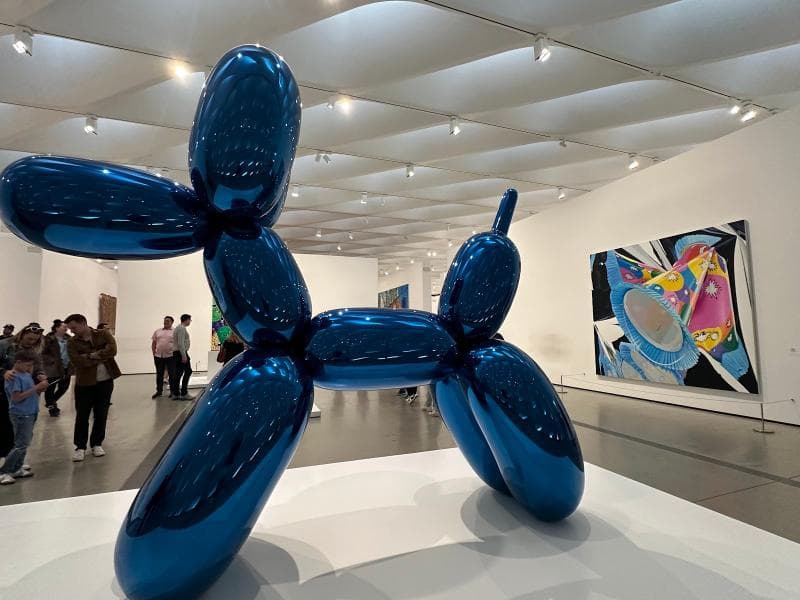
Inside, BCAM boasts 60,000 square feet of exhibition space spread across three stories, featuring some of the largest column-free art spaces in the United States. This open design allows for the display of large-scale installations and monumental sculptures. The building's innovative saw-tooth roof system is designed to capture natural northern light, which is then carefully controlled by automatically activated rollershades to ensure optimal viewing conditions for the artworks. The collection itself is a major draw, featuring significant holdings from The Broad Art Foundation and the Broads' personal collection, alongside LACMA's own contemporary pieces. It showcases an impressive roster of artists including Jeff Koons, Andy Warhol, Jasper Johns, Robert Rauschenberg, and Richard Serra, often with works that span their careers.
Stories, Fun Facts & Local Details
The Broad Contemporary Art Museum's architecture itself tells a story. Renzo Piano intentionally designed the building with industrial-inspired aesthetics, giving it a resemblance to a modern factory, albeit one clad in elegant travertine. This design choice speaks to the often-experimental and boundary-pushing nature of the contemporary art housed within. The 'Renzo Red' accents seen throughout the building and on the iconic outdoor escalator are a signature touch, adding a vibrant energy to the museum's facade and circulation spaces.
A fun detail for visitors is the glass-fronted elevator within the building's central core, which Piano humorously described as a 'moving room' due to its generous dimensions and unique transparent design. This elevator also hosts a three-story-high artwork by Barbara Kruger, making the journey between floors an artistic experience in itself. BCAM is also home to Chris Burden's intricate 'Metropolis II', a complex kinetic sculpture featuring hundreds of miniature cars and trains, which enthralls visitors with its frenetic energy and detailed urban landscape. The museum's strategic placement within LACMA's campus and its connections to the surrounding park create a fluid interaction between art, architecture, and the natural environment.
Visitor Perspective
Visiting the Broad Contemporary Art Museum offers a dynamic and engaging experience for art lovers and curious travelers alike. The journey often begins with an ascent up the dramatic red outdoor escalator, which provides a unique prelude to the art inside. Upon entering the third floor, visitors are greeted by naturally lit galleries showcasing expansive collections of post-war and contemporary masterpieces. The sheer scale of the exhibition spaces allows for an uncrowded and contemplative viewing of large-scale works that might not fit elsewhere.
While BCAM is a distinct entity focusing on its specific period of art, it seamlessly integrates into the broader LACMA experience. After exploring BCAM's cutting-edge displays, visitors can easily transition to other parts of the museum, providing a comprehensive journey through diverse artistic traditions and historical periods. The museum is a place where one can encounter globally renowned artists, discover emerging talents, and engage with artworks that challenge perceptions. It's a key part of the Los Angeles County Museum of Art, offering a fresh perspective on the art of our time and underscoring Los Angeles's significance as a global cultural hub. It serves as an exciting and thought-provoking stop for anyone exploring the rich artistic tapestry of the city.
Coordinates: -118.3592, 34.0639
View on Google Maps💬 How Travelers Describe This Place
Based on community votes
Interesting
958Unique
794Beautiful
571Must See
546Photogenic
157
Traveler Stories
Discover memorable experiences shared by travelers who have visited this place.
No traveler stories yet.
Be the first traveler to share what made this place memorable.

Tour
By
Spot
Discover amazing places around the world. Your journey starts here.
Explore
© 2026 TourBySpot. All rights reserved.