Bridge Walkway
Budapest, Hungary
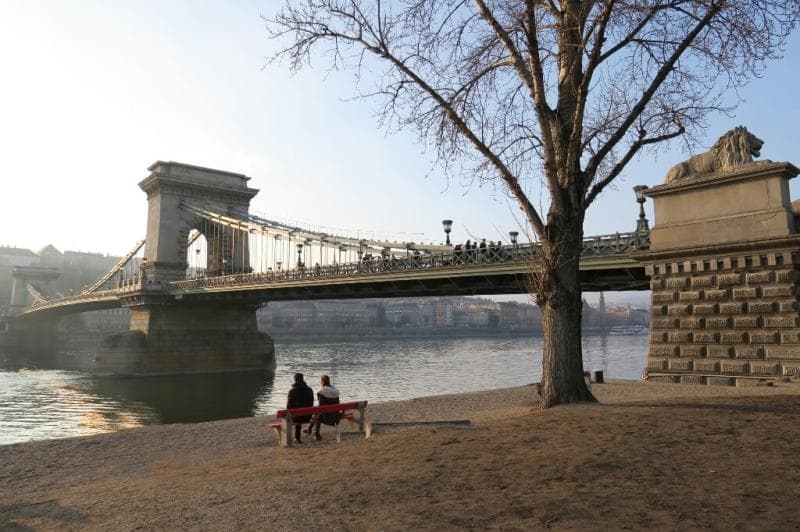
Stroll the iconic Bridge Walkway of Budapest's Chain Bridge. Discover its rich history, admire stunning Danube views, and explore local legends.
Overview
The Széchenyi Chain Bridge, known locally as Széchenyi Lánchíd, is more than just a crossing; it's a profound symbol of Budapest, Hungary, connecting the historic districts of Buda and Pest across the majestic Danube River. For any traveler exploring this vibrant city, walking across its storied pathway is an essential experience. This engineering marvel, a suspension bridge with impressive iron chains and stately stone lions, spans approximately 375 meters (1,230 feet), offering unparalleled panoramic views of the city's iconic landmarks.
Completed in 1849, the Chain Bridge was a groundbreaking achievement, representing the first permanent link between the previously separate towns of Buda and Pest. Its recent reopening in 2023 after significant renovations ensures that the walkway is in pristine condition, inviting visitors to stroll freely and absorb the city's grandeur from a unique vantage point.
History & Cultural Background
The genesis of the Chain Bridge is steeped in a personal tale that blossomed into a national imperative. Before its construction, crossing the Danube was a perilous affair, often impossible during winter due to ice or adverse weather, with ferries being the only option.
The visionary behind this monumental project was Count István Széchenyi, often hailed as 'the greatest Hungarian'. His determination was solidified after he tragically missed his father's funeral in 1820 because he was unable to cross the river from Pest to Buda. This deeply personal experience ignited his resolve to champion a permanent bridge.
Designed by the English engineer William Tierney Clark and constructed under the supervision of Scottish engineer Adam Clark, the bridge was a marvel of 19th-century engineering. Its completion in 1849 was not merely an architectural feat; it symbolized national unity, progress, and resilience, especially following the Hungarian Revolution of 1848. Though it suffered destruction during World War II at the hands of retreating German troops in 1945, only its towers remained. It was meticulously rebuilt and reopened exactly 100 years after its original inauguration, in 1949, as an exact replica of the original, a testament to Hungary's enduring spirit.
What Makes It Special
The Chain Bridge stands out not only for its historical significance but also for its architectural grandeur and the experience it offers. Its design, inspired by William Tierney Clark's earlier Marlow Bridge over the Thames, features massive Neo-Classical stone pylons and the distinctive wrought-iron chains that give it its name.
What truly makes the walkway special are the breathtaking views it provides. From the pedestrian path, travelers can admire the UNESCO World Heritage skyline of Budapest, with the majestic Hungarian Parliament Building on the Pest side and the historic Buda Castle and Fisherman's Bastion perched atop Buda Hill. The bridge is a photographic paradise, particularly at sunset when the golden light bathes the city, or at night when the entire structure is beautifully illuminated, creating a magical atmosphere.
Stories, Fun Facts & Local Details
One of the most enduring and charming legends associated with the Chain Bridge concerns its guardian lion statues. Sculpted by János Marschalkó in 1852, these imposing stone lions sit at each end of the bridge. A popular myth claims that the sculptor was so distraught upon realizing he had forgotten to carve tongues on the lions that he tragically took his own life.
However, the truth is far less dramatic: the lions do possess tongues, they are simply not easily visible from ground level, adding a quirky layer to Budapest's folklore. Another interesting detail is that the bridge was designed in sections in the UK and then shipped to Budapest for assembly. Historically, it was also a symbol of 'burden sharing' as, unlike other privileges of the nobility, everyone, regardless of social standing, had to pay a toll to cross the bridge until 1918.
Visitor Perspective
Walking the Chain Bridge walkway is a free, accessible, and highly rewarding activity for any visitor to Budapest. The bridge is fully walkable and takes approximately 5 to 10 minutes to cross at a casual pace. However, most travelers find themselves lingering far longer, pausing to soak in the views, take photographs, and simply appreciate the moment.
It serves as a perfect starting point or a scenic interlude between exploring Buda's Castle District and Pest's bustling city center. The Pest side leads to Széchenyi István tér, close to Gresham Palace and the Hungarian Academy of Sciences, while the Buda side connects to Adam Clark Square, the gateway to Buda Castle and the funicular. Whether you choose to cross from Buda to Pest or vice-versa, the experience provides a tangible connection to Budapest's rich history and offers some of the most memorable vistas the city has to offer.
Coordinates: 19.04361, 47.49889
View on Google Maps💬 How Travelers Describe This Place
Based on community votes
Must See
684Beautiful
363Photogenic
302Unique
250Interesting
88
Traveler Stories
Discover memorable experiences shared by travelers who have visited this place.
No traveler stories yet.
Be the first traveler to share what made this place memorable.

Tour
By
Spot
Discover amazing places around the world. Your journey starts here.
Explore
© 2026 TourBySpot. All rights reserved.