Bread Section
Tashkent, Uzbekistan
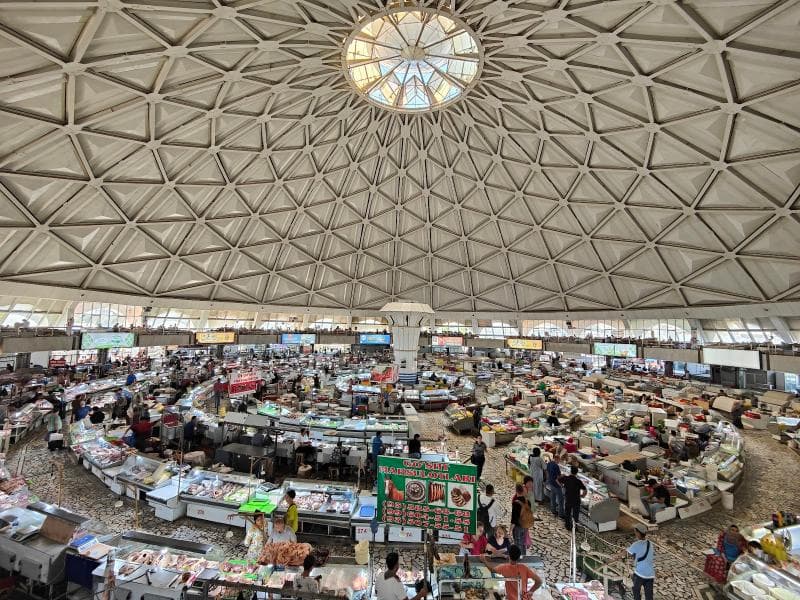
Discover the vibrant Bread Section at Chorsu Bazaar in Tashkent, Uzbekistan. Explore ancient traditions of Uzbek bread making, learn about 'non', and witness skilled bakers craft this cultural symbol.
Overview
Deep within the bustling Chorsu Bazaar, a historic marketplace in Tashkent, Uzbekistan, lies a vibrant sub-spot known as the Bread Section. This area is a cornerstone of the bazaar's energetic atmosphere, dedicated to the ancient craft of baking traditional Uzbek bread, locally called 'non' or 'lepyoshka'. Chorsu Bazaar itself, with roots tracing back over 2,000 years, stands as one of Central Asia's oldest continuously operating markets and was a vital hub along the legendary Silk Road. The name 'Chorsu,' derived from Persian, aptly translates to 'four ways' or 'crossroads,' reflecting its historical significance as a meeting point for diverse cultures and merchants.
The iconic blue-domed pavilion of Chorsu Bazaar, a striking blend of traditional Uzbek architectural motifs and modern engineering from the 1980s, houses much of the market's activity. Within its sprawling complex, the Bread Section offers more than just sustenance; it provides a sensory feast. The air is thick with the warm, comforting aroma of freshly baked bread, mingling with the lively sounds of daily commerce. Here, bread is not merely a commodity; it's a focal point of Uzbek culture and hospitality, offering visitors a genuine glimpse into local life.
History & Cultural Background
Chorsu Bazaar's history is deeply intertwined with the region's past, serving as a pivotal trading crossroads for millennia that significantly shaped the cultural and economic landscape of Central Asia. While the bazaar has continuously operated for centuries, the modern blue-domed structure, designed in the 1980s, elegantly echoes the traditional architectural styles of the region. Its historical importance was further recognized in July 2026, when Chorsu Bazaar, among other modernist sites in Tashkent, was designated a UNESCO World Heritage Site.
Uzbek bread, 'non,' is far more than a simple food item; it is a profound cultural symbol imbued with immense significance. Revered as a symbol of life, prosperity, unity, and deep-seated hospitality, non holds a sacred place in Uzbek society. The tradition of baking non in a 'tandoor' — a cylindrical clay oven — spans thousands of years, a testament to its enduring role in daily life and cultural practices. This ancient baking method continues to be practiced with devotion, preserving a culinary heritage passed down through generations.
What Makes It Special
The Bread Section at Chorsu Bazaar offers an experience that is truly authentic and un-staged. It functions as a real, bustling local bakery where families come daily to purchase their bread, rather than being a mere demonstration for tourists. What sets it apart is the extraordinary skill of the bakers, who rely on instinct and years of experience to master the intense heat of the tandoor ovens. They know precisely when the oven walls are ready, how quickly to work, and the exact moment to retrieve each perfect loaf.
A unique tool called a 'chekich' is central to the process. This spiked stamp is used to press intricate patterns into the center of the dough before baking. This technique serves a dual purpose: it not only creates beautiful, distinctive designs but also prevents the center of the bread from rising excessively in the hot clay oven. The variety of non available is remarkable, with each region of Uzbekistan boasting its own unique variations in ingredients, shape, and taste. From the rich and buttery dough favored in Tashkent to breads sprinkled with sesame or nigella seeds, the Bread Section showcases a delicious diversity. The irresistible aroma emanating from the dozens of tandoor ovens is a signature characteristic, drawing visitors closer to witness this timeless craft.
Stories, Fun Facts & Local Details
In Uzbek culture, bread is treated with profound reverence. It is considered sacred, never to be placed face down or discarded carelessly. Should a piece of bread accidentally fall to the ground, custom dictates that it be picked up, kissed, and touched to the forehead as a sign of respect. Numerous rituals underscore bread's importance: the 'non sindirish' ceremony involves breaking bread to signify an engagement or an agreement, symbolizing an unbreakable bond and unity between families.
A touching tradition for travelers involves a person biting a piece of bread before embarking on a long journey, with the remaining portion kept at home until their safe return. This practice is believed to protect the traveler and ensure their safe homecoming. Furthermore, bread is often presented during significant life events like weddings, births, and other festive occasions as a symbol of blessing and good fortune. The intricate patterns pressed into each loaf by the chekich are often more than just decorative; they can carry regional significance or symbolize specific meanings. A humble yet meaningful detail is that the very first loaf baked each day is often not sold but given to a neighbor or someone in need. Unlike many Western cultures, Uzbek bread is never cut with a knife; it is always torn by hand, reflecting its sacred status. The name Chorsu itself, meaning 'four ways' or 'crossroads,' is a direct nod to its ancient role as a confluence of trade and cultures along the Silk Road.
Visitor Perspective
For any curious traveler, the Bread Section at Chorsu Bazaar offers an immersive and unforgettable experience. It's a rare opportunity to stand close and observe skilled bakers performing their age-old craft, transforming simple dough into golden, aromatic loaves within the intense heat of the tandoor ovens. Visitors can purchase freshly baked bread directly from the ovens, enjoying it still warm, a delightful taste of authentic Uzbek flavor.
The entire section is a treat for the senses—the enticing smells, the vibrant sights of bakers at work, and the sounds of the bustling market all contribute to a truly engaging atmosphere. Some tours even offer hands-on bread-making workshops, allowing participants to try their hand at shaping and stamping their own 'non' under the guidance of local experts. This authentic corner of the bazaar provides a tangible connection to Tashkent's rich cultural tapestry and a deep understanding of Uzbek hospitality. To fully appreciate the experience and acquire the freshest loaves, it's often recommended to visit early in the morning when the day's baking is in full swing. It's a place where the rhythms of daily life and ancient traditions converge, offering a truly human-centric insight into the heart of Uzbekistan.
Coordinates: 69.23653, 41.32617
View on Google Maps💬 How Travelers Describe This Place
Based on community votes
Unique
931Must See
692Photogenic
655Beautiful
491Interesting
266
Traveler Stories
Discover memorable experiences shared by travelers who have visited this place.
No traveler stories yet.
Be the first traveler to share what made this place memorable.

Tour
By
Spot
Discover amazing places around the world. Your journey starts here.
Explore
© 2026 TourBySpot. All rights reserved.